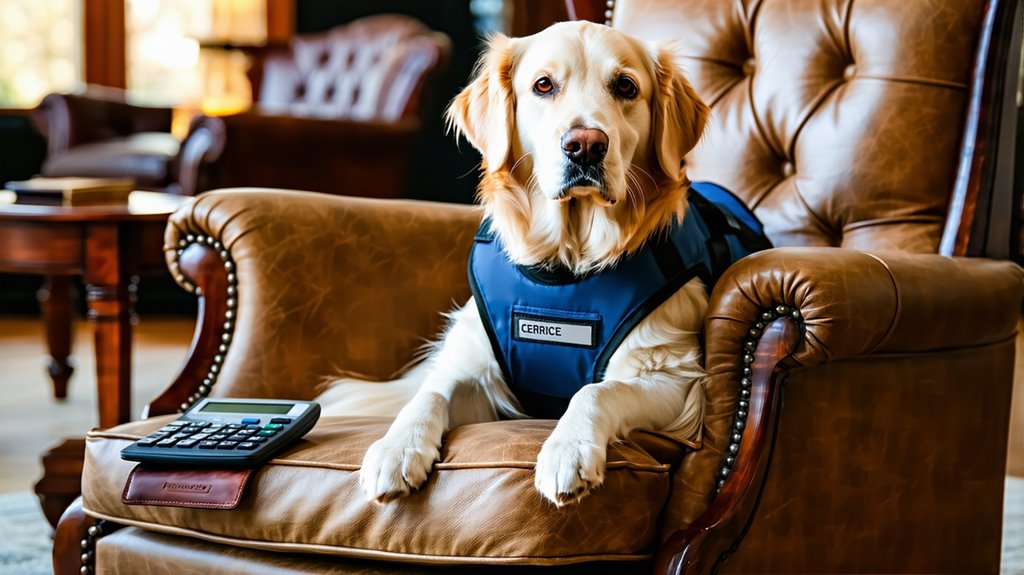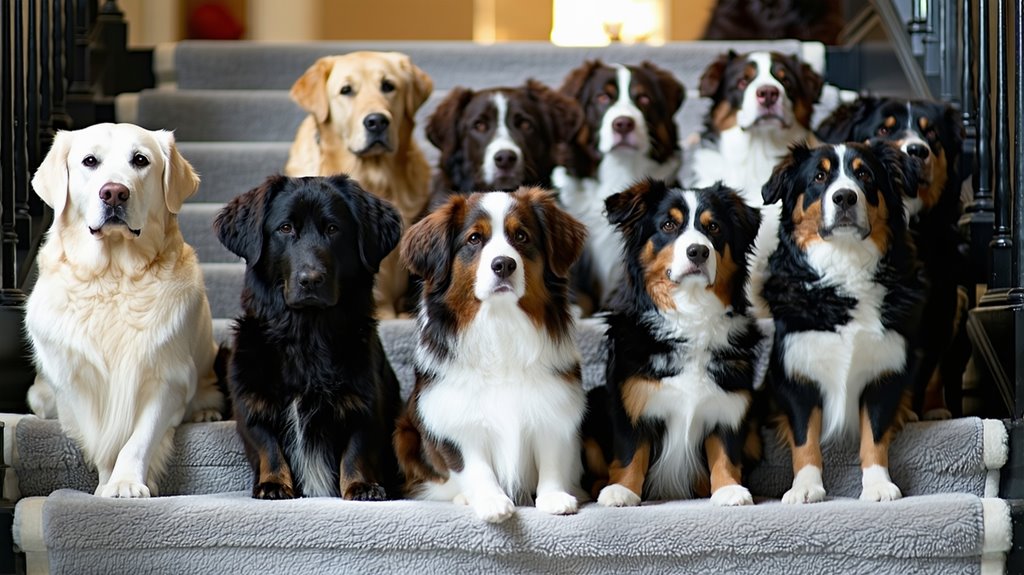
Popular depression support dogs include the gentle Golden Retriever, loyal Labrador, and intelligent Poodle, all offering proven emotional benefits through their empathetic nature. You'll find medium-sized breeds like the sensitive Vizsla excel at mood detection, while smaller companions like Cavaliers and Yorkies provide comfort in compact spaces. Your ideal match depends on your living situation and lifestyle needs, but each breed brings unique therapeutic qualities to support your mental health journey.
Some key takeaways
- Golden Retrievers and Labrador Retrievers excel as emotional support dogs due to their gentle nature, high trainability, and unwavering loyalty.
- Poodles offer hypoallergenic benefits while providing emotional support, making them ideal for individuals with both depression and allergies.
- Vizslas demonstrate exceptional emotional sensitivity and can detect mood changes quickly, offering timely comfort to depressed individuals.
- Successful support dogs share key traits: emotional intelligence, consistent gentleness, adaptable personalities, and the ability to sense mood changes.
- Proper training investment ranges from £80 to £240 for basic obedience, ensuring the dog can effectively support its owner's emotional needs.
Understanding Depression Support Dogs Vs Service Animals

While both depression support dogs and service animals can provide valuable assistance to individuals with mental health challenges, understanding their distinct roles and legal classifications is essential.
Your emotional support animals serve a comforting purpose, providing companionship and emotional relief without specialised training. On the other hand, service dogs undergo rigorous training to perform specific tasks that help manage disabilities.
If you're seeking a depression support dog, you'll need a recommendation letter from a mental health professional. This differs from service dogs, which require extensive training and certification.
While your emotional support animal can accompany you in housing regardless of pet policies, service dogs have broader access rights in public spaces.
Key Traits of Effective Support Dog Breeds

The success of your depression support dog largely depends on their inherent personality traits and characteristics. When choosing your companion, you'll want to focus on finding an intelligent dog that can quickly learn and respond to your emotional needs. A friendly disposition and affectionate nature ensure your support dog will provide the comfort you need during challenging times.
- Look for breeds known for their emotional intelligence and ability to sense mood changes.
- Choose dogs with naturally adaptable personalities that can thrive in your living situation.
- Select breeds that demonstrate consistent gentleness and patience.
- Prioritise dogs with social temperaments that interact well with people and other animals.
These fundamental traits create the foundation for a strong emotional support partnership, helping you navigate daily challenges with a reliable, loving companion by your side.
Large Breeds: Golden Retrievers and Labrador Companions

As trusted companions for emotional support, Golden Retrievers and Labrador Retrievers stand out among large breeds for their exceptional ability to provide comfort and stability.
You'll find their gentle nature and enthusiasm to please create an immediate connection that helps lift your spirits during difficult times.
Your Golden Retriever will offer a calming presence and unwavering loyalty, creating a secure environment where you can feel emotionally protected.
Meanwhile, a Labrador Retriever's natural joy and playful spirit can brighten your darkest days.
Both breeds excel at companionship, forming deep bonds that combat feelings of isolation.
They'll motivate you to stay active through daily walks and playtime, which naturally boosts your mood.
Their high trainability means they'll quickly learn to respond to your emotional needs, making them ideal partners in your journey toward better mental health.
Medium Breeds: Poodles and Vizslas for Emotional Support

Searching for the perfect medium-sized emotional support companion leads you to two outstanding breeds: Poodles and Vizslas.
These intelligent and emotionally attuned dogs offer unique therapeutic benefits that can help you navigate through depression and anxiety. You'll find that both breeds excel at providing comfort while keeping you active and engaged.
- Poodles' hypoallergenic coats make them ideal companions if you're sensitive to pet dander, while their sharp minds ensure they quickly learn to respond to your emotional needs.
- Vizslas' natural sensitivity allows them to detect your mood changes, offering comfort precisely when you need it most.
- Both breeds' exercise requirements will motivate you to maintain an active lifestyle, helping to improve your overall well-being.
- Their adaptable nature means they'll thrive in your home environment while providing consistent emotional support.
Choosing either a Poodle or a Vizsla can be a rewarding investment in your mental health, making them invaluable companions for your journey towards emotional well-being.
Small Breeds: Cavaliers and Yorkies as Comfort Partners

When considering small-breed emotional support dogs, Cavalier King Charles Spaniels and Yorkshire Terriers stand out as exceptional choices for managing depression.
These gentle companions offer unwavering emotional support while fitting perfectly into your living space, regardless of size.
You'll find that Cavalier King Charles Spaniels excel at providing comfort through their loving nature and constant desire for human connection.
Their affectionate personality helps create a strong emotional bond that can lift your spirits during difficult times.
Yorkshire Terriers, with their intelligence and friendly disposition, offer similar benefits while adding a touch of playful energy to your daily routine.
Both small dogs are easy to care for and transport, making them ideal partners for flat living.
Their natural ability to sense and respond to your emotional needs makes them invaluable companions in your journey toward better mental health.
Training Requirements and Associated Costs

The financial commitment for a depression support dog extends beyond the initial adoption costs.
When considering training requirements, it's crucial to understand that emotional support dogs don't require specialised training like service dogs do, which can save you considerably on training costs.
Your investment will vary depending on your chosen path:
- Basic obedience training (£80-£240) – perfect for ESAs
- Therapy dog training (£40-£120 per session) – if you'd like your companion to help others
- Service dog certification (£16,000-£32,000) – for specialised assistance
- Annual maintenance (£400-£960) – covering ongoing care and training refreshers
You'll find the most cost-effective option is training an emotional support dog, which mainly requires basic obedience while providing the comfort and companionship you need for depression support.
Living Space and Lifestyle Considerations

Choosing your ideal depression support dog requires careful consideration of your living environment and daily routine. Your living space plays an essential role – if you're in a flat, smaller breeds like Pugs or Cavalier King Charles Spaniels will adapt beautifully to cosy spaces while providing the emotional support you need.
Your lifestyle and energy level should match your future companion's needs. If you enjoy outdoor activities, consider active breeds like Boxers who'll motivate you to stay physically engaged. For a more relaxed pace, gentle Greyhounds offer calming companionship.
Don't forget to factor in grooming needs – while Poodles require regular maintenance, breeds like Beagles are lower maintenance. If you work from home, companion breeds like Shih Tzus will thrive, but they may not suit those who spend long hours away.
Health Screening and Maintenance Needs

Supporting your depression support dog's health through regular screenings and maintenance is essential for ensuring they can effectively assist you on your mental health journey.
As a dog owner, it's important to prioritise preventative care to maintain the strong emotional support bond you share with your furry companion.
- Schedule annual health screenings, including blood work and vaccinations, to catch potential issues early and keep your support dog in prime condition.
- Book dental cleanings and maintain parasite control to prevent discomfort that could affect your dog's ability to support you.
- Create a breed-specific diet plan that matches your dog's age and activity level.
- Commit to regular exercise and mental stimulation activities that benefit both you and your support dog's physical and emotional well-being.
Legal Rights and Registration Process

Understanding your legal rights as an emotional support dog owner can help you navigate housing, travel, and public spaces with confidence.
While registration isn't legally required, you'll need a recommendation letter from a licensed mental health professional to establish your dog's ESA status.
Your emotional support dog's primary legal protections focus on housing rights. You're entitled to live with your ESA in no-pet housing, and landlords must provide reasonable accommodations.
However, it's vital to understand that ESAs don't have the same public access rights as service dogs. Unlike service animals, your emotional support dog isn't automatically permitted in restaurants, shops, or other public spaces.
Keep your mental health professional's documentation handy for housing requests and travel arrangements – it's your most important tool for exercising your legal rights.
Success Stories and Real-World Impact
The transformative power of emotional support dogs comes to life through countless success stories and research-backed results. You'll find compelling evidence of how therapy dogs improve mental health, with studies showing a remarkable 50% reduction in anxiety levels.
These faithful companions have become lifelines for people struggling with depression, offering unconditional support and renewed purpose.
- Veterans with PTSD report significant emotional healing after partnering with trained service dogs.
- Children develop better social skills and emotional regulation through therapy dog interactions.
- 74% of pet owners experience enhanced mental well-being and reduced loneliness.
- Individuals with Major Depressive Disorder show increased motivation and daily engagement.
These success stories aren't just heartwarming anecdotes; they're backed by research proving that support dogs can transform lives, offering hope and healing to those battling depression.
Frequently asked questions
What Is the Best Dog for Someone With Depression?
You'll find great emotional support in Labrador Retrievers, as they're naturally attuned to your feelings and offer unconditional love when you need it most.
If you're seeking gentle companionship, a Golden Retriever's warm personality can help lift your spirits daily.
While these breeds are excellent choices, remember that the best dog for your depression is one you connect with personally – trust your heart when making this important decision.
What Dog Breed Is Best as an Emotional Support Dog?
Ever wondered which furry companion would be your perfect emotional anchor?
While any breed can be an excellent emotional support dog, you'll find certain breeds naturally excel in this role.
You'll love the gentle nature of Labrador and Golden Retrievers, or the intuitive companionship of Poodles and Cavalier King Charles Spaniels.
However, remember that your perfect match depends more on the individual dog's personality and how it aligns with your lifestyle and emotional needs.
What Is the Best Emotional Support Animal for Depression?
While many animals can provide emotional support, dogs are often your best choice for managing depression.
You'll find they offer unconditional love and constant companionship that's truly therapeutic. Their ability to sense your emotions and provide immediate comfort is remarkable.
Consider gentle breeds like Labradors, Golden Retrievers, or Poodles – they're naturally empathetic and loving.
Which Pet Is Best for Depression?
Dogs are your best option for managing depression, as they provide unconditional love and constant emotional support.
You'll benefit from their ability to boost your oxytocin levels while reducing stress hormones through simple interactions like petting.
They'll also get you moving with daily walks, which naturally combats depression.
While other pets can help, dogs are uniquely attuned to human emotions and can actively respond to your emotional needs.
To summarise
Choosing a depression support dog isn't just about selecting a furry friend – it's akin to discovering a lighthouse amidst the storm. Consider how 82% of support dog handlers report significant improvements in their daily functioning. Whether you're drawn to a gentle Golden Retriever or a spirited Yorkshire Terrier, you'll find a loyal companion who will stand by you through thick and thin. You've got this, and your perfect canine partner is waiting.