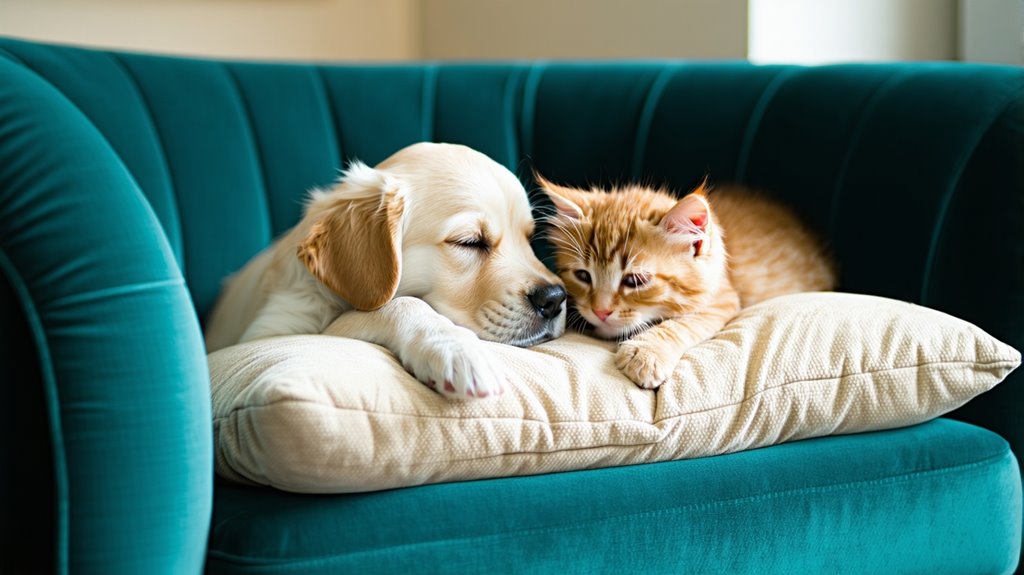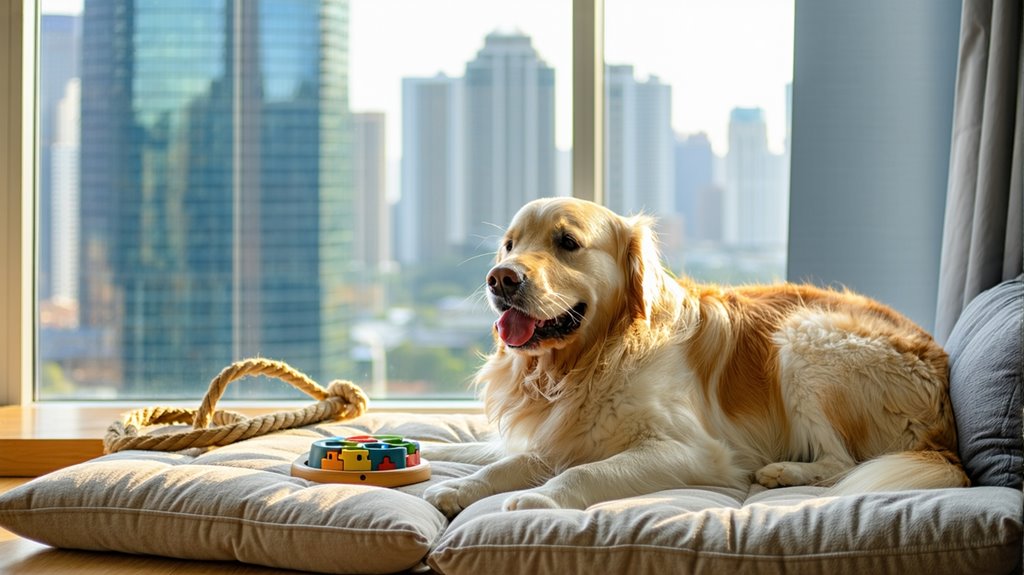
To help your city dog thrive in a small space, establish a structured daily routine that balances physical exercise and mental enrichment. Create designated zones with comfy beds and puzzle toys, while making the most of vertical space for storage. Plan regular outdoor adventures and socialisation opportunities to keep your pup engaged. Emphasise positive reinforcement training to build confidence in urban environments. These foundational elements will unlock your dog's full potential in apartment living.
Some key takeaways
- Consistent daily routines with scheduled walks, meals, and activities help dogs feel secure and balanced in urban environments.
- Smart space optimisation using vertical storage and multi-functional furniture creates designated areas for both pets and owners.
- Regular mental stimulation through puzzle toys and indoor games prevents boredom and maintains emotional well-being.
- Frequent outdoor adventures and socialisation opportunities balance limited indoor space with enriching experiences.
- Positive reinforcement training focused on quiet commands and city desensitisation helps dogs adapt to apartment living.
Creating a Structured Daily Routine for Urban Dogs

While adapting to life in a small urban space can pose challenges for dogs, establishing a structured daily routine provides them with the stability and predictability they need to thrive.
You'll want to create a daily schedule that includes 30 minutes to 2 hours of activity, mixing physical exercise with mental stimulation. Set consistent times for walks, potty breaks, and meals to help your dog feel secure in their urban living environment.
Don't forget to incorporate dedicated quiet periods for rest and recovery from city stimuli. Make socialisation a regular part of your structured routine through scheduled playdates or visits to the dog park.
Your dog will quickly adjust to small space living when they know what to expect each day. Use positive reinforcement to strengthen these routines, especially during potty training sessions.
Maximizing Limited Space Through Smart Design
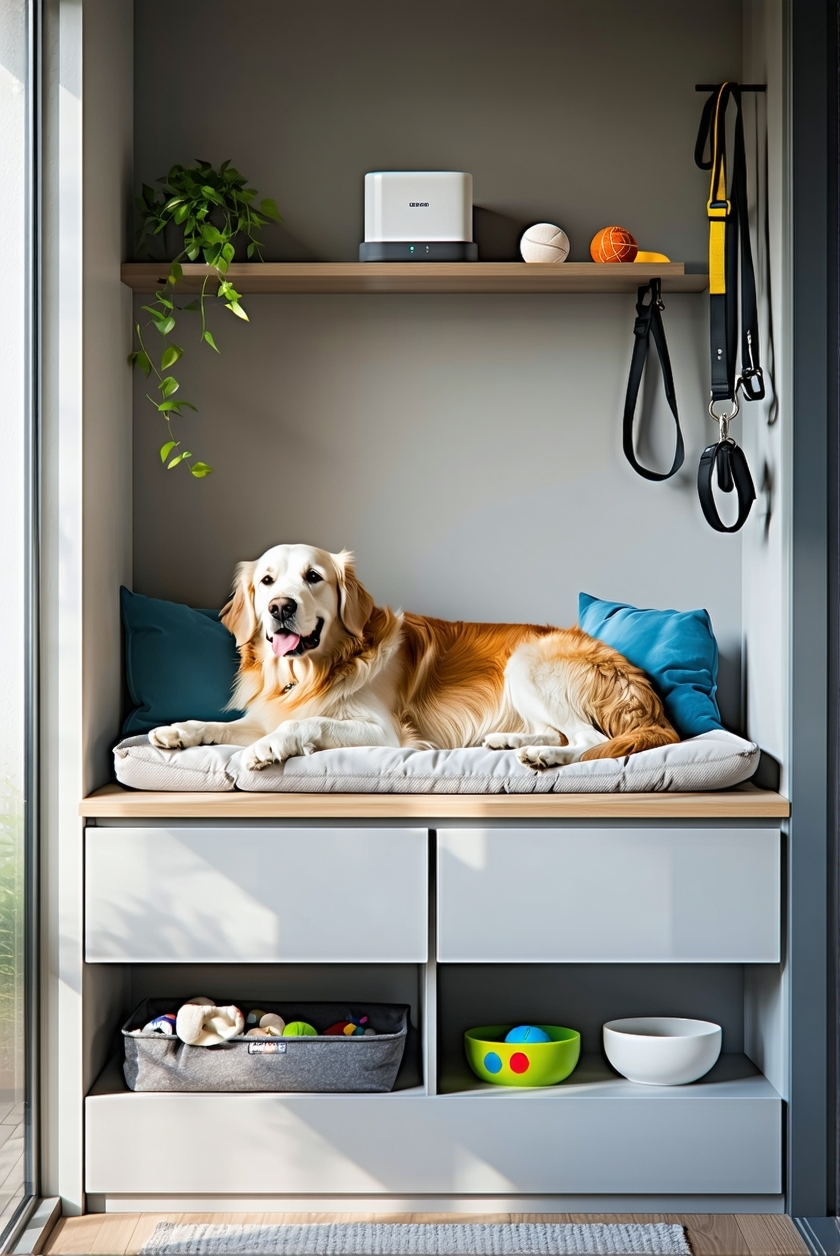
Living in a small urban space doesn't mean compromising your dog's comfort and wellbeing. You can transform your compact flat into a dog-friendly haven through clever design choices. Start by creating designated dog zones that give your furry friend a sense of belonging and security.
Make the most of your vertical space by installing wall-mounted shelves for toys and supplies, keeping everything organised while freeing up valuable floor area.
Invest in foldable dog furniture that you can easily store when not in use, and consider multi-functional furniture pieces that serve both you and your pet.
Get creative with indoor activities by setting up temporary obstacle courses using household items.
These thoughtful design solutions help you and your dog thrive in an urban environment while maintaining a comfortable, efficient living space.
Building Strong Bonds in Close Living Quarters

Small spaces create unique opportunities to develop an extraordinary connection with your dog. When you share a cosy living environment, you'll find yourself more attuned to your pet's needs, fostering a deeper bond through constant interaction and awareness.
Your close proximity naturally enhances communication, as you learn to read each other's signals and adapt to shared routines.
Living in small spaces means you'll spend more quality time together, strengthening trust and companionship through daily activities like walks and play sessions.
You'll become more intentional about creating comfort zones for your furry friend, making every square foot count.
These shared experiences in close quarters lead to a more responsive relationship, where you're both more aware of each other's patterns and preferences, creating a truly special connection.
Balancing Indoor Comfort With Outdoor Adventures
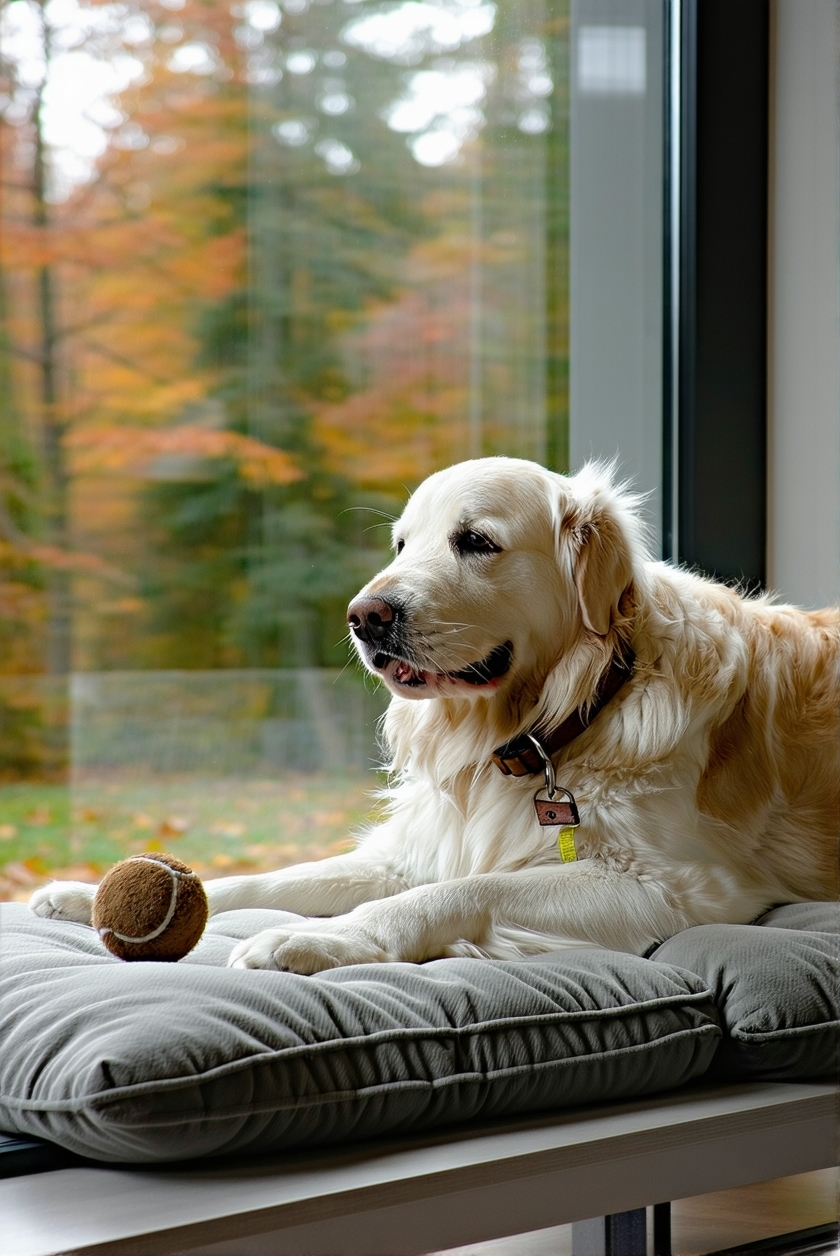
Creating a harmonious balance between indoor comfort and outdoor adventures is essential for city dogs living in small spaces. Your urban companion can thrive when you establish a structured lifestyle that combines cosy indoor retreats with regular outdoor activities.
Make your space work for both you and your dog by implementing these key strategies:
- Designate dedicated indoor zones with comfy beds and enrichment toys.
- Schedule daily outdoor exercise routines that include walks and visits to the park.
- Set up indoor obstacle courses and puzzle games for mental stimulation.
- Utilise nearby green spaces for adventure and socialisation opportunities.
You'll find that this balanced approach helps your dog adapt to small-space living while maintaining their physical and emotional well-being.
Adapting Training Methods for Apartment Success
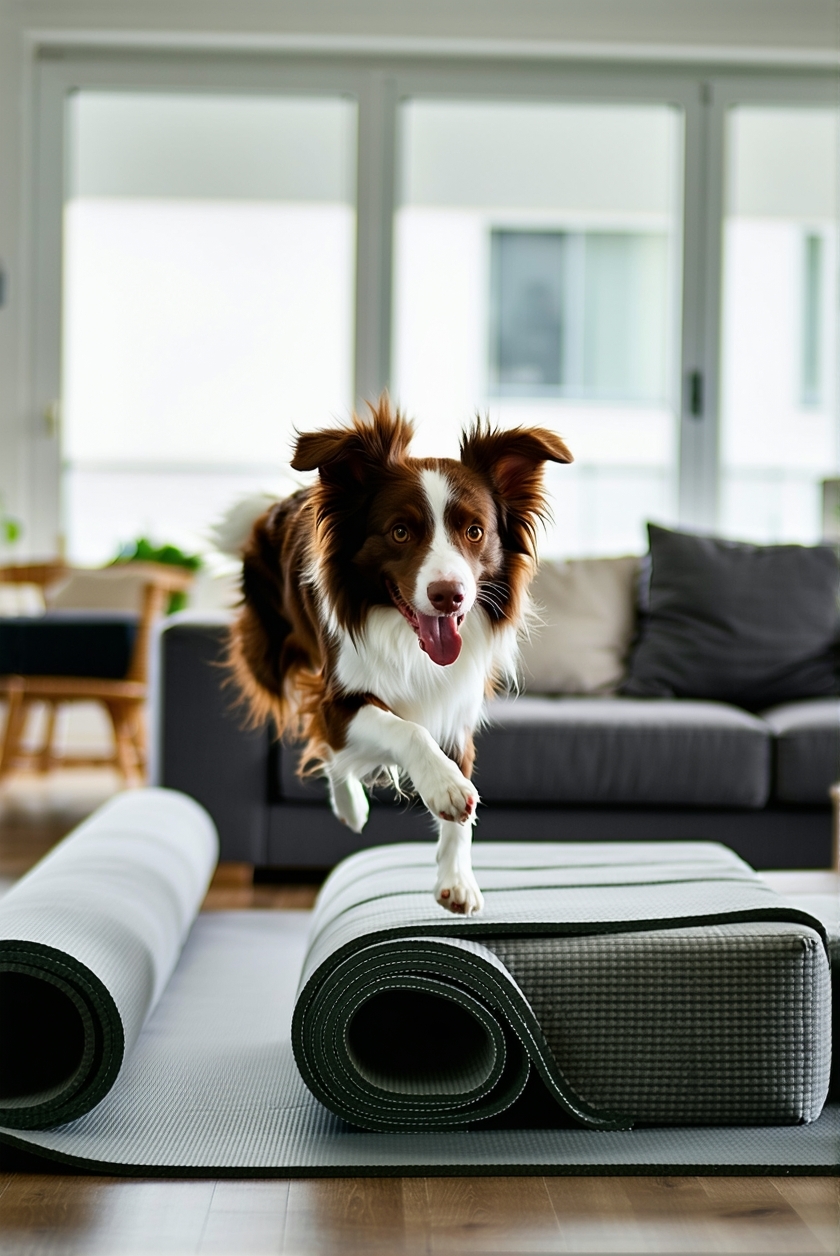
While apartment living presents unique challenges for dog training, you can adapt traditional methods to create a successful urban training programme. Start by establishing a consistent training routine that reinforces basic commands in your small space, ensuring it's dog safe and conducive to learning.
You'll want to focus on desensitisation techniques to help your pup adjust to the various noises and distractions of city life. Incorporate puzzle toys and indoor obstacle courses to provide mental stimulation, which helps prevent behavioural issues caused by boredom.
Teaching quiet commands is essential for apartment harmony, and you'll see better results by using positive reinforcement when your dog responds well in challenging situations.
With patience and dedication, you'll develop a fully trained companion who's comfortable in confined spaces and ready to tackle urban adventures.
Frequently asked questions
Why Do Dogs Like to Go in Small Spaces?
Your dog's fondness for small spaces stems from their natural denning instinct, where they feel safe and protected.
When they curl up in snug spots, they're mimicking their ancestors' behaviour of seeking secure shelters.
You'll observe that they're most relaxed in these cosy nooks, as it helps alleviate their anxiety and provides a sense of being enveloped in comfort – much like a warm, protective hug.
What Is the Best Dog for Small Spaces?
When you're searching for the perfect companion for a small space, French Bulldogs, Pugs, and Cavalier King Charles Spaniels are your top choices.
You'll appreciate how these breeds adapt seamlessly to apartment living with their laid-back personalities and modest exercise requirements. They tend to be naturally quiet and won't disturb your neighbours.
If you're in pursuit of an even smaller friend, you can't go wrong with a Chihuahua or a Yorkshire Terrier – they'll flourish in your snug home.
Can Dogs Live in Small Spaces?
Meet Sarah's Bulldog, Max, who lives happily in a 500-square-foot flat!
Yes, your dog can absolutely thrive in a small space. You'll just need to focus on meeting their exercise needs with daily walks and playtime (30 minutes to 2 hours), creating designated pet zones in your home, and providing mental stimulation through training and interactive toys.
When you maintain a consistent routine and offer plenty of love, your pup will flourish regardless of square footage.
Can Dogs Be Happy in the City?
Yes, your dog can absolutely be happy in the city!
You'll find that urban dogs thrive when you create a structured routine of daily walks, social interactions at dog parks, and mental stimulation at home.
You're actually giving your pup wonderful opportunities for diverse experiences and constant companionship.
To summarise
You might worry that city living isn't fair to your dog, but urban pups can truly thrive with the right approach. By creating smart routines, maximising your space, and strengthening your bond through targeted training, you'll help your dog adapt beautifully to apartment life. Remember, it's not the size of the space that matters most – it's how you use it to enrich your dog's daily experience and meet their needs.