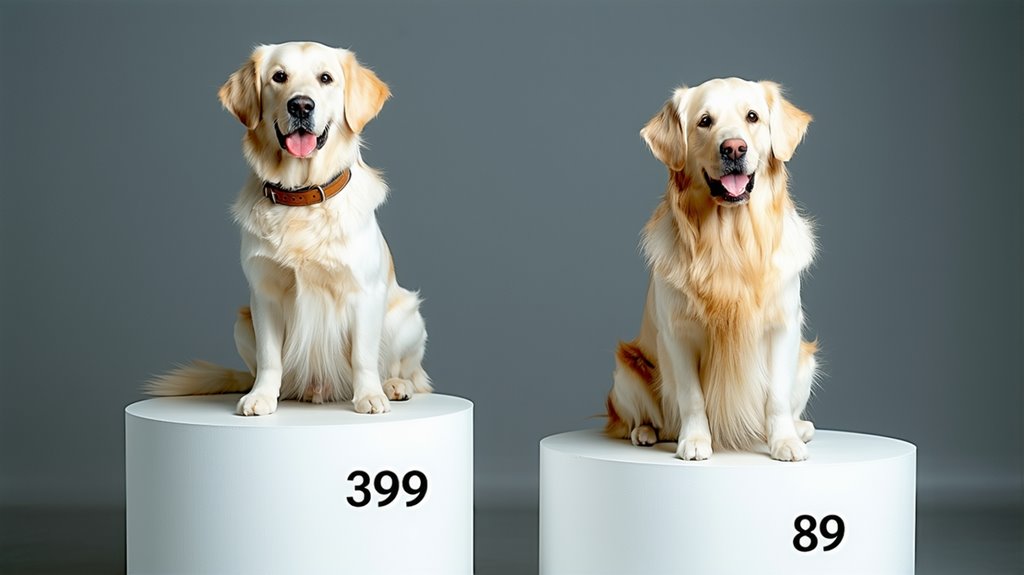
Private dog training sessions are significantly more expensive than group classes, with average rates of £60.47 compared to £19 per session. The location also affects pricing, as private lessons can range from £35 in Sunderland to £70 in London. Group classes typically accommodate up to 12 dogs, whereas private sessions provide more focused attention. Additionally, package deals and payment plans can help reduce costs for both options. Understanding these key differences will assist you in making a well-informed investment in your dog's development.
Some key takeaways
- Private lessons cost significantly more at £60.47 per session compared to group classes at £19.00 per session.
- Group classes accommodate up to 12 dogs, making them more cost-effective per hour of training time.
- Location impacts pricing, with private lessons ranging from £35.00 in Sunderland to £70.00 in London.
- Package deals and upfront booking discounts are more commonly available for private training sessions.
- Group classes provide better value for basic training, while private sessions are more cost-effective for addressing specific behavioural issues.
Cost Comparison: Group Sessions Vs One-On-One Training

When choosing between dog training options, understanding the cost differences between group and private sessions can help you make an informed decision.
Group classes offer an affordable entry point at around £19 per session, whether you're training your dog as a puppy or an adult. These group classes typically include up to 12 dogs, making the average price considerably lower than private lessons.
Private lessons with experienced trainers cost considerably more, averaging £60.47 per session, but provide focused attention for addressing specific behavioural issues.
While one-on-one training comes at a premium, you'll benefit from personalised solutions and flexible scheduling. If your dog has particular challenges, private lessons offer targeted support that group training can't match.
Consider your dog's needs and your budget when weighing these options.
Hidden Fees and Package Pricing
Although dog training packages may seem straightforward at first glance, you'll need to account for potential hidden costs and special pricing structures.
When exploring your options, be sure to ask dog trainers about additional fees for training materials or follow-up consultations that might affect your overall expenses.
While private lessons typically cost more than group classes, you can reduce training costs by taking advantage of package pricing. Many trainers offer substantial discounts when you book multiple private lessons upfront.
If you're seeking a budget-friendly option, consider combining group classes with occasional private sessions. You can also maximise savings by attending training during off-peak times or special promotional events.
Remember to get a clear breakdown of all fees before committing to ensure there aren't any unexpected charges later.
Long-Term Value and Results

The long-term value of dog training extends far beyond the initial investment. When weighing the price of dog training options, consider how each approach shapes your dog's behaviour differently.
Group sessions at £19 offer exceptional value for socialisation while building foundational skills alongside other dogs. Private training at £60.47 delivers concentrated, personalised attention that can quickly resolve specific behavioural challenges.
You will find the most thorough results by combining both training approaches in your training plan. While group classes help your dog develop essential social skills and basic commands cost-effectively, private sessions allow your trainer to address your pet's unique needs.
This balanced approach might initially cost more, but it delivers superior long-term value through well-rounded behavioural development and lasting results.
Location-Based Price Variations

Location significantly influences dog training prices across the UK, resulting in distinct regional cost patterns that are worth exploring.
There are notable variations between cities; for instance, private lessons in London can cost around £70, whereas dog owners in Sunderland may pay approximately £35 for similar services.
If you're seeking more cost-effective options, group training sessions provide substantial savings across different regions. You can expect to pay about £19.10 for puppy training and £19.31 for adult dog training in group settings.
Furthermore, location-based price variations also impact specialised training, with services like aggression management averaging £67.50 per session.
These discrepancies reflect the local market's demand and the living costs trainers encounter in urban areas. Understanding these regional price patterns can help you make informed decisions about which training format best suits your budget and requirements.
Payment Plans and Financing Options

Understanding that dog training can represent a significant investment, many professional trainers now offer flexible payment solutions to make their services more accessible.
You'll find that both private dog training and group training programmes often provide payment plans that allow you to spread costs over several months, making high-quality training more manageable for your budget.
When you're exploring financing options, you'll discover that many trainers offer package deals that include valuable extras such as follow-up sessions and training materials.
You can maximise your savings by booking multiple sessions upfront, as trainers frequently provide discounts for longer commitments.
Don't hesitate to ask about available promotions or financial assistance programmes – many facilities actively work to help you find the most cost-effective way to access their training expertise.
Frequently asked questions
What Is the Rule of 3 in Dog Training?
The Rule of 3 means you'll need to teach your dog a command in three different environments before they truly understand it.
When you're working with your pup, you'll want to practice commands in various locations – such as your living room, garden, and local park.
This helps your furry friend generalise the behaviour and respond reliably no matter where you are.
It's a proven method that will strengthen your bond while building consistent responses.
How Much Does Dog Training Cost in the UK?
Holy fetch, you'll find that dog training costs vary quite a bit in the UK!
You're looking at around £50 for an average session, but location is a significant factor. In London, you could pay up to £70, while Sunderland is more wallet-friendly at £35.
If you're interested in group classes, you can expect to spend about £19 per session.
For one-on-one training, anticipate paying between £30 and £100, with specialised training, such as aggression management, costing around £67.50 per session.
Is Group Training Good for Dogs?
Yes, group training can be fantastic for your dog!
You'll find it provides essential social experiences as your pup learns alongside other dogs. It's great for teaching basic obedience while exposing them to real-world distractions in a controlled setting.
Your dog will learn to focus despite exciting stimuli, which is vital for daily life.
However, if your dog shows severe anxiety or aggression, you'll want to consider private training instead.
What Is the Best Dog Training Certification in the UK?
You might be surprised to learn there's no single "best" certification, but the APDT UK stands out as one of the most respected credentials you'll find.
It's widely recognised for its focus on positive reinforcement methods and a thorough training approach.
You'll also find excellent credibility with the Kennel Club's Accreditation Scheme, IMDT, and BIPDT certifications.
What matters most is choosing a certification that aligns with your commitment to force-free, science-based training methods.
To summarise
Whether you choose group or private training, you're investing in your dog's future behaviour and well-being. You'll find success through consistent practice, professional guidance, and the right training format for your needs. By understanding price structures, exploring payment options, and evaluating long-term value, you can make an informed decision that benefits both your budget and your dog's development.