Indoor puppy potty training in apartments can be successful with the right setup. You'll want to start with either real grass patches or space-saving synthetic systems that trigger your pup's natural instincts. Create a designated potty area with antimicrobial surfaces and establish a consistent schedule, taking your puppy there every hour initially. Keep cleaning supplies handy and maintain freshness with weekly washing. The key to apartment success lies in the details of your chosen system.
Some key takeaways
- Real grass patches provide a natural potty solution that can train puppies in just seven days while fitting well in apartment spaces.
- Indoor potty systems featuring synthetic grass or absorbent pads offer space-efficient alternatives for small urban living areas.
- Designated potty areas with antimicrobial surfaces and odour control features help maintain cleanliness and freshness within the apartment.
- Multi-functional enclosures blend seamlessly with home décor while concealing potty areas, making them ideal for limited apartment space.
- Regular maintenance using enzymatic cleaners and weekly washing of potty surfaces prevents odours and maintains hygiene.
Real Grass Patches: Nature's Solution for Indoor Training
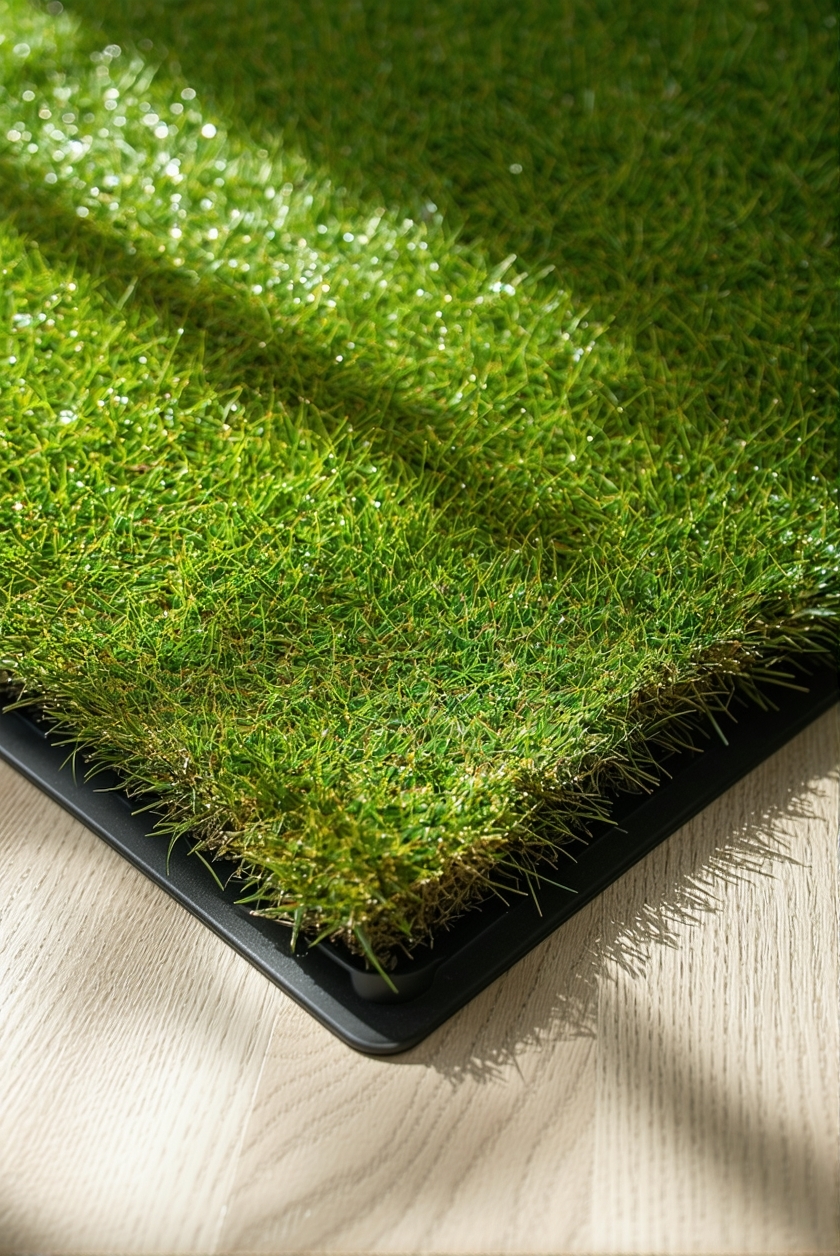
Nature's brilliance shines through in real grass patches, offering a seamless indoor potty training solution for your puppy. These patches are particularly effective as they trigger your pup's natural instincts, making potty training in your flat considerably easier.
With real grass as your designated potty area, you can train your puppy in as little as seven days. The familiar texture and scent help reduce accidents while preparing your furry friend for the eventual shift to outdoor habits.
For flat dwellers, these patches are a game-changer, eliminating the need for constant trips outside. While potty pads work, real grass provides a more natural experience.
Just remember to maintain your grass patch regularly through watering and occasional replacement to keep it fresh and effective for your pup's needs.
Space-Saving Potty Systems for Urban Living
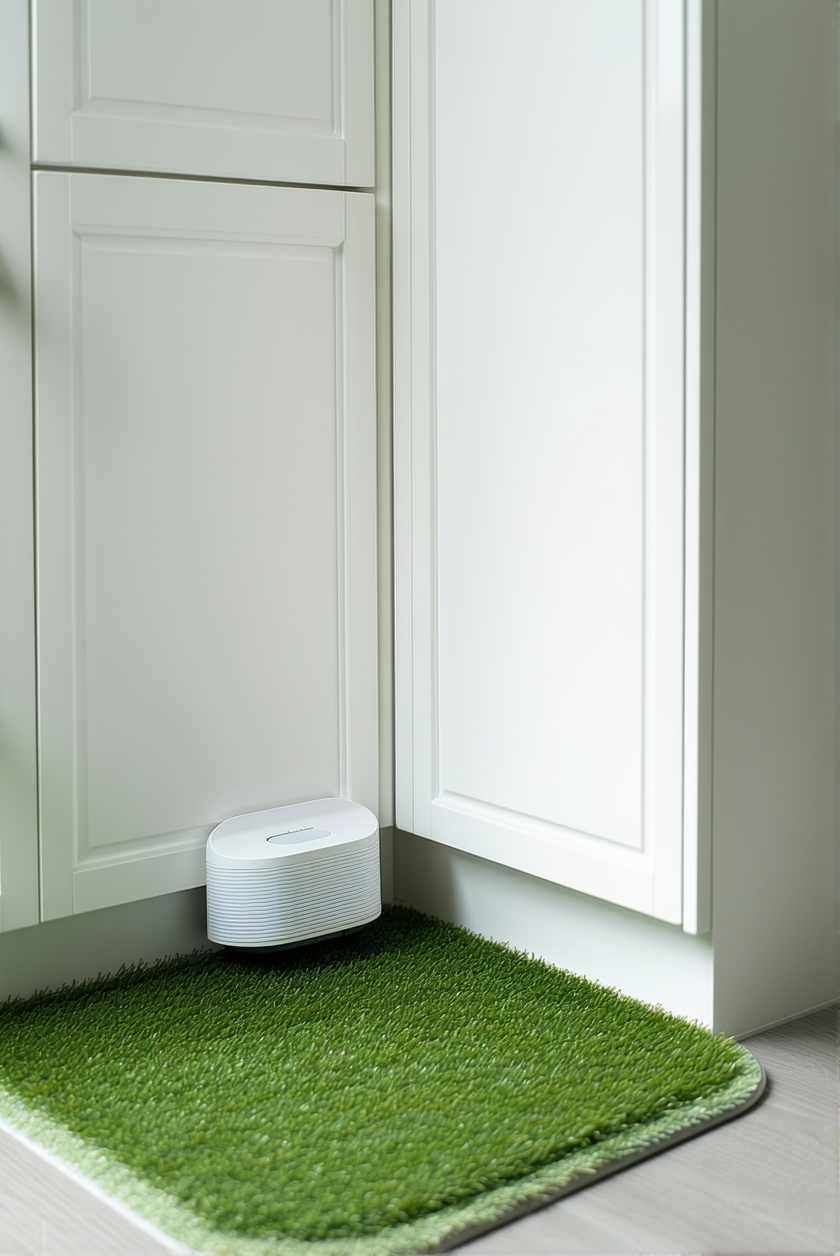
Living in a compact urban space doesn't mean you have to compromise on your puppy's potty training needs.
Today's innovative space-saving solutions make it easy to potty train your puppy while maximising your flat's limited square footage. From synthetic grass pads to elevated designs, you'll find options that fit perfectly in your designated area.
Here's what makes modern indoor potty systems ideal for urban living:
- Real grass mats that provide a natural feel while fitting neatly in compact spaces
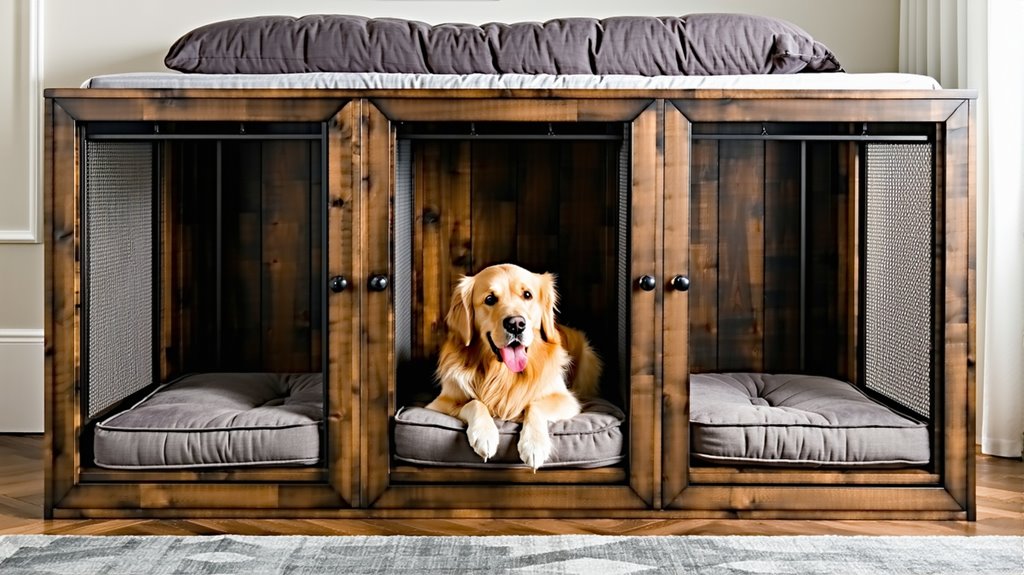
- Multi-functional enclosures that blend with your décor while concealing the potty area
- Low-threshold designs for easy access, particularly helpful for frequent potty breaks
- Space-efficient synthetic grass pads that can be placed on balconies or tucked into corners
With these solutions, you can create a comfortable potty training environment using positive reinforcement, regardless of your living space.
Training Schedules That Work in Small Spaces
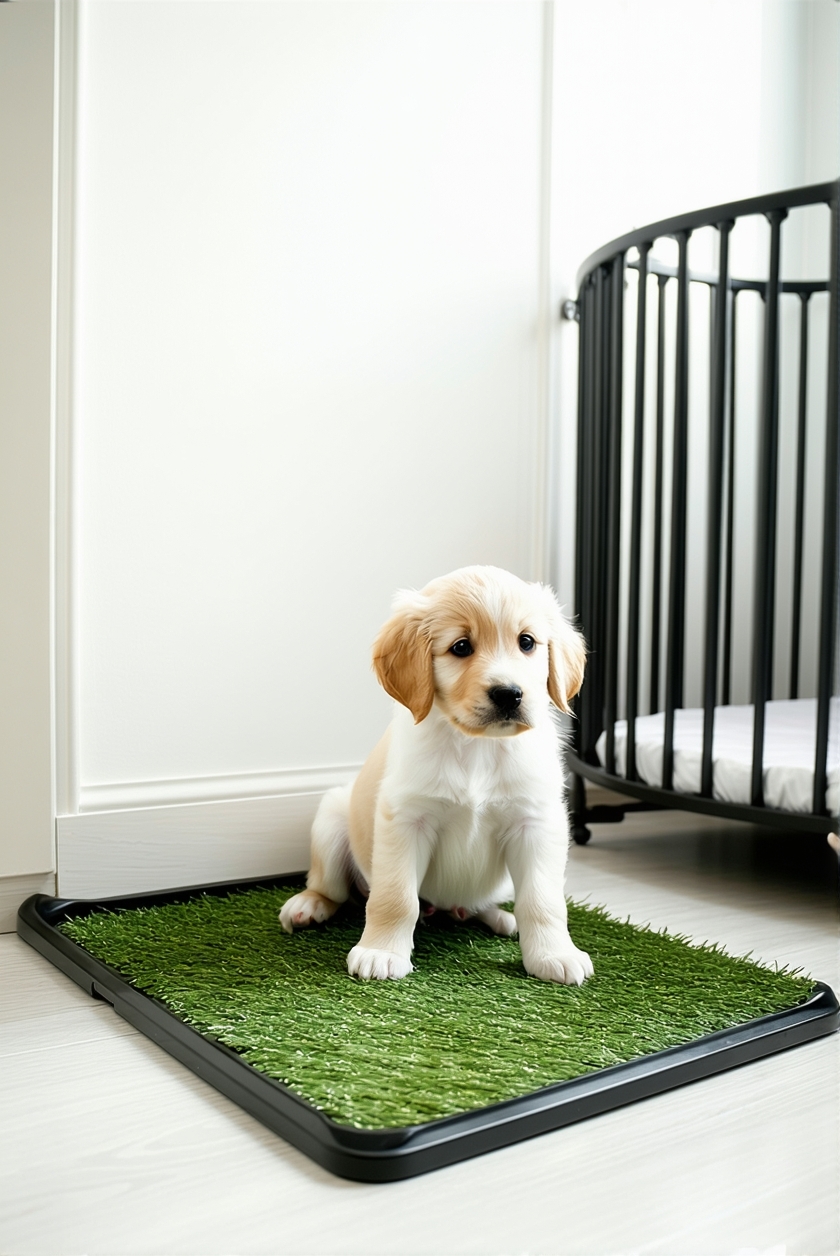
Three key elements make a successful potty training schedule work in small spaces: consistency, timing, and observation.
When you create your training schedule, plan for potty breaks every hour, especially in an indoor dog setup. Keep a puppy potty log to track when your little one needs to go outside or use their indoor grass area.
Monitor your puppy closely for telltale signs like sniffing or circling—these behaviours signal it's time for a potty break.
House training in small spaces requires you to be extra vigilant about regular potty visits, particularly after meals and naps.
Remember that younger puppies need more frequent breaks, following the one-hour-per-month-of-age rule.
Clean up accidents immediately and always reward successful potty trips to reinforce good habits.
Essential Tools and Setup for Apartment Success
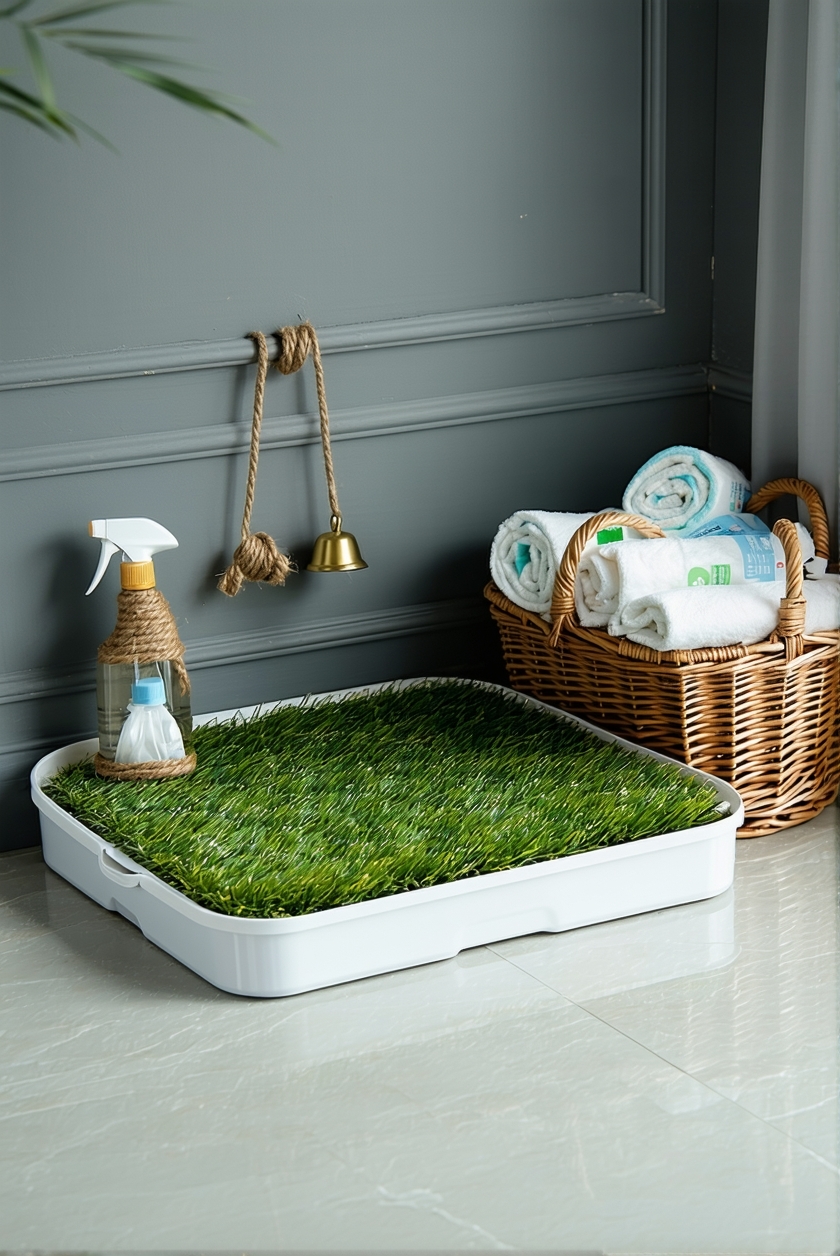
A well-equipped indoor potty setup forms the foundation of successful apartment training.
You'll want to create a designated area that makes your puppy feel comfortable while keeping your living space fresh and clean. Start with high-quality potty pads or a Fresh Patch, and establish a convenient dog waste station nearby for quick cleanup.
- Choose antimicrobial surfaces with odour control features to maintain apartment freshness.
- Set up your indoor potty in a quiet, easily accessible corner where your puppy won't be disturbed.
- Install absorbent liners beneath the potty area to prevent leakage and protect your floors.
- Keep cleaning supplies within reach for immediate accident response.
Remember to monitor signs that your puppy needs to go, and guide them to their designated area on a regular schedule.
This setup will help create positive associations with proper elimination habits.
Maintaining a Clean and Odor-Free Environment
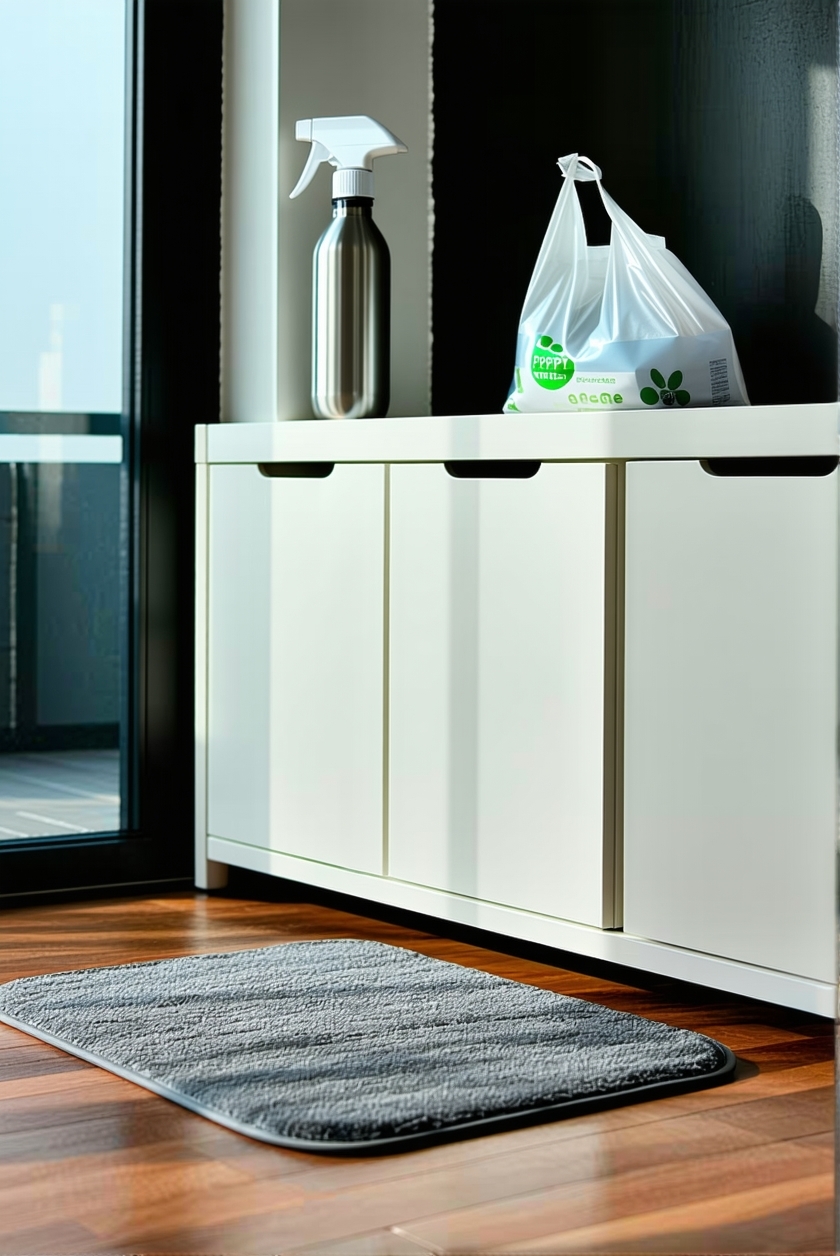
When it comes to indoor puppy potty training, maintaining a pristine environment is essential for both your pet's health and the freshness of your home.
You'll want to establish a regular cleaning schedule using enzymatic cleaners that effectively eliminate odours from when your puppy needs to go.
To maintain hygiene, wash pee pads or your Grass Patch at least weekly, and consider investing in antimicrobial surfaces that resist bacterial growth.
Place your potty solution in a well-ventilated area, and use a dedicated waste container with a sealed lid for proper disposal.
For maximum odour control, look for potty solutions featuring absorbent liners that trap unpleasant smells.
Frequently asked questions
How to Potty Train a Puppy in an Apartment?
You'll need to create a consistent indoor potty spot for your apartment puppy using either real grass patches or puppy training pads.
Take your puppy there every hour, especially after meals, naps, and playtime.
Keep a close eye on them for signs like sniffing or circling, and quickly guide them to their designated spot.
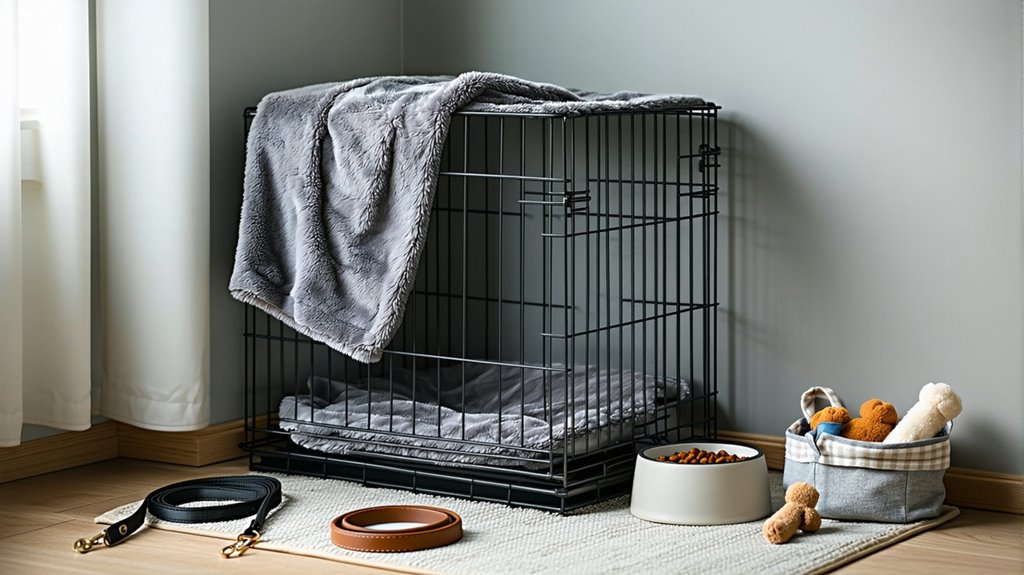
Use a crate when you can't supervise them, and always reward successful potty trips with treats and praise.
Consistency and patience are essential in this process.
How Do Dogs Go to the Toilet in Apartments?
You've got several reliable options for your dog's bathroom needs in an apartment.
You can train them to use pee pads, indoor grass mats, or specialised dog potties that mimic outdoor surfaces.
You'll need to establish a consistent schedule and watch for signs like sniffing or circling that indicate they need to go.
If you're working with a puppy, remember they'll need more frequent breaks – about every hour per month of age.
How Do I Stop My Puppy From Peeing Indoors?
You'll need a consistent schedule to prevent indoor accidents.
Take your puppy out every 2-3 hours, especially after meals, naps, and playtime.
Watch for signs like sniffing or circling – these indicate your pup needs to go.
When they pee outside, reward them immediately with treats and praise.
Keep a close eye on your puppy indoors, and use a crate when you can't supervise.
Clean any accidents with enzymatic cleaners to remove tempting odours.
Where Should My Dog Poop if I Live in an Apartment?
Just like creating a cosy nest for your furry friend, you'll want to establish a comfortable potty solution.
For apartment living, you've got several options: real grass patches like Fresh Patch, synthetic grass mats, or pee pads in a consistent spot.
If you're able, take your pup outside regularly – ideally every few hours.
Can't make it outdoors? Set up a designated indoor area, but keep it away from where you eat and sleep.
To summarise
Indoor potty training your pup in a flat isn't exactly a stroll in the park, but you're now equipped with practical solutions that will make your life easier. Like a well-oiled machine, your combination of real grass patches, space-efficient systems, and consistent schedules will lead to success. Remain patient and committed to maintaining a fresh-smelling environment, and you'll create a comfortable home that works for both you and your furry friend.