Planning for your puppy's first year requires budgeting for seven key expenses: essential supplies (£370-£425), veterinary care including vaccinations (£40-£70) and microchipping (£10-£30), monthly nutrition (£25-£50), training classes (£50-£120), insurance coverage (starting at £9.74 per month), grooming services, and professional pet care support. You will need between £2,000 and £3,000 for the first year, and understanding these costs helps you prepare a solid financial foundation for your new companion.
Some key takeaways
- Initial startup supplies, including beds, bowls, and toys, require a budget of £370 to £425 for essential equipment.
- First-year veterinary care costs encompass vaccinations (£40 to £70), microchipping (£10 to £30), and spaying/neutering (£100 to £365).
- Monthly nutrition costs range from £25 to £50, with additional expenses for training treats and dietary supplements.
- Training classes are priced between £50 and £120 for six-week courses, while private sessions are available at £20 per hour.
- Pet insurance starts at £9.74 per month, and it is advisable to establish an emergency fund of £500 to £1,000 for unexpected expenses.
Essential Puppy Supplies and Setup Costs
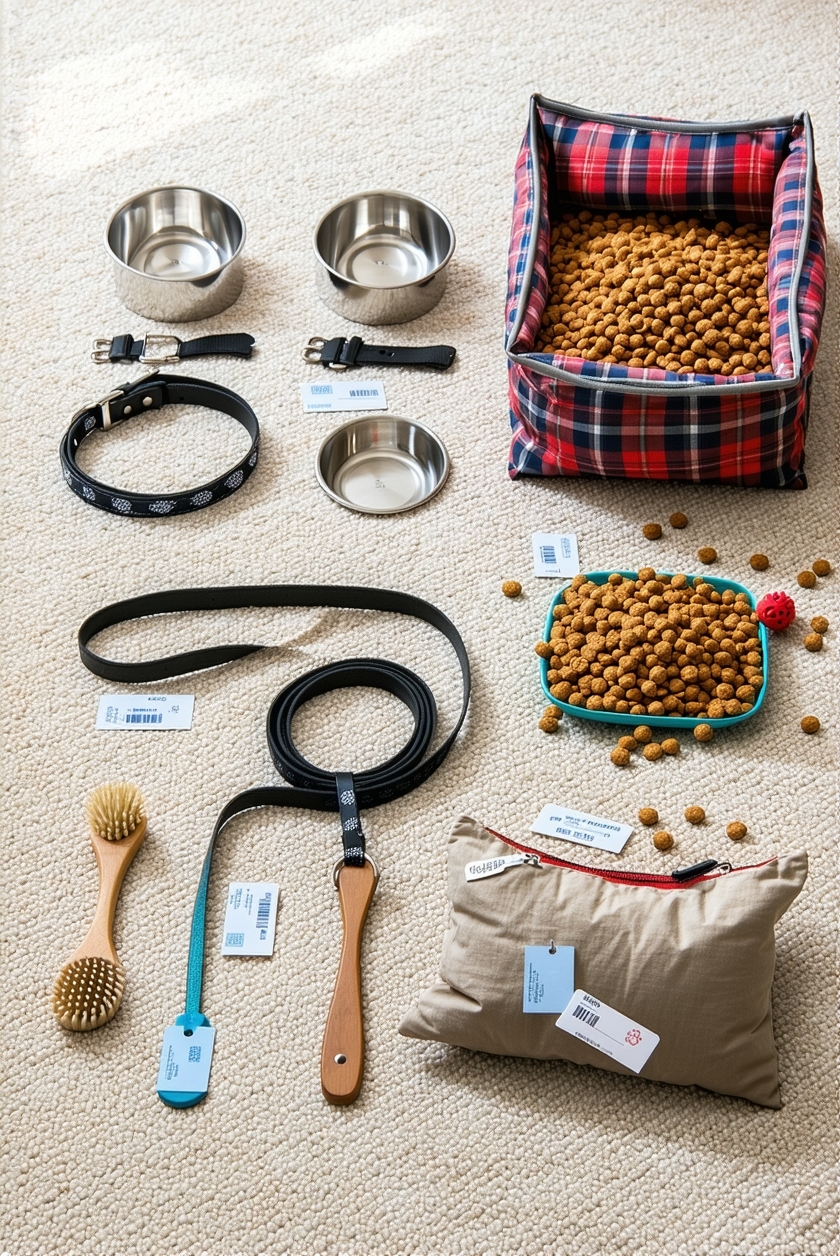
When bringing a new puppy home, you'll need to budget at least £370-£425 for essential startup supplies and equipment. Your initial costs will cover vital items like beds, bowls, collars, harnesses, leads, ID tags, and toys that your puppy needs to feel comfortable and secure in their new environment.
Don't forget to factor in essential puppy supplies like age-appropriate food, which typically costs £25-£50 monthly.
Vaccination costs range from £40-£70, while regular flea treatments are an ongoing cost you'll need to maintain.
You'll also need to ensure compliance with microchipping, which costs between £10-£30, as it's a legal requirement in the UK.
Consider investing in a crate as a worthwhile setup expense, particularly for larger breeds, where costs can exceed £100.
These setup expenses create a foundation for successful puppy training classes and long-term care.
Veterinary Care and Preventive Health Expenses

Keeping your puppy healthy requires a significant investment in veterinary care and preventive treatments during their first year.
You'll need to budget for initial vaccinations, which typically cost between £40 and £70, with annual boosters ranging from £50 to £60. Microchipping, legally required by eight weeks, costs between £10 and £30 and is often bundled with vaccination packages.
One of your largest veterinary expenses will be spaying or neutering, which can cost between £100 and £365 depending on your puppy's size and breed.
Don't forget to account for regular veterinary check-ups to monitor your puppy's development. For ongoing preventive health, you'll need to factor in monthly flea treatments at around £5 and periodic worming treatments costing between £10 and £15 each.
While these costs for your puppy may seem substantial, they're essential investments in your pet's long-term wellbeing.
Nutrition and Feeding Requirements

Proper nutrition is one of the most vital ongoing expenses for your new puppy.
You'll need to budget between £25 and £50 per month for dog food, depending on your chosen brand and your puppy's nutritional needs. A balanced diet often combines wet and dry food to provide ideal nourishment.
Don't forget to factor in training treats into your feeding budget, which typically cost around £3 per pack. While these treats are essential for effective training, it's important to monitor their use carefully to prevent health problems that could lead to unexpected veterinary costs.
Although high-quality puppy food might appear expensive initially, investing in premium ingredients can actually save you money in the long run by supporting your puppy's overall health and reducing potential medical expenses.
Training Classes and Behavioral Development

Training classes represent a significant investment in your puppy's future well-being, with costs ranging from £50 to £120 for comprehensive six-week courses.
During your pup's first year, it's essential to consider various training options to ensure proper behavioural development and essential socialisation.
You can choose between private training lessons at £20 per hour for personalised attention, or opt for more affordable group training classes at around £10 per hour.
If you're looking to enhance your puppy's obedience skills, intensive training courses are available for approximately £100.
While the financial implications of training may seem substantial, they're crucial for preventing future behavioural issues.
Consider combining group classes for socialisation with occasional private sessions to address specific challenges, thereby creating a balanced approach to your puppy's development that suits your budget.
Insurance Coverage and Emergency Fund Planning

When planning for your puppy's first year, securing comprehensive insurance coverage and establishing an emergency fund should be top priorities.
With average premiums starting at £9.74 per month, you'll find various coverage options including lifetime and accident-only policies to help manage unexpected costs.
It's advisable to set aside between £500 and £1,000 for initial emergencies, as insurance won't cover everything, particularly routine care and pre-existing conditions.
Keep in mind that veterinary bills for basic check-ups and vaccinations typically range from £40 to £100, while potential expenses over your pet's lifetime can reach £30,000 depending on breed and health issues.
Consider your long-term financial strategy carefully, weighing different insurance plans against your ability to self-fund veterinary bills through a dedicated emergency fund.
Grooming Services and Maintenance Needs

Regular grooming and maintenance represent a significant portion of your puppy's first-year expenses, with costs varying dramatically based on breed and coat type.
Professional grooming services can range from £25 to £55 per session, and you'll need to factor in additional costs for dental care, which can reach up to £500 annually.
While you might consider DIY grooming to save money, it's important to weigh this against your skill level and your dog's specific needs.
Regular grooming isn't just about appearance – it's vital for maintaining coat health and preventing costly vet bills further down the line.
To stay ahead of maintenance needs, create a dedicated budget that accounts for both routine care and professional grooming sessions, especially if you've chosen a breed with high grooming demands.
Professional Pet Care and Support Services

Professional pet care and support services make up a significant portion of your puppy's first-year expenses, often surprising new owners with their considerable impact on monthly budgets.
You'll need to account for dog walking services, which can range from £15 to £30 per visit, along with regular grooming sessions that cost between £25 and £55, particularly for long-coated breeds.
Puppy training classes are essential for early socialisation, typically costing £10 to £20 per session, with comprehensive six-week programmes averaging £100.
Don't forget about pet insurance, which is crucial for covering unexpected veterinary bills and can range from £100 to £600 or more annually.
While mobile groomers and specialised trainers offer convenience, they often charge premium rates.
Planning for these ongoing grooming needs and professional pet care services will help you maintain a realistic monthly budget.
Frequently asked questions
What Is a Realistic Budget for a Dog?
You'll need to budget between £1,000 and £3,000 for your dog's first year, which covers initial costs such as adoption fees and vaccinations.
You should plan for monthly expenses of £150-£250 for food, insurance, and grooming.
Don't forget to set aside money for unexpected vet visits, which can exceed £1,000.
Your ongoing annual costs will typically range from £600-£1,200 for routine care and treatments.
How Much Should I Pay for a Puppy in the UK?
Imagine bringing home that perfect furry companion – but let's discuss sensible pricing first.
In the UK, you'll find puppies ranging from £400 to £4,000, depending on the breed you have your heart set on. If you're mindful of your budget, consider adopting from rescue centres, where costs typically range from £100 to £300, often including initial healthcare.
When purchasing from breeders, expect to pay between £1,000 and £2,500 for most popular breeds.
Remember to also account for those essential first-year costs!
Is the First Year With a Puppy the Hardest?
Yes, your first year with a puppy is typically the most challenging.
You'll face intensive training demands, sleepless nights during house training, and constant supervision during the teething phase.
You're also dealing with vaccinations, socialisation windows, and establishing routines.
However, don't let this discourage you – the bond you'll develop during this time is incredibly rewarding, and the challenges become easier as your puppy matures.
How Expensive Should a Puppy Be?
You'll find that puppy prices vary considerably, but you shouldn't simply seek out the cheapest option.
While you can adopt from rescue centres for £100-£300, purebred puppies typically cost between £400-£4,000 depending on the breed.
To summarise
Planning for your puppy's first-year expenses will help you provide the best care possible while avoiding financial stress. Dr. Sarah Chen, a veterinary financial advisor, recommends setting aside at least £3,000 for initial costs. You'll find that investing in quality supplies, preventive care, and proper training early on can save you money in the long run and ensure your puppy grows into a healthy, well-adjusted adult dog.