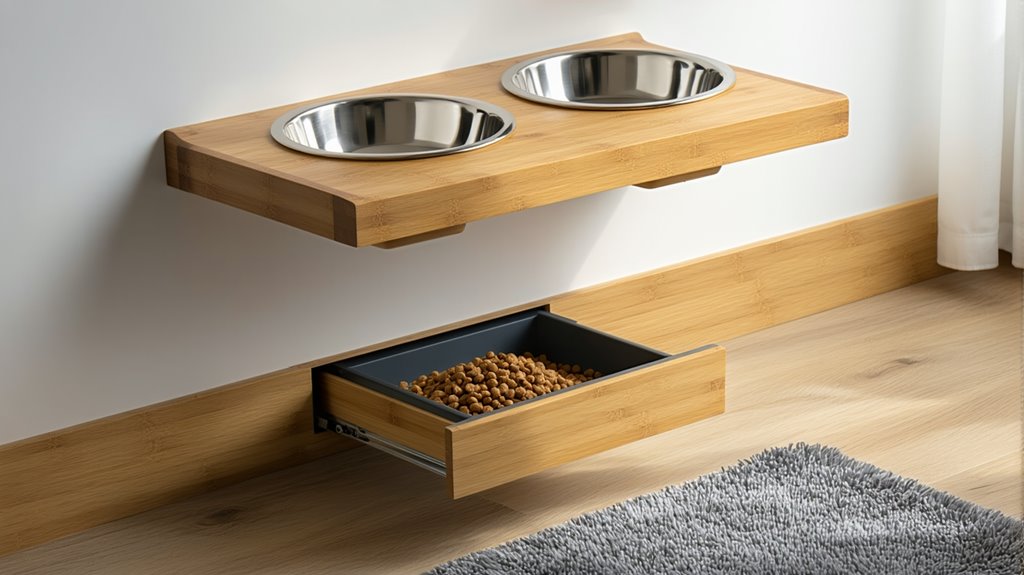
A dedicated space-saving feeding area helps your dog feel secure and focused during mealtime while keeping your home organised. You'll benefit from reduced mess, easier cleanup, and better storage solutions for food and supplies. Setting up a designated corner with elevated bowls, non-slip mats, and vertical storage creates a comfortable dining space that works for both you and your furry friend. Discover how smart design choices can transform your dog's dining experience.
Some key takeaways
- Corner feeding stations create a calm, semi-private dining environment that reduces distractions and promotes better eating habits.
- Space-saving vertical storage solutions keep food, treats, and supplies organised while maximising limited floor space.
- Designated feeding areas with mats and splash guards contain messes and make cleanup easier, maintaining a tidy home.
- Wall-mounted or elevated feeding stations free up floor space whilst providing comfortable access for your dog.
- Multi-functional feeding stations combine food storage and dining areas, eliminating clutter in small living spaces.
Choosing the Perfect Corner: Space-Efficient Feeding Locations
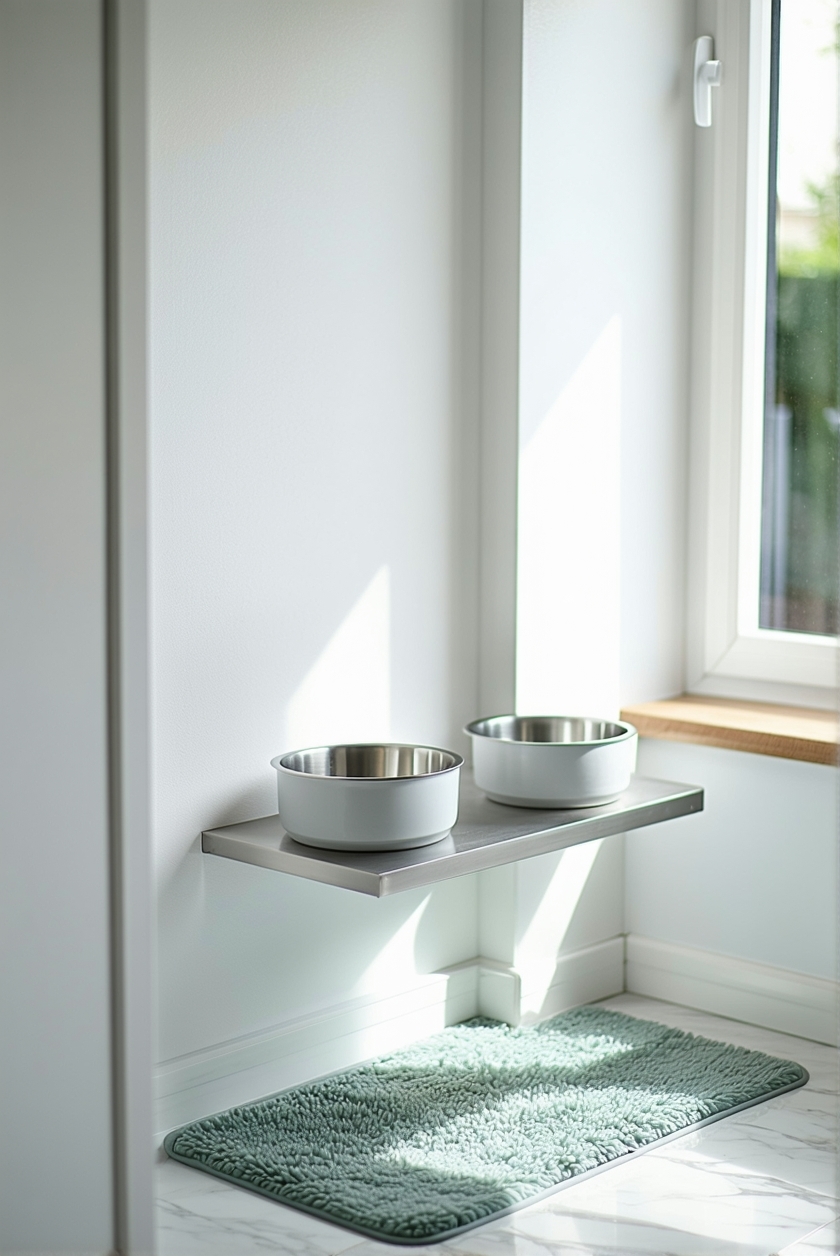
When establishing a dedicated feeding area for your dog, the corner of a room presents an ideal solution that merges practicality with comfort.
You'll discover that corners inherently create a semi-private space, allowing your furry companion to concentrate on their meal without unnecessary distractions.
This arrangement supports better canine health through mindful eating.
Design Elements for a Clutter-Free Feeding Station
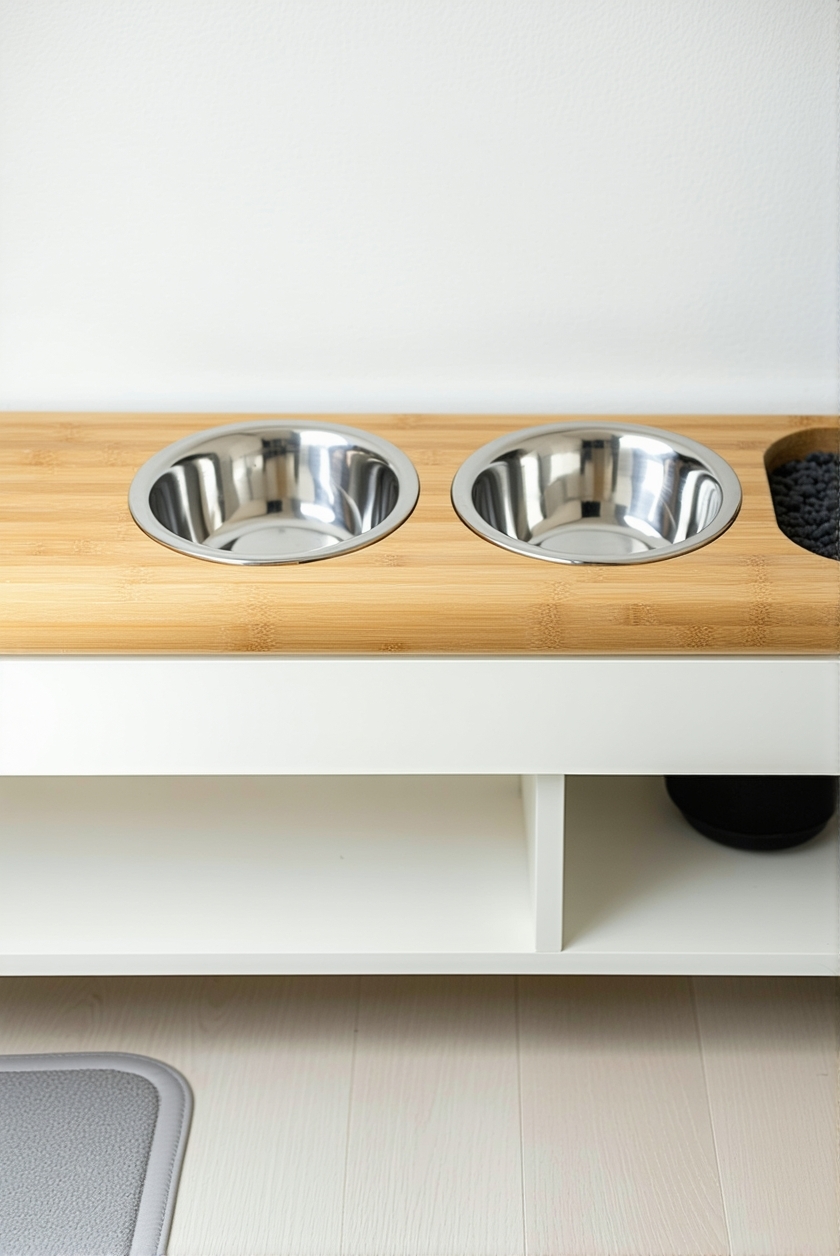
Creating a clutter-free feeding station requires thoughtful design elements that prioritise both functionality and cleanliness.
You'll want to start with a designated mat or tray that contains spills and makes cleanup a breeze. Consider elevated feeding bowls that will prevent your furry friend from pushing their dishes around, keeping your space neat and organised.
Choose non-slip or weighted bowls to maintain stability during mealtime, and opt for a compact, multi-functional feeding station that includes storage for dog food and accessories.
You'll appreciate having everything within arm's reach while keeping the area tidy. Position a storage container nearby for food, treats, and supplies – this simple addition transforms your feeding station into an efficient hub that stays clutter-free.
These thoughtful elements create a space that works for both you and your pup.
Multi-Purpose Storage Solutions for Food and Supplies
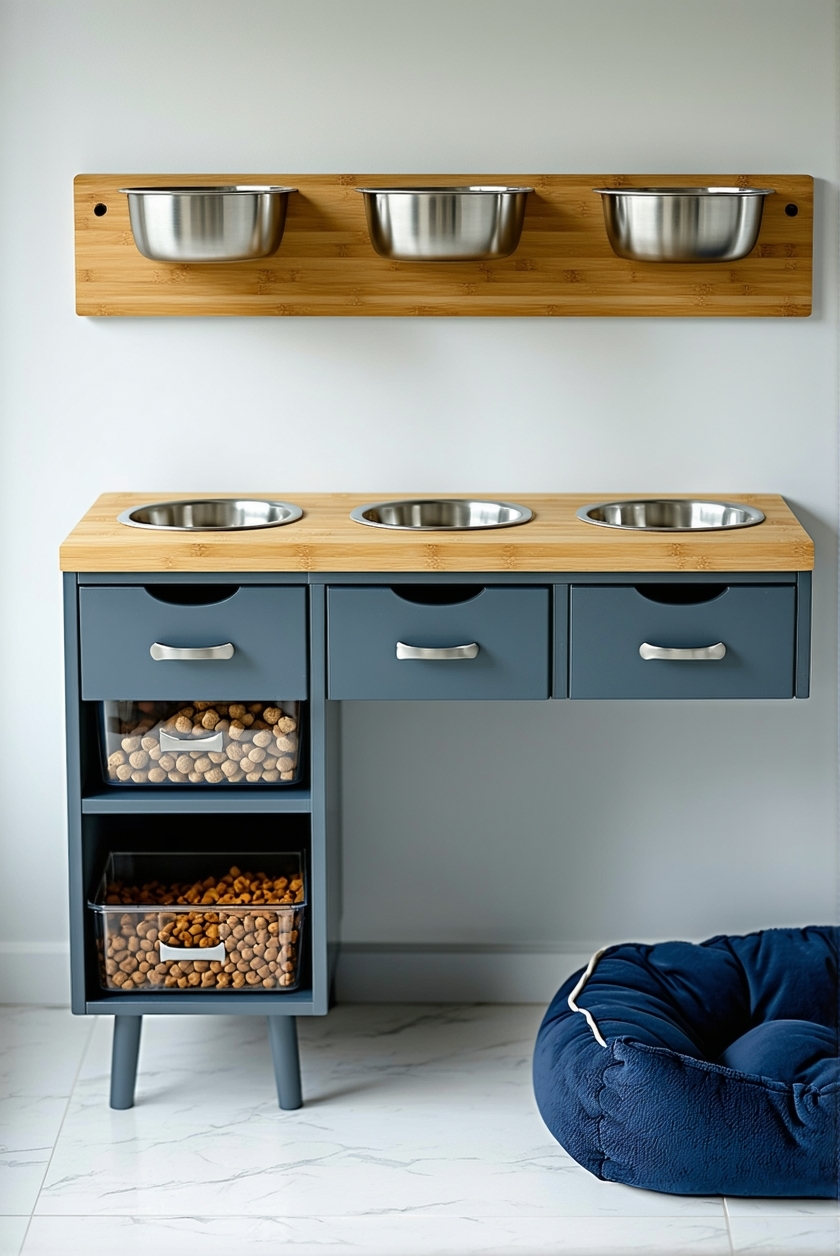
Smart storage solutions transform your dog's feeding area into a well-organised hub for all essential supplies. By incorporating multi-purpose storage options, you'll create a space that serves both you and your furry friend efficiently. Airtight dog food containers not only keep kibble fresh but also prevent unwanted spills and messes in feeding areas.
Make the most of your available space by thinking vertically. Install shelving units or cabinets above feeding stations to store treats, toys, and grooming supplies within easy reach.
Consider investing in furniture pieces that double as storage units, such as benches with hidden compartments or side tables with built-in storage. These clever solutions help you maintain a tidy feeding area while keeping all your pet's necessities close at hand, making daily routines smoother and more enjoyable for everyone.
Creating Boundaries: Mats and Splash Guards
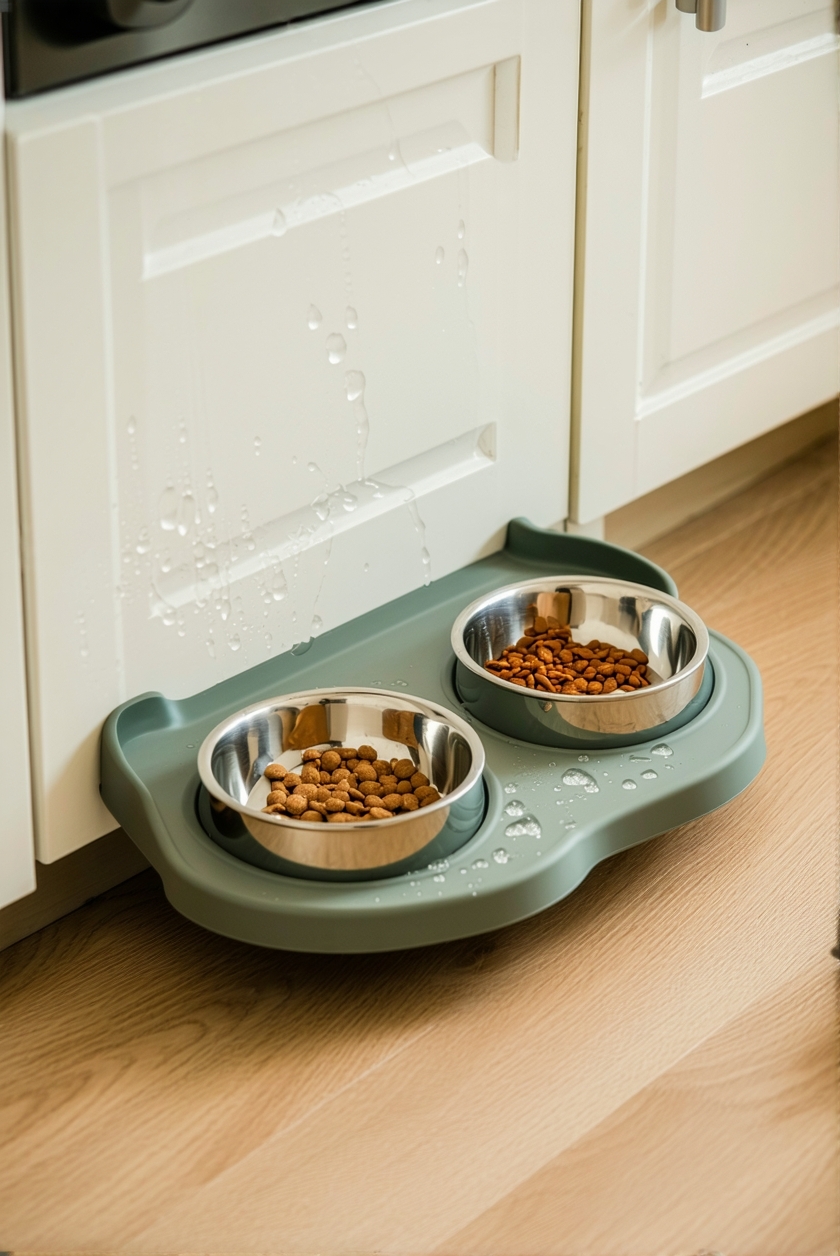
A well-defined feeding area starts with proper boundaries that protect both your floors and your dog's dining experience.
You'll want to invest in washable mats that feature non-slip surfaces to prevent bowls from sliding during your pup's enthusiastic eating sessions. These mats not only contain spills but also create a designated space where your furry friend can focus on mealtime without distractions.
Adding splash guards around the feeding area provides an extra layer of protection against scattered food and water splatter. They'll help keep your floors clean while giving your dog a sense of security during meals.
Together, mats and splash guards create an organised, hygienic space that's easy to maintain. You're not just setting boundaries – you're creating a comfortable dining environment that your dog will appreciate meal after meal.
Vertical Space Optimization for Feeding Equipment
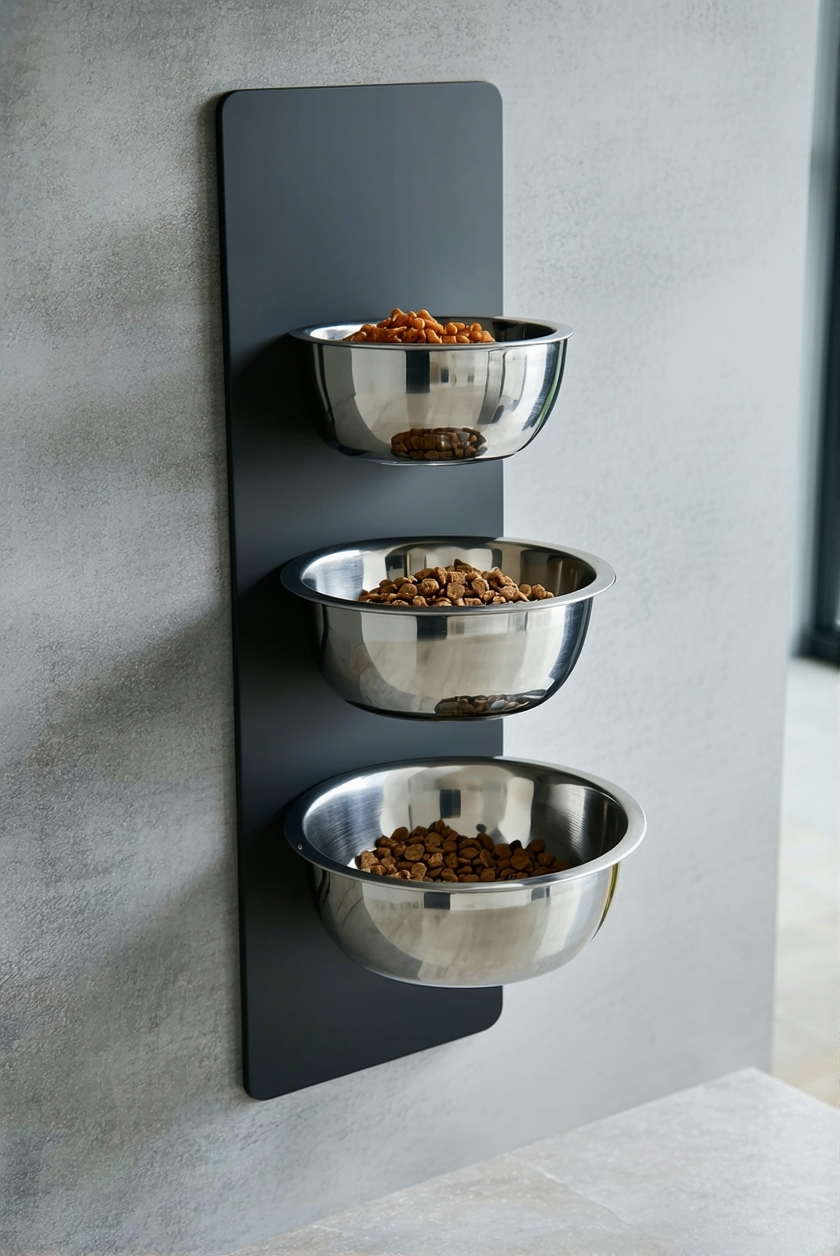
While floor-level boundaries establish a solid foundation for your dog's dining space, making use of vertical space opens up exciting possibilities for a more organised feeding station.
You'll discover that mounting bowls or installing elevated feeders on walls and in corners can transform your pet's dining area into a sleek, efficient setup that maximises every inch of available space.
As a thoughtful dog owner, you'll appreciate how vertical space solutions keep feeding equipment off the ground, reducing clutter and preventing your pup from pushing bowls around during mealtime.
Whether you're working with a cosy flat or a spacious home, wall-mounted options create a designated feeding zone that complements your décor while keeping your furry friend's dining area neat and accessible.
This approach not only saves valuable floor space but also adds a touch of sophistication to your pet's daily routine.
Frequently asked questions
Why Do Dogs Need a Safe Space?
Your dog needs a safe space because it satisfies their natural denning instincts and provides essential emotional security.
When you create a cosy retreat, you're helping your furry friend manage stress and anxiety. It's especially important if you've rescued your pup, as they may have experienced past trauma.
Think of it as their personal sanctuary where they can relax, feel protected, and decompress whenever life gets overwhelming.
Why Do Dogs Take Their Food to Another Room?
When your dog takes food to another room, they're following deeply ingrained instincts to protect their resources.
It's akin to them creating their own "safe den" to eat in peace. If you've rescued your furry friend, they may be particularly inclined to this behaviour due to past food insecurity.
Don't worry – it's perfectly natural! They're simply seeking a quiet, secure spot where they can enjoy their meal without feeling vulnerable.
Why Does My Dog Need Space?
Your dog needs space to feel secure and comfortable, just like you do.
They're instinctively drawn to having their own territory where they can relax without feeling threatened or overwhelmed.
When you give your pup personal space, especially during meals, you're showing respect for their natural behaviours and helping them feel safe.
It's also essential for their mental well-being, as it allows them to process their environment at their own pace.
How Should I Space My Dogs Meals?
Did you know that 60% of dogs benefit from having two structured meals per day?
You'll want to space your dog's meals roughly 8-12 hours apart, typically serving breakfast in the morning and dinner in the evening.
If you're feeding an adult dog once daily, it's best to serve their meal after their main walk.
You'll also want to maintain consistent timing each day – dogs thrive on routine and predictable meal schedules.
To summarise
Your carefully designed feeding station will transform that once-chaotic corner into a peaceful dining nook where your furry friend can enjoy meals without creating chaos. As you watch your pup contentedly eating from their organised space, you'll appreciate how those wall-mounted dispensers, tucked-away storage, and easy-clean surfaces have simplified your daily routine. You've created more than just a feeding area—you've crafted a thoughtful space that honours your pet's needs while maximising your home's potential.