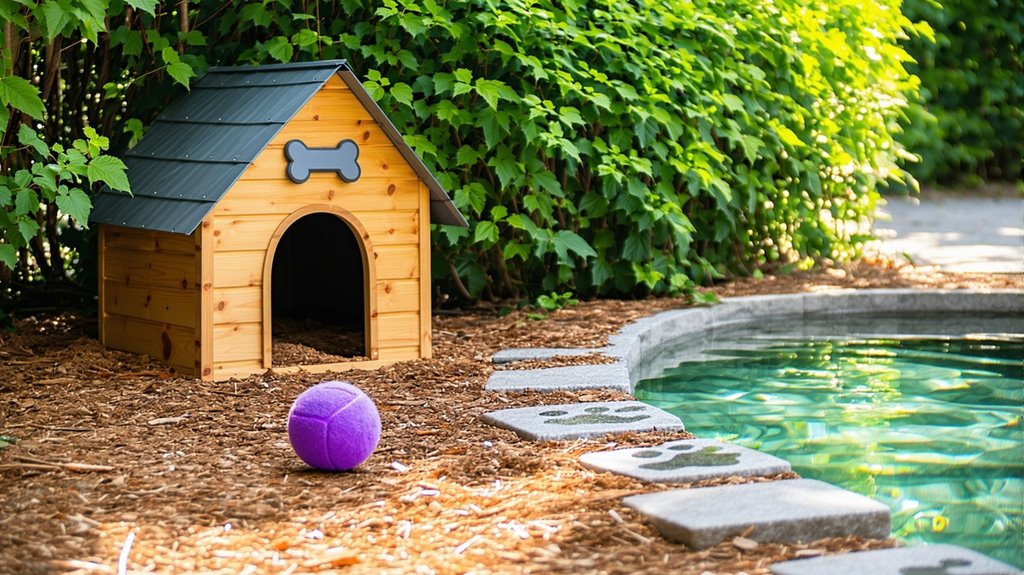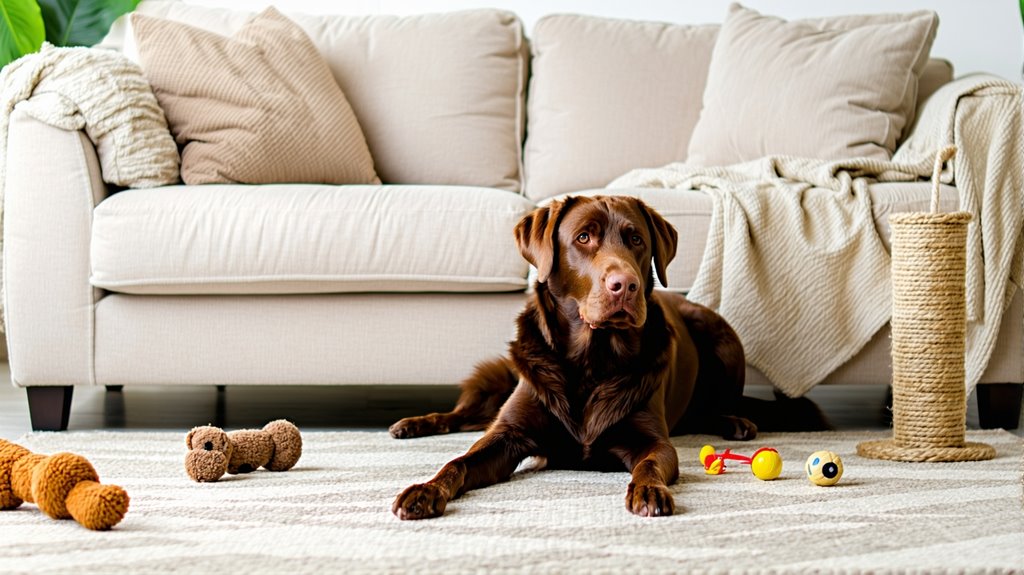
Keep your furniture fresh and protected from pet wear by combining smart fabric choices with strategic protection methods. It’s wise to invest in durable materials such as microfiber or leather, use protective covers, and create designated pet zones with engaging alternatives. Make daily maintenance a priority by brushing your pets regularly and addressing any accidents immediately. Implement consistent training techniques with positive reinforcement, and you’ll discover a harmonious balance between pet companionship and home aesthetics.
Some key takeaways
- Choose durable fabrics such as microfiber or leather that resist stains, pet hair, and wear while remaining easy to clean.
- Install protective covers and washable throws on furniture to create a barrier against pet-related damage and dirt.
- Create designated pet zones with comfortable beds and toys to discourage pets from claiming furniture as their territory.
- Maintain regular grooming schedules and vacuum the furniture weekly to minimise hair accumulation and odours.
- Use positive reinforcement training and deterrent sprays to establish clear furniture boundaries for your pets.
Smart Fabric Choices for Pet-Friendly Living
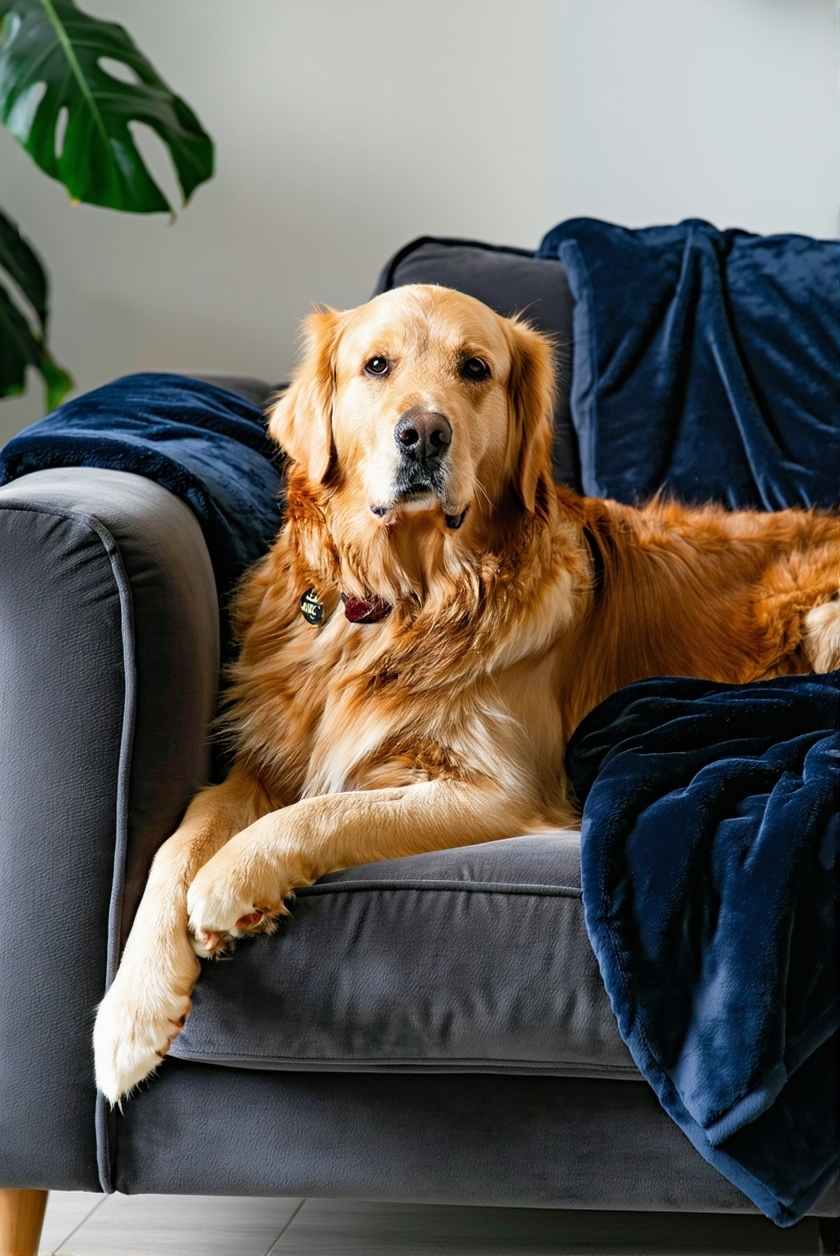
When sharing your home with furry friends, choosing the right fabrics for your furniture can make all the difference between constant maintenance and stress-free living.
Your smart fabric choices should prioritise durability and easy maintenance to keep your home looking pristine.
You’ll want to invest in durable fabrics like microfiber or leather, which stand up beautifully to daily pet interactions. These pet-friendly materials resist stains and clean up effortlessly, saving you time and worry.
For added convenience, look for pieces with removable, washable covers that you can easily launder. While you might love the look of silk or velvet, these delicate materials aren’t practical for pet households.
Instead, opt for darker-coloured upholstery that conceals pet hair and minor stains. Don’t forget to protect your investment with specialised upholstery treatments that guard against moisture, odours, and wear.
Strategic Protection Methods for Your Furniture
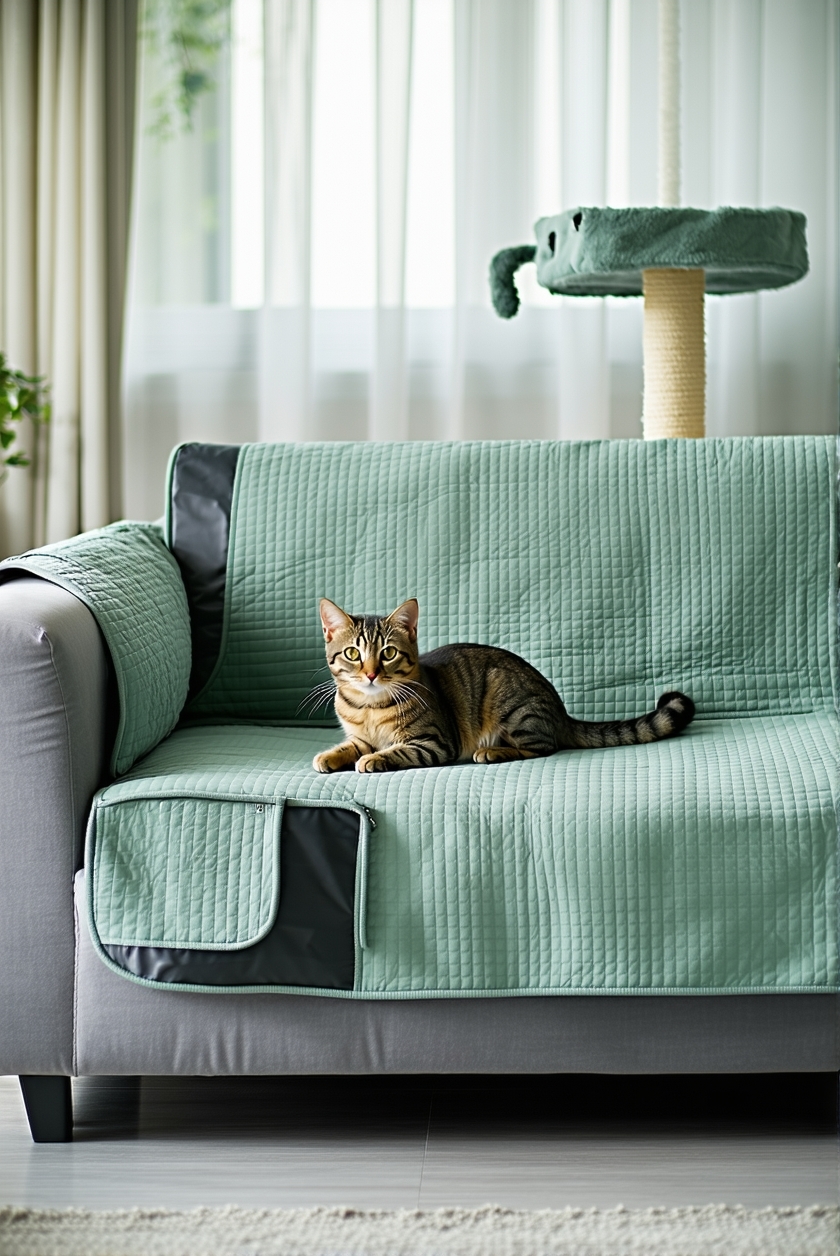
Although pets bring boundless joy to our lives, protecting your furniture from their natural behaviours requires a strategic approach. For pet owners seeking to maintain their home’s beauty, protective covers are your first line of defence.
Today’s modern slipcovers and waterproof protectors offer both style and functionality while shielding your furniture from pet-related wear.
Create designated pet zones by placing scratching posts and chew toys strategically throughout your home. This simple step redirects your pet’s natural urges away from your furniture.
Combine this with positive reinforcement training to establish clear furniture boundaries. When it comes to maintenance, make quick work of pet hair with regular vacuuming and keep lint rollers handy for touch-ups.
Creating Pet-Specific Zones in Your Home

Setting up dedicated spaces for your pets plays an essential role in maintaining harmony between your furry friends and your home environment. By establishing clear boundaries through pet-friendly zones, you’ll create a win-win situation that respects both your needs and your pet’s natural instincts.
Start by designating cosy corners with comfortable beds and engaging toys, ensuring your pets have their own retreat.
Install gates to create pet-free areas, protecting valuable furniture while giving them their personal space. In their designated zones, incorporate durable furniture and essential items like scratching posts or chew toys.
Remember to keep their interest piqued by regularly updating their area with new toys and comfort items.
Successful pet ownership often comes down to balance – giving your pets freedom within structured spaces while preserving your home’s integrity.
Daily Maintenance Routines That Make a Difference
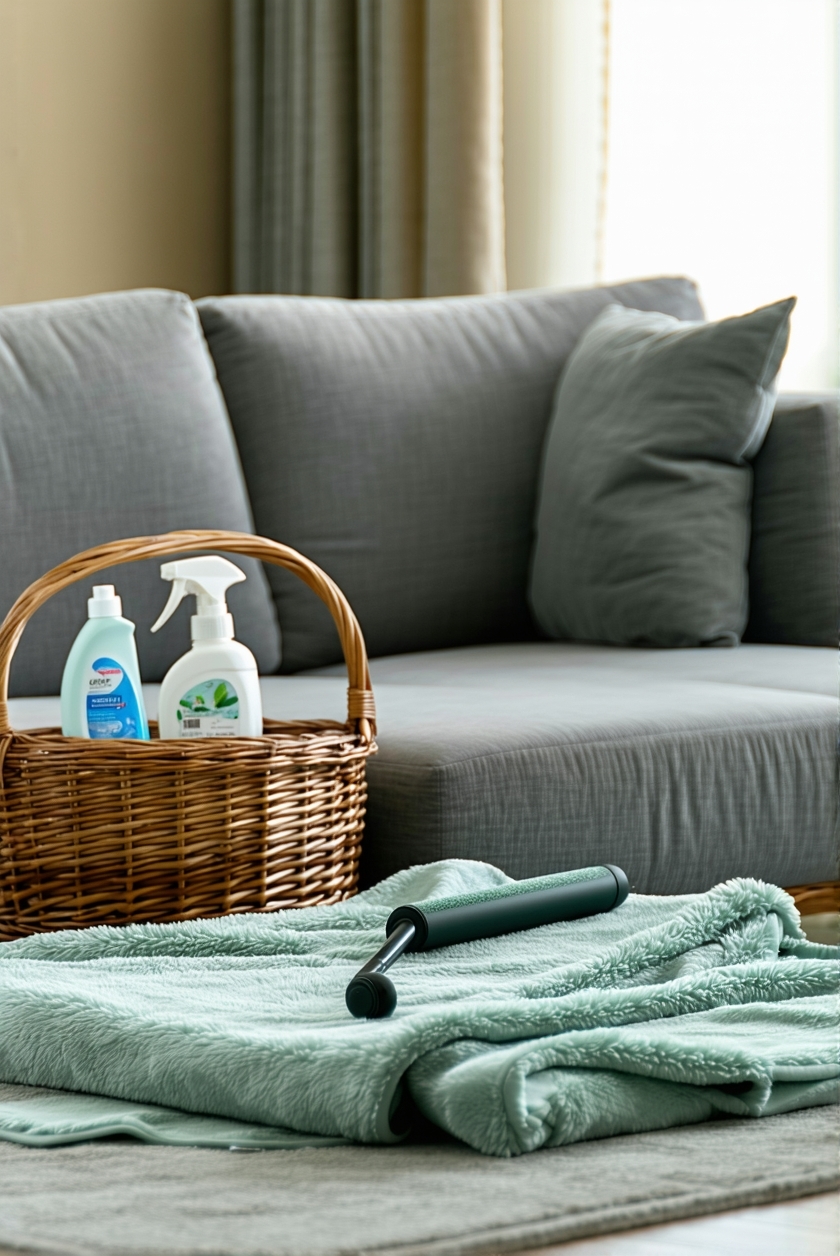
Once you’ve established dedicated pet zones in your home, consistent daily maintenance becomes your next line of defence against pet-related wear and tear.
You’ll find that simple, proactive steps can prevent major cleaning challenges down the line.
Start by brushing your furry friend weekly – it’s not just bonding time; it’s your secret weapon against pet hair taking over your home.
Keep washable blankets on your pet’s favourite spots and swap them out regularly.
When you notice fur accumulating, grab your lint roller for quick touch-ups between deeper cleans.
Make it a habit to vacuum your furniture at least weekly, paying special attention to your pet’s preferred lounging areas.
When accidents happen, reach for enzyme-based cleaners immediately.
Remember to schedule professional cleaning every 6-12 months to keep your furniture looking and smelling fresh.
Training Techniques to Preserve Your Furniture
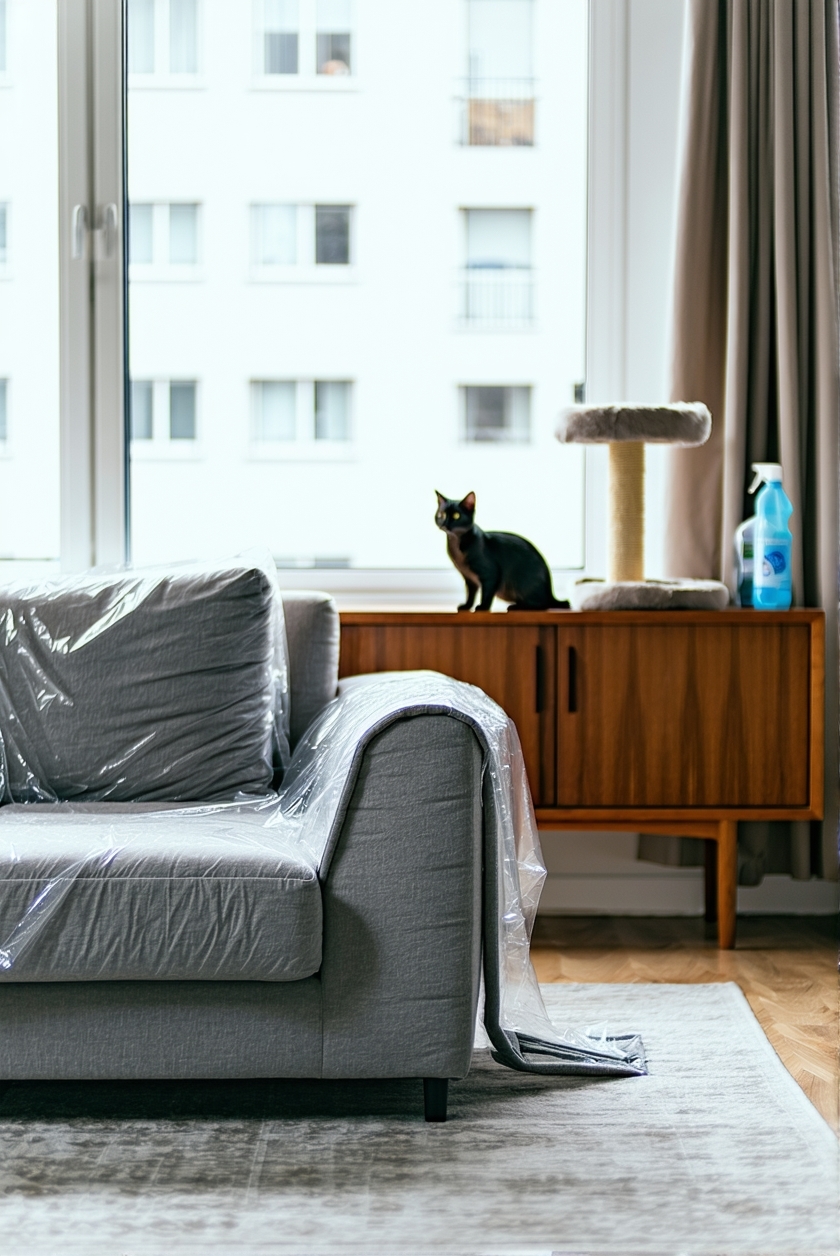
Training your pets to respect your furniture requires patience and positive reinforcement, but the long-term benefits are certainly worth the effort.
Begin by establishing clear boundaries with consistent commands such as “off” or “down” when your pets attempt to climb on furniture. Remember to reward them immediately with treats and enthusiastic praise when they comply.
It’s important to provide appealing alternatives that satisfy your pets’ natural instincts. Position scratching posts near furniture for cats and offer special chew toys for dogs in designated areas.
For particularly stubborn pets, consider using deterrents like double-sided tape or pet-safe sprays on furniture surfaces.
Always remember that consistency is key—maintain regular training sessions and monitor their behaviour closely.
With time and dedication, you’ll help your pets develop habits that protect your furniture while keeping them happy and fulfilled.
Professional Solutions and Expert Support
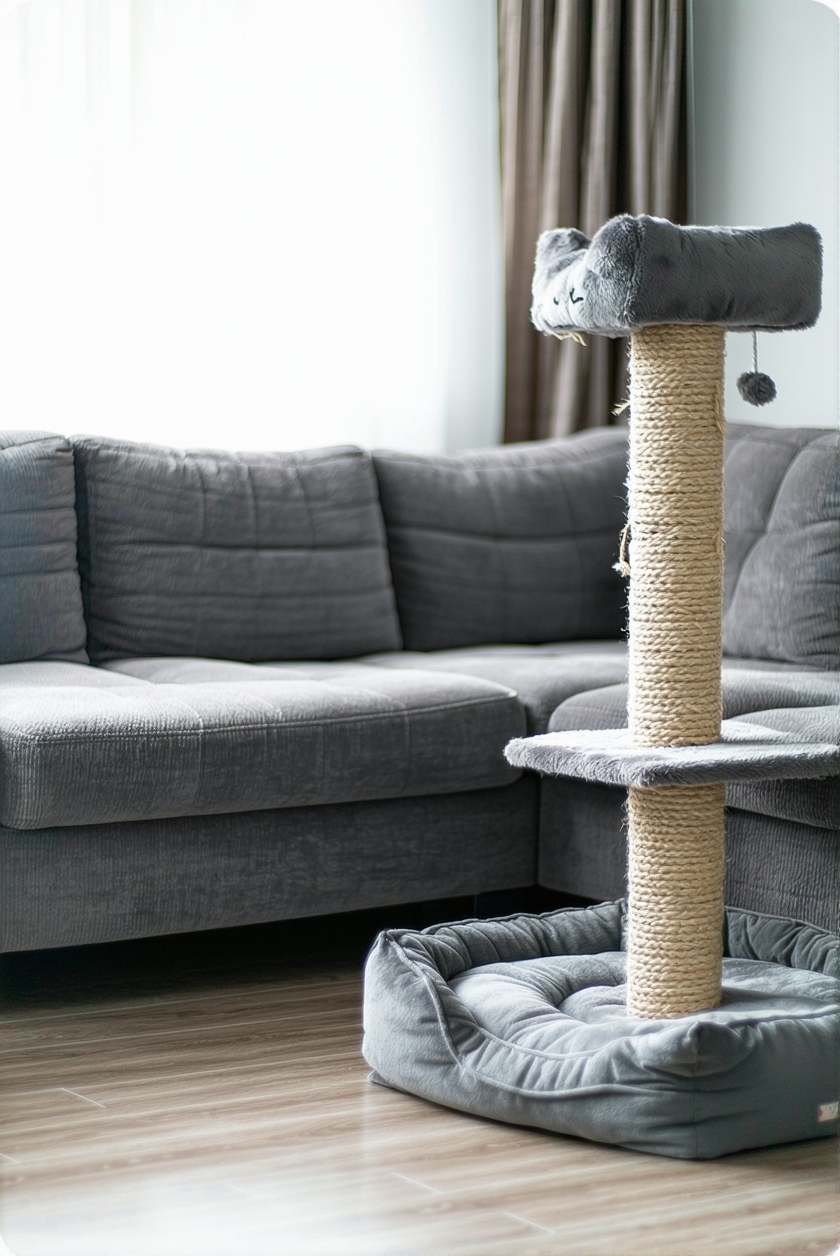
While dedicated training and preventive measures can protect your furniture, there are times when professional expertise is essential to tackle more challenging pet-related issues.
Professional cleaning services can address those stubborn stains and lingering odours that your regular cleaning routine simply can’t manage, restoring your furniture’s fresh appearance and scent.
If your furry friend’s behaviour is resulting in ongoing furniture damage, don’t hesitate to contact pet behaviourists who can provide tailored solutions.
They’ll collaborate with you to understand and modify destructive habits.
Consider investing in upholstery protection services to safeguard your furniture against future wear and tear.
For a comprehensive approach, pet-proofing specialists can evaluate your home and recommend customised solutions that maintain both style and functionality.
These experts will assist you in creating a space where both you and your pets can flourish.
Frequently asked questions
How Do You Protect Furniture From Pet Urine?
To protect your furniture from pet urine, you should begin with waterproof furniture covers that can be easily washed.
Don’t delay if accidents occur – use enzyme-based cleaners immediately to break down stains and neutralise odours.
Make spot-cleaning a regular routine, and remember to check your upholstery frequently.
You could also consider using pet deterrent sprays while you’re working on training your furry friend to respect furniture boundaries.
What Can You Put on Your Furniture to Keep Dogs Off?
You’ve got several effective options to keep your furry friend off the furniture.
Try placing double-sided tape or aluminium foil on surfaces – dogs don’t like these textures. You can spray pet-safe citrus or vinegar solutions that will naturally deter them.
For extra protection, use furniture covers or motion-activated devices that release a gentle air burst.
If you’re looking for a physical barrier, consider installing pet gates in doorways to limit access.
Does Aluminum Foil Keep Pets off Furniture?
Yes, aluminium foil can effectively keep your pets off furniture!
You’ll find that most cats and dogs dislike the crinkly texture and unusual sound it makes when they step on it.
Simply lay sheets of foil on your furniture’s surfaces, and you’ll likely see your pets avoiding these areas.
While it’s not a permanent solution, it’s a safe training tool when combined with positive reinforcement – just be sure your pet doesn’t try to eat the foil.
How to Keep a Dog off Furniture When Not Home?
When you’re away from your beloved companion, there are several effective ways to maintain furniture boundaries.
You’ll want to place pet barriers or baby gates to restrict access to tempting lounging spots.
Consider investing in furniture covers or placing double-sided tape on surfaces your pup finds inviting.
Don’t forget to provide cosy alternatives like memory foam beds in permitted areas.
Let’s clean up!
Your home’s transformation into a pet-friendly haven isn’t just about protecting furniture – it’s about creating harmony between your beloved companions and your living space. Like a well-conducted orchestra, each element – from strategic fabric choices to consistent training – plays its part in the symphony of pet ownership. You’ll find that with these protective measures in place, you’re not just preserving furniture; you’re building a more peaceful kingdom for both two-legged and four-legged family members.