You can successfully train a puppy in your tiny home by creating designated zones and smart storage solutions. Start by puppy-proofing a small area using baby gates, then establish a consistent routine for potty breaks and exercise sessions. Break up training into shorter segments, use vertical space for supplies, and choose quiet enrichment activities like puzzle toys. With proper planning and positive reinforcement, your compact space will become the perfect training ground for your new best friend.
Some key takeaways
- Maximise vertical storage with wall-mounted shelves and hooks to keep training supplies organised while preserving floor space.
- Create a designated puppy zone using baby gates and a crate to provide a safe, controlled environment for training.
- Break training sessions into short 10-minute intervals throughout the day to avoid overwhelming your puppy in limited space.
- Establish an indoor potty area with artificial grass and maintain a strict schedule to prevent accidents.
- Rotate toys and create indoor obstacle courses using household items to provide mental and physical stimulation.
Creating a Puppy-Safe Zone in Limited Square Footage
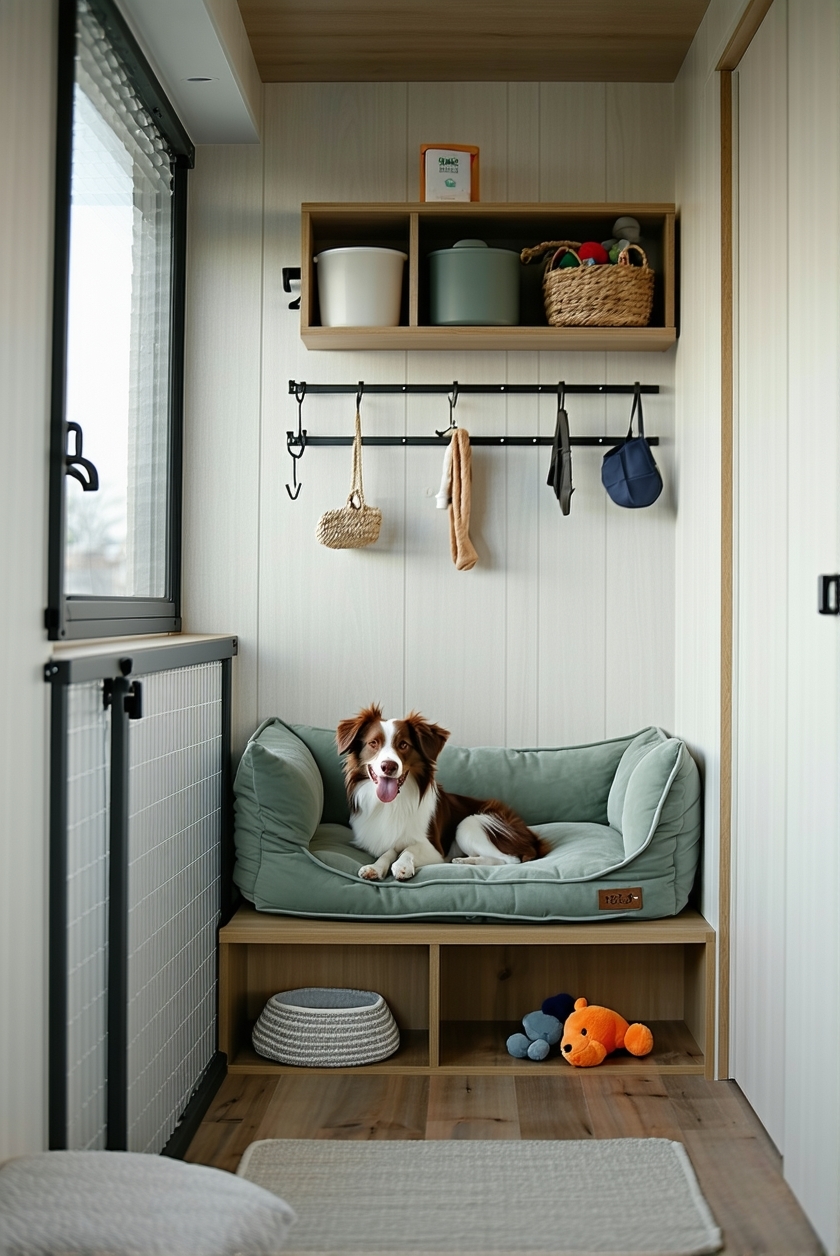
When you're working with limited space, creating a safe zone for your puppy requires thoughtful planning and strategic organisation.
Start by conducting a detailed room-by-room inspection, removing hazards like electrical cords and toxic items that your curious pup might encounter.
Set up baby gates to section off designated areas where your puppy can safely explore and play.
Within this space, introduce crate training by placing a comfortable crate or playpen that serves as your puppy's personal retreat. This creates a secure foundation for both supervision and relaxation.
Consider adding an indoor potty area with a grass patch tray that's easily accessible within your puppy's safe zone.
As your little one grows and develops, you'll need to regularly assess and adjust these safety measures, always using positive reinforcement to help them understand their boundaries.
Smart Space Management for Essential Training Tools
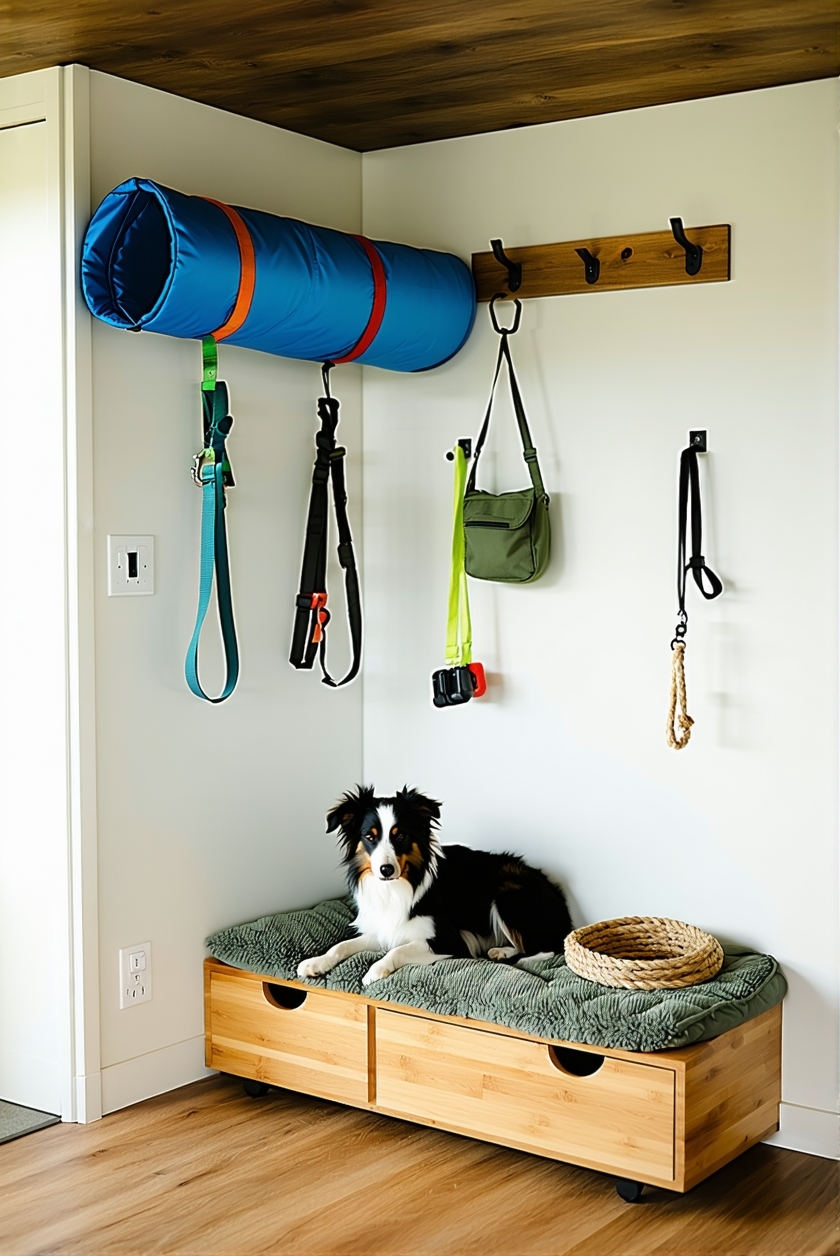
Living in a tiny home shouldn't limit your ability to provide effective puppy training. With smart space management for essential training tools, you can create an organised environment that supports your pup's learning journey.
Make the most of your vertical space by installing shelves and hooks to keep leads, treats, and toys within easy reach. A multifunctional storage ottoman can cleverly hide training supplies while doubling as comfortable seating for both you and your furry friend.
Set up a designated training area that's distraction-free and fully equipped with your tools. Keep your training supplies fresh and accessible by storing high-value treats in airtight containers.
A portable crate or playpen can serve as both a training space and a safe zone for your pup, making the most of your limited square footage while maintaining consistency in your training routine.
Building Daily Exercise Routines in Small Living Areas
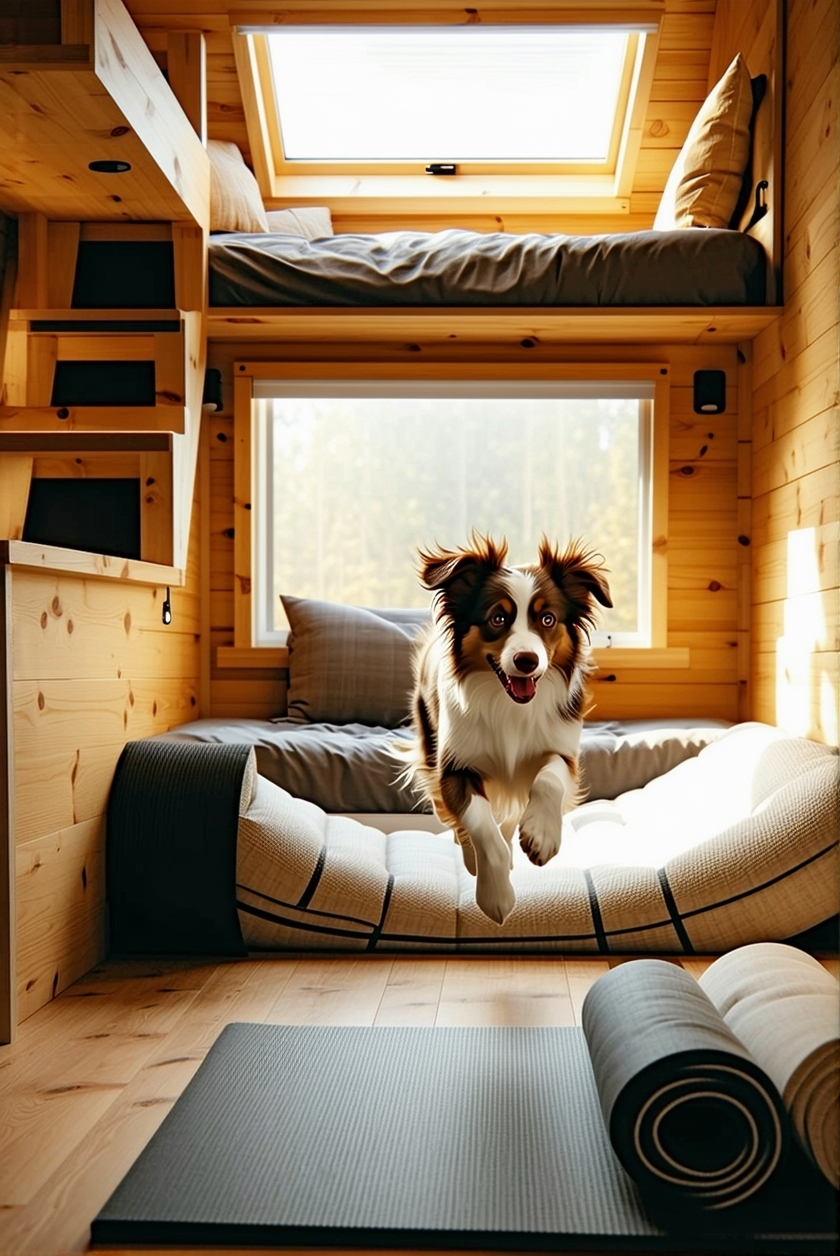
Now that your training tools are organised, let's focus on keeping your puppy active in your cosy space. Training dogs in small areas requires creativity, but you can establish effective exercise routines by breaking up 30 minutes of daily activity into manageable sessions.
Transform your limited space into an engaging workout zone with indoor games like fetch and tug-of-war. Make the most of nearby parks for longer walks and socialisation opportunities.
Set up mini agility courses using household items, and incorporate obedience training into your exercise sessions to provide both mental and physical stimulation.
Keep your puppy's routine fresh and exciting by rotating toys and introducing new activities regularly.
Mastering Indoor Potty Training Solutions
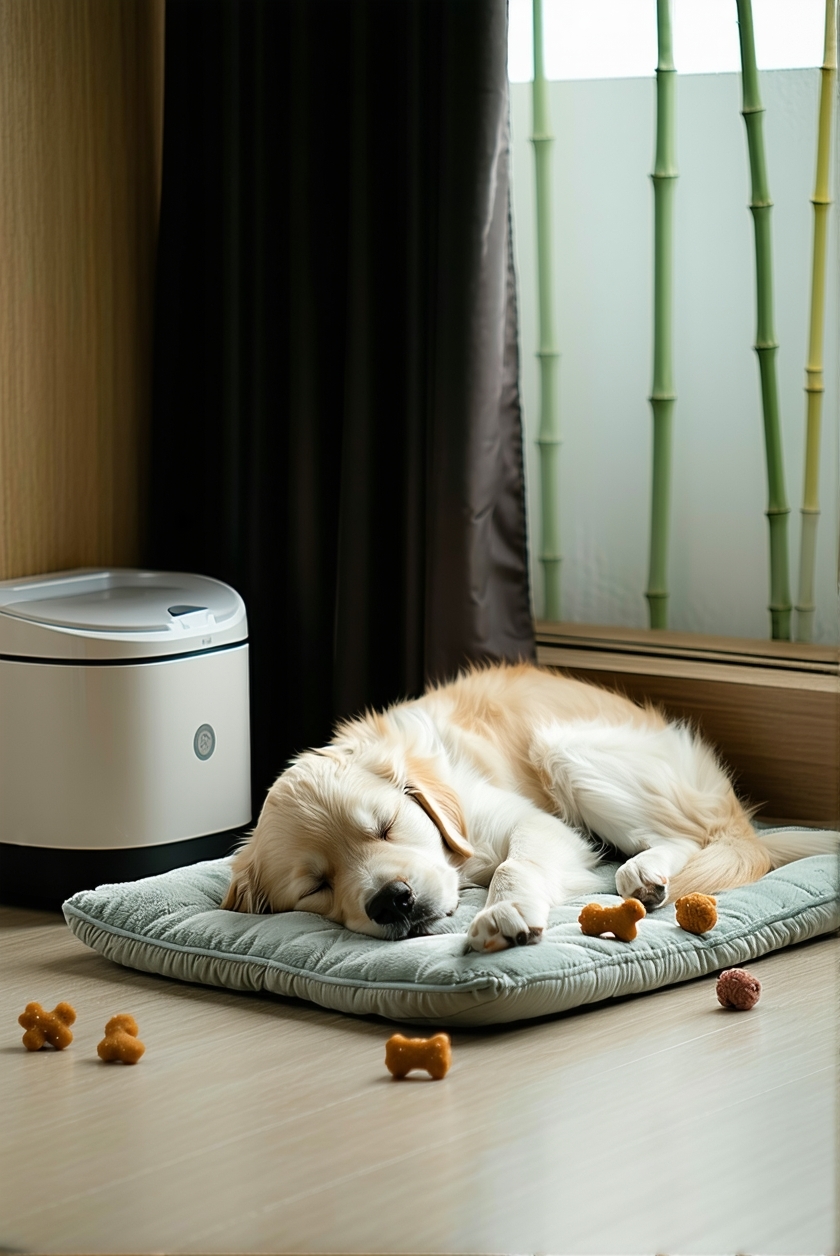
Successfully potty training your puppy in an indoor environment requires patience, consistency, and a well-structured approach.
You'll want to create a reliable routine by tethering your puppy to you or using a crate when you can't provide direct supervision. This helps prevent accidents while building trust.
Focus on rewarding the puppy immediately when they eliminate outside, using high-value treats like cheese or chicken. You're not just training – you're building a positive association that'll last a lifetime.
Watch for signs your puppy needs to go, such as sniffing or circling, and quickly guide them to their designated spot.
As your puppy shows consistent success, gradually increase their freedom in small increments.
Noise Control Strategies for Close Quarters
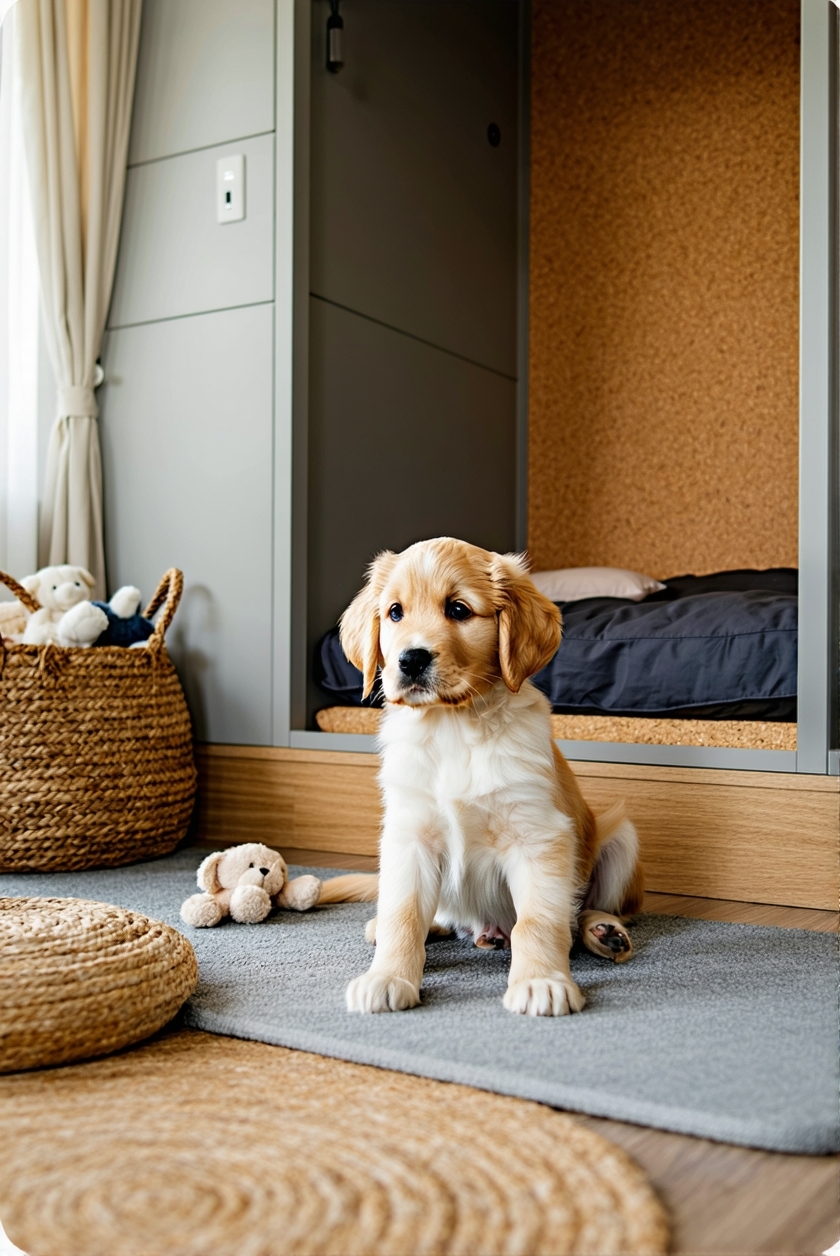
Peace and quiet in close quarters starts with smart breed selection and proven training techniques. Consider naturally quieter breeds like Bulldogs or Basset Hounds, who'll adapt beautifully to your cosy tiny home lifestyle.
You'll find success by creating a calming environment that encourages quiet behaviour. Transform your space with sound-absorbing rugs and curtains, and establish a special retreat where your puppy can feel secure when they need downtime.
Make training a positive experience by rewarding your pup with treats and gentle praise when they maintain their indoor voice.
Keep your puppy's mind and body engaged with puzzle toys and regular walks to prevent boredom-induced barking. Remember, a tired puppy is usually a quiet puppy.
Enrichment Activities for Confined Spaces
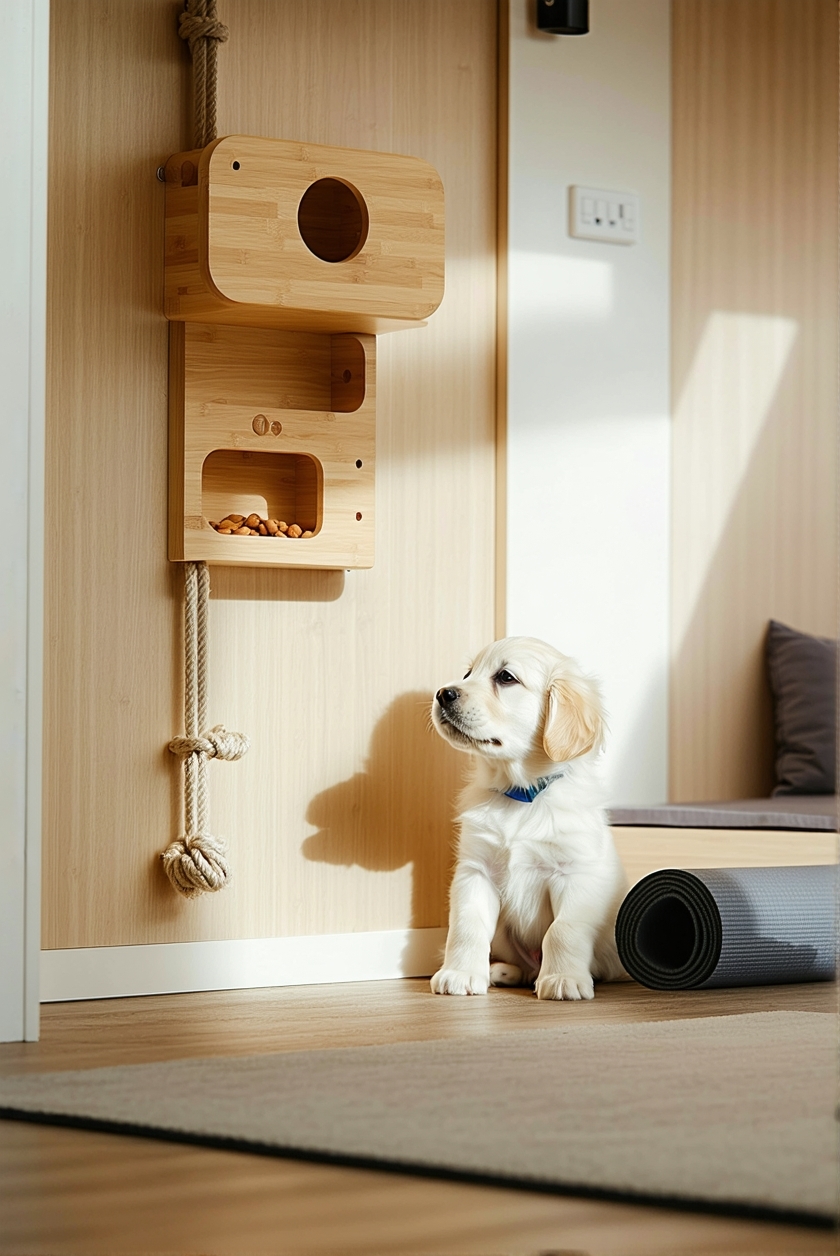
Living in a small space doesn't mean your puppy's world has to feel limited. You can create an enriching environment that keeps your puppy's mind active and engaged, even in confined quarters.
Transform your space into a playground of discovery by introducing interactive puzzle feeders and treat-dispensing toys that challenge your puppy's problem-solving abilities. Set up scent trails with hidden treats, turning your flat into an exciting treasure hunt.
Create mini agility courses using indoor-friendly equipment, making physical exercise fun and mentally stimulating. Break up your day with short training sessions, teaching new tricks that strengthen your bond while providing mental exercise.
Keep things fresh by rotating toys weekly; when old toys return, they'll feel new again to your pup. With creativity, you'll make every square foot count in developing your puppy's mind.
Balancing Rest and Play Areas in Tiny Spaces
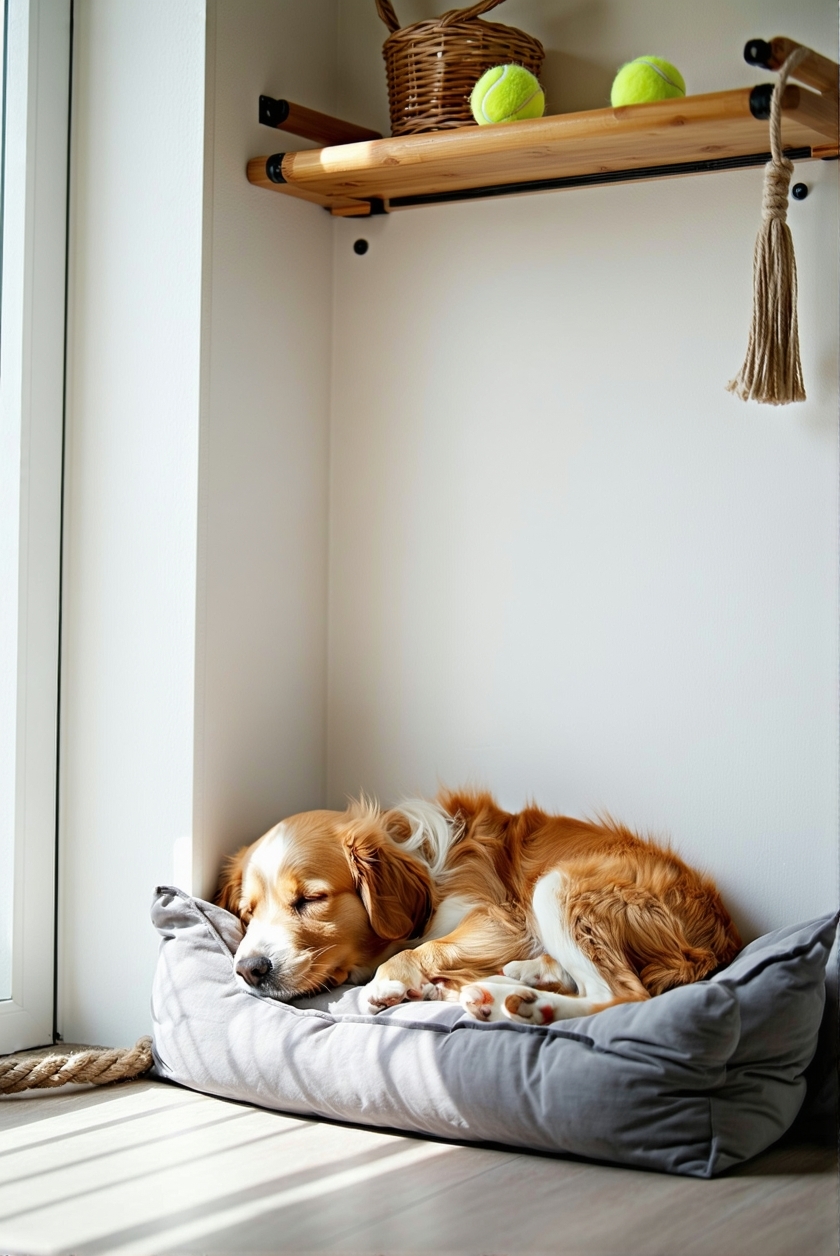
Creating distinct zones for rest and play is essential in a tiny space, even when square footage is limited. Ensure you know how to maximise your space by using multi-functional furniture, such as storage ottomans that serve as both cosy resting spots and play areas for your puppy's toys.
Set up baby gates or playpens to establish boundaries between active and quiet zones, helping your furry friend understand spatial cues. Define these areas clearly with rugs or designated furniture pieces, making it easier for your puppy to recognise when it's time to play or relax.
Establish a consistent routine that alternates between energetic play sessions and downtime. Keep the play area engaging with select toys, but avoid overcrowding your limited space. This thoughtful organisation will help your puppy thrive while maintaining harmony in your tiny home.
Frequently asked questions
What Is the 10-10-10 Rule for Puppies?
The 10-10-10 rule is your daily guide to raising a well-balanced puppy.
You'll spend 10 minutes on training to build essential skills, 10 minutes on playtime to burn off energy and strengthen your bond, and 10 minutes on socialisation to help your pup become comfortable with new experiences.
It's a straightforward way to ensure you're meeting your puppy's needs while keeping sessions short and enjoyable, which is ideal for their developing attention span.
How to Stop a Puppy From Peeing and Pooping in the House?
To stop your puppy from having accidents indoors, you'll need to establish a consistent routine.
Take your pup outside after meals, naps, and playtime, and reward them with treats and praise when they go potty outdoors.
Keep a close eye on them indoors using a lead or in a confined space, and watch for signs like sniffing or circling.
When accidents do occur, clean thoroughly with enzymatic cleaners to prevent repeat incidents in the same spot.
What Is the Puppy 1/2 Rule?
The Puppy 1/2 Rule is your little one's natural bathroom timing guide.
It's quite straightforward: your pup can "hold it" for approximately one hour per month of age, plus an additional hour.
So, if your furry friend is three months old, they'll need to go every four hours.
This rule is a useful way to plan potty breaks and help prevent indoor accidents.
What Is the Hardest Thing to Teach a Puppy?
While potty training often tops the list of challenging tasks, teaching reliable recall (coming when called) is arguably the most difficult thing to teach your puppy.
You're competing with an exciting world full of distractions – squirrels, other dogs, interesting smells – and asking your pup to choose you instead.
It's a test of trust, patience, and consistency.
But don't worry! With positive reinforcement and high-value treats, you'll build this essential life-saving skill together.
To summarise
Just like a bonsai tree thrives within the artful constraints of its small pot, you'll discover that training your puppy in a tiny home can yield beautiful results. You've learned to maximise every inch of space, create structured routines, and nurture your pup's growth through positive reinforcement. By implementing these space-smart strategies, you're crafting a harmonious environment where both you and your furry friend can flourish together.