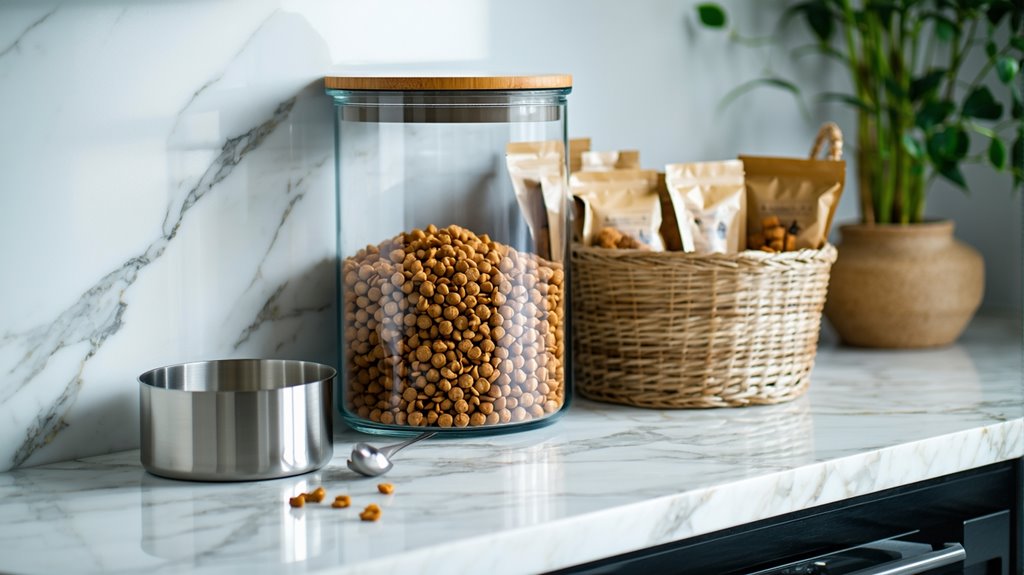
Store your dog’s food efficiently and affordably with airtight containers like the Sterlite 54 Qt Gasket Bin, which keeps kibble fresh while protecting against pests. You’ll find stackable options perfect for small spaces, or you could try repurposing clean plastic containers for a budget-friendly DIY solution. Clear containers make it easy to monitor food levels, whilst decorative bins can complement your home décor. Discover more clever storage solutions that won’t strain your wallet.
Some key takeaways
- Sterlite 54 Qt Gasket Bins offer an affordable, airtight solution that keeps dog food fresh and safeguarded from moisture and pests.
- Clean, repurposed plastic containers present a no-cost option when properly sealed and stored in a cool, dry environment.
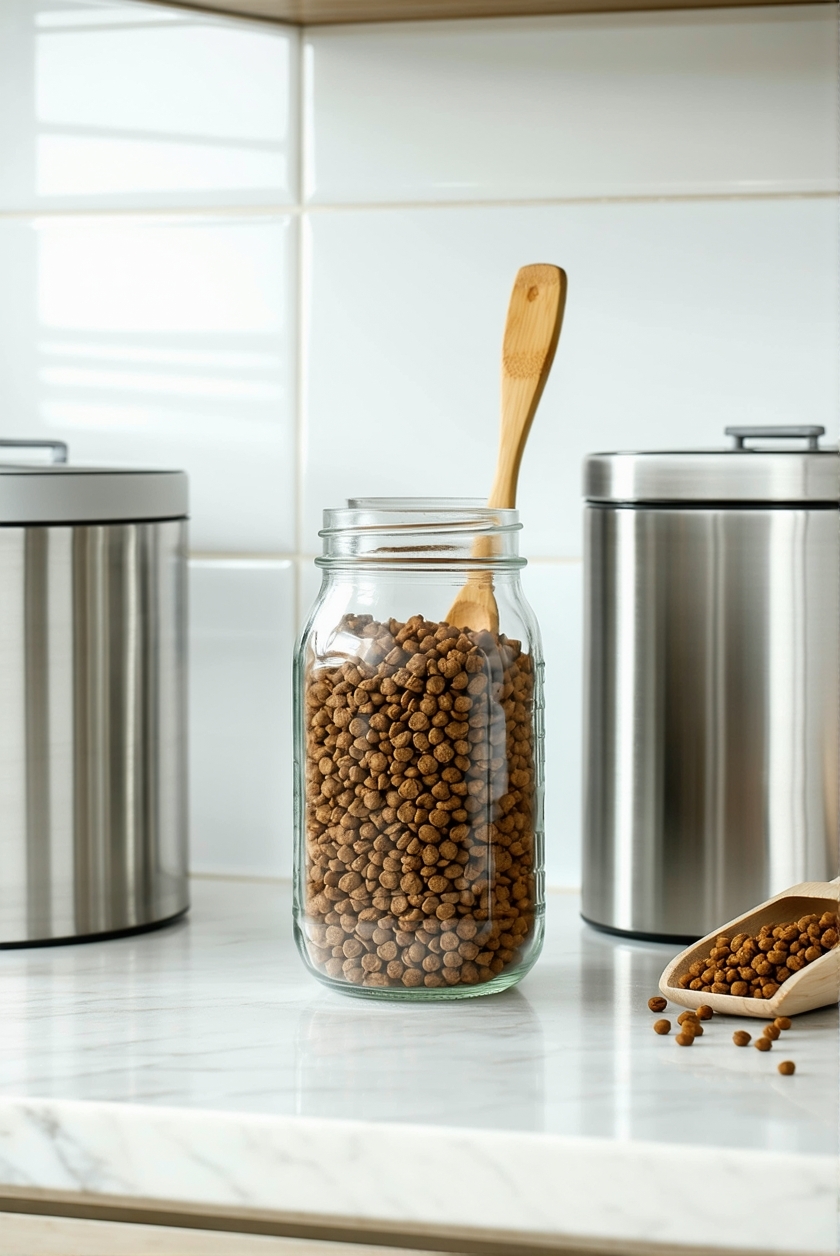
- Large mason jars are ideal for storing smaller quantities of dog food while ensuring the contents remain visible and fresh.
- Stackable food containers make the most of vertical space and usually cost less than £30 for a set of three.
- Metal bins with secure lids provide a budget-friendly means of rodent protection and can accommodate large amounts of dog food.
Budget-Friendly Container Options for Dog Food
While keeping your dog’s food fresh doesn’t have to stretch your budget, selecting the right storage solution can make a significant difference in both convenience and cost-effectiveness.
You’ll discover excellent food-safe containers such as the Sterlite 54 Qt Gasket Bins, which provide airtight storage while keeping pests at bay.
For your pet food storage needs, consider robust metal containers that offer exceptional protection, particularly if you’re in an area where rodents are a concern.
If you’re short on space, look for stackable food containers that optimise vertical storage.
You could also create your own DIY dog food storage solution by repurposing clean plastic containers—just add some decorative vinyl labels to keep things organised.
Whether you opt for a ready-made food storage solution or craft your own container, you’ll find plenty of practical options available for under £30.
Space-Saving Storage Solutions for Small Homes
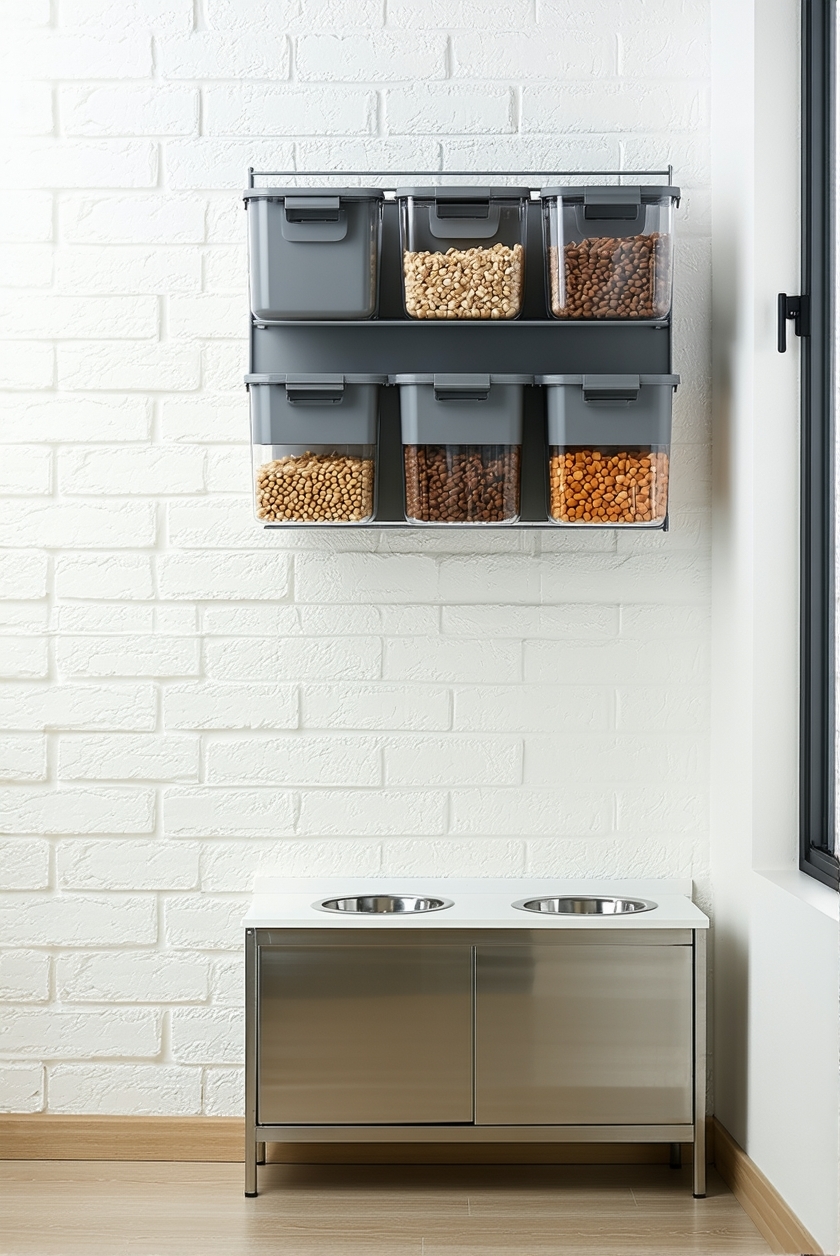
Living in a small home doesn’t mean compromising on proper dog food storage. You’ll find that stackable Food Storage Containers can transform your vertical space into an efficient storage solution, keeping your living area clutter-free.
A 10-gallon dog food bin offers the perfect balance between capacity and compactness for daily use.
Make the most of your limited room for storage by choosing clear containers that allow you to easily monitor food levels.
You can move around multi-functional furniture, such as storage benches, to keep the food hidden while adding extra seating.
Consider stylish decorative bins that complement your home’s decor while serving a practical purpose.
These smart solutions guarantee your pet’s food stays fresh and accessible without sacrificing precious floor space in your cosy home.
Creative Upcycling Ideas for Pet Food Storage
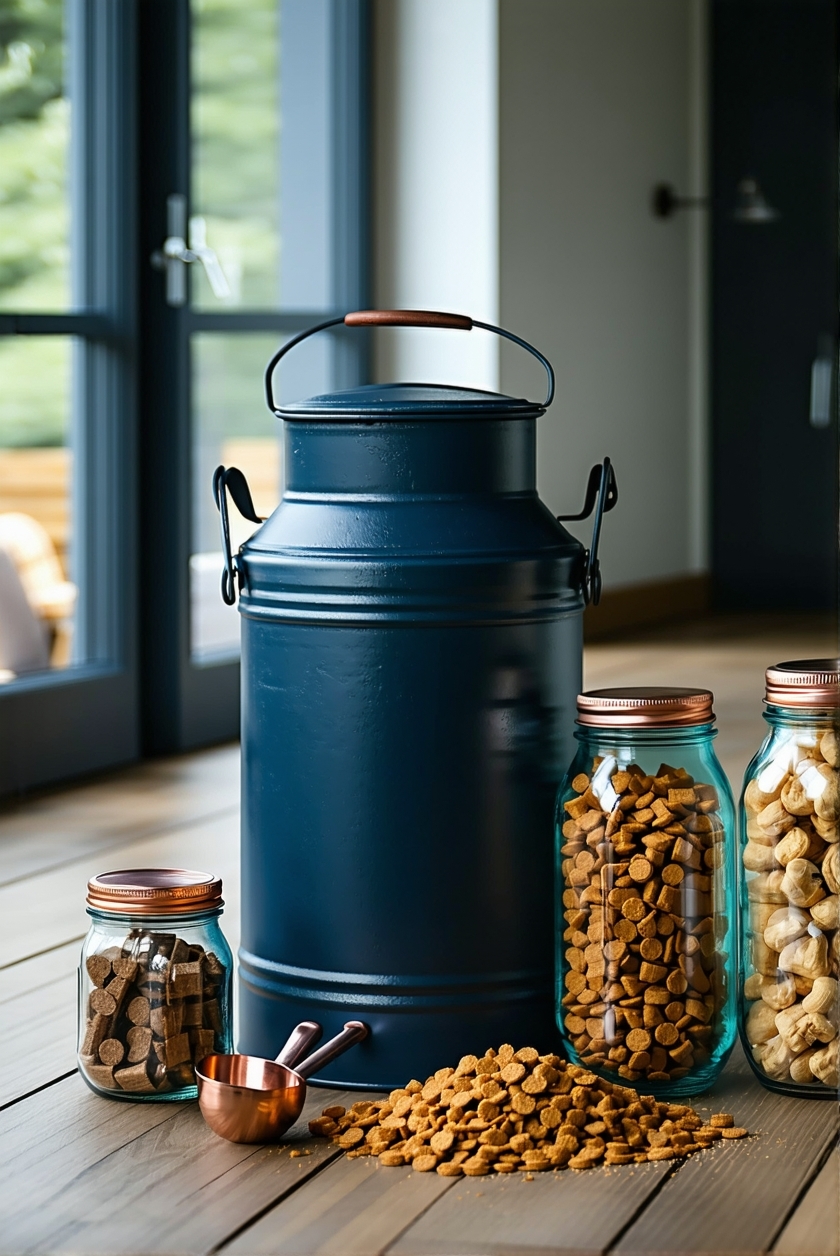
Transforming everyday items into stylish pet food storage solutions allows you to reduce waste while adding character to your home.
You’ll love how wooden crates and pallets can become rustic-looking containers that keep your pet’s food organised and protected. Old glass jars provide perfect airtight storage while letting you see when it’s time for a refill.
Give new life to vintage suitcases or trunks by converting them into unique storage solutions that double as conversation pieces. For smaller portions, decorative tin cans create charming displays that make feeding time more convenient.
If you’re tight on space, try crafting a vertical storage unit from old furniture pieces – it’s ideal for organising different types of pet food and treats.
These upcycling projects help you save money while creating personalised storage that reflects your style.
Essential Features for Practical Food Storage

Beyond creative storage solutions, practical functionality takes centre stage when choosing the right containers for your dog’s food. Your ideal dog food storage container should feature airtight seals that keep moisture and unwanted pests at bay, ensuring your pup’s kibble stays fresh and crunchy.
Look for durable materials like BPA-free plastic or stainless steel that will stand the test of time. If you’re working with limited space, stackable containers offer excellent space efficiency.
You’ll want easy-access features, such as hinged or removable lids, to make daily feeding routines a breeze. Don’t forget about monitoring food levels – a clear design allows you to quickly check when it’s time to stock up.
These practical features work together to create a storage solution that’s both convenient and reliable for your furry friend’s needs.
Quick DIY Storage Hacks for Pet Parents
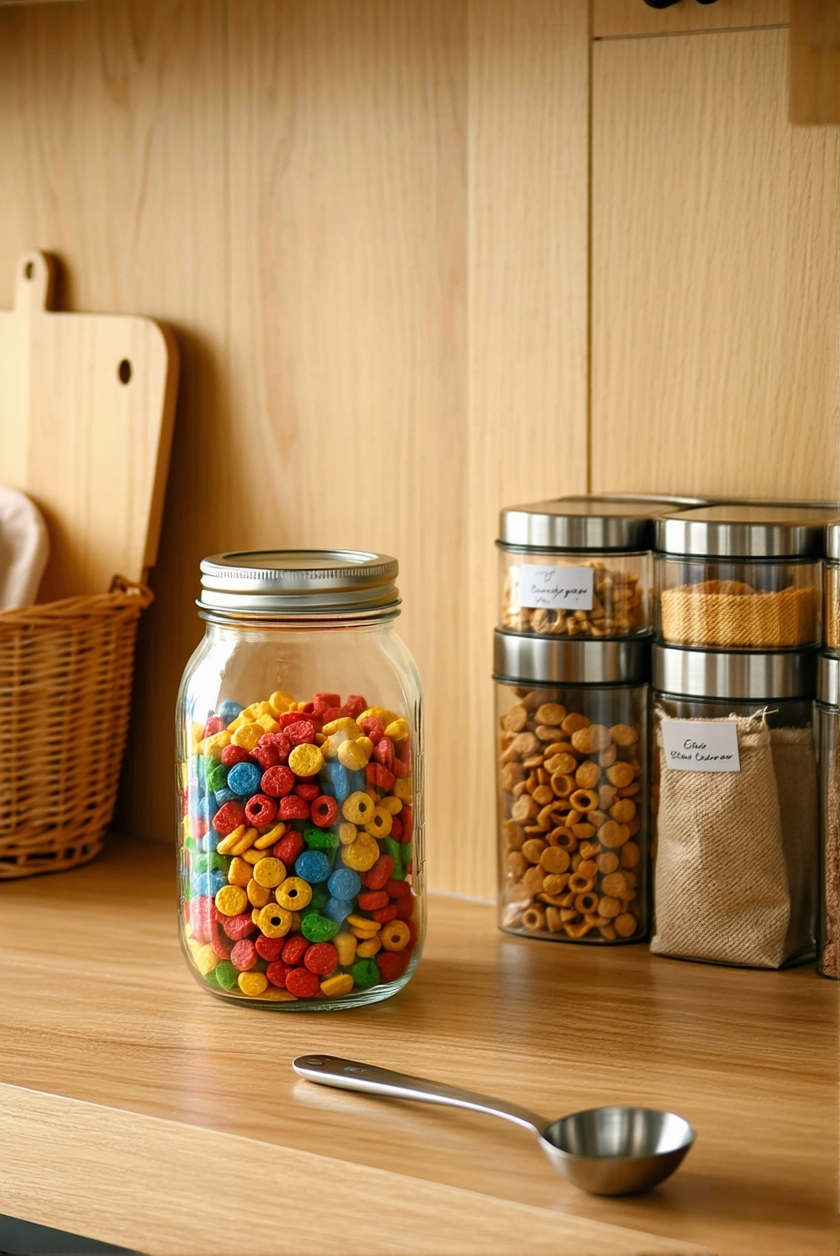
Pet parents on a budget will be delighted to know that creative DIY storage solutions are both practical and wallet-friendly. Transform a large plastic bucket into a stylish container for dog and cat food by adding a coat of satin enamel paint and a charming paw stencil.
It’s a good idea to use clear, stackable bins with secure lids for quick identification of different foods while maximising your space.
For a more extensive solution, build a simple storage cabinet from plywood to keep everything organised. Add shelves for food, treats, and supplies, ensuring they’re within reach during feeding time.
Don’t overlook the charm of repurposed mason jars for treats, or fabric bins for smaller items – they’ll add both function and style to your pet care station while maintaining a tidy space.
Frequently asked questions
What Is the 80/20 Rule for Dog Food?
The 80/20 rule for your dog’s diet means you’ll want to provide 80% high-quality protein sources (such as meat and fish) and 20% fruits, vegetables, and carbohydrates.
This serves as a guide to ensuring your furry friend receives the right balance of nutrients without unnecessary fillers.
You can adjust this ratio based on your dog’s specific needs, taking into account their age, activity level, and health status.
It’s all about providing them with the best nutrition possible.
What’s the Best Way to Store Homemade Dog Food?
Like a well-organised kitchen pantry, your homemade dog food deserves proper storage care.
You’ll want to store it in airtight containers to keep it fresh and protect those precious nutrients.
Pop it in the fridge using glass or BPA-free plastic containers, where it will stay good for 3-5 days.
If you’re batch cooking, freeze portions in labelled containers or flat freezer bags – they’ll keep for months.
Don’t forget to date everything so you’re always serving fresh meals.
What Is the 25 Rule for Dog Food?
The 25% rule is essential for understanding dog food labels.
When you come across a product labelled as simply “Beef Dog Food” or “Chicken Dog Food,” that named ingredient must constitute at least 25% of the total weight on a dry matter basis.
It’s important to note that if you encounter terms such as “dinner” or “entree,” the requirement decreases to 10%, and products labelled “with” an ingredient only need to contain 3% of that ingredient.
What Can I Use as a Dog Food Container?
You’ve got several practical options for storing your pup’s food.
You can use airtight plastic containers like Sterlite bins that will keep kibble fresh and pest-free.
If you’re storing larger amounts, a metal bin with a secure lid works brilliantly and keeps those pesky rodents at bay.
For smaller portions, consider glass jars with tight seals – they’re perfect for treats too.
Food-grade buckets are another reliable choice, and you can even personalise them to match your home’s style.
Pull this all together
Storing your dog’s food properly doesn’t have to break the bank or take up precious space. With these budget-friendly solutions under £30, you’ll keep kibble fresh and pests at bay while maximising your living space. Studies show that properly stored dry dog food can maintain its nutritional value for up to six weeks after opening, compared to just one to two weeks when left in the original bag. Choose the storage option that fits your needs and start organising today.