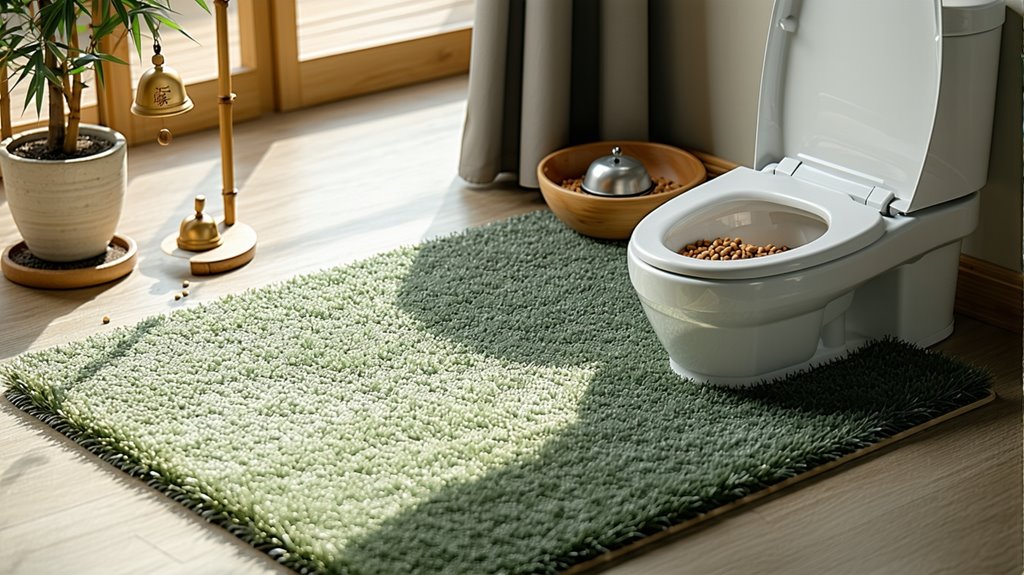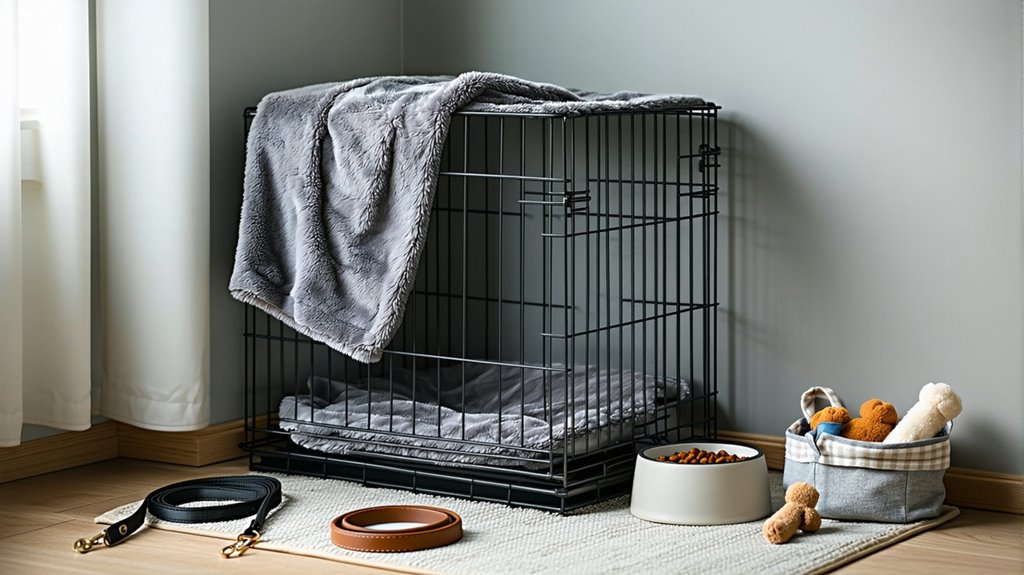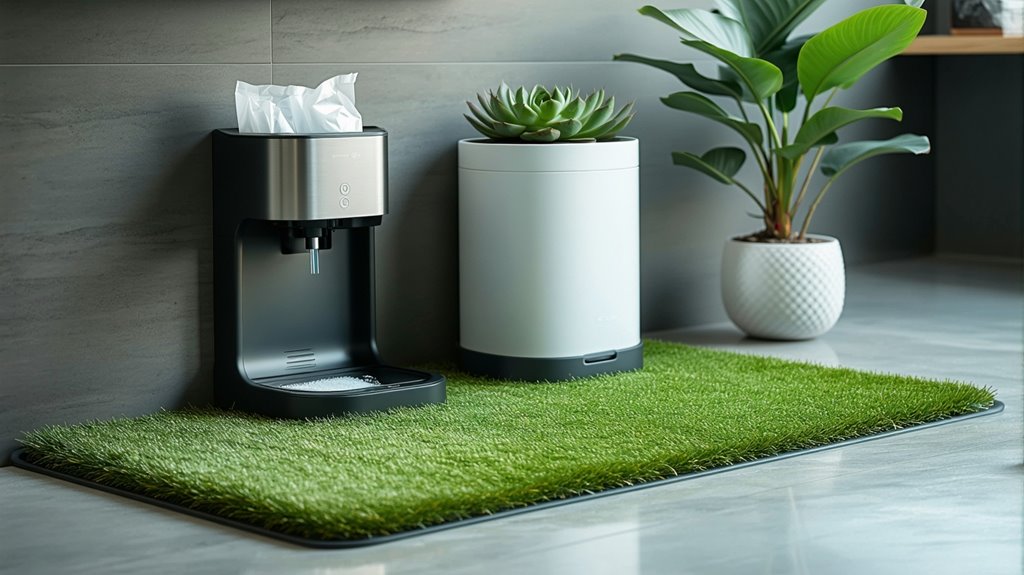
Your perfect indoor dog potty setup begins with deciding between real grass or synthetic patches in a quiet, well-ventilated corner of your home. You'll want easy access to cleaning supplies, waste bags, and treats for positive reinforcement during training. Keep the area clean with enzyme cleaners and maintain good airflow to control odours. Whether you choose natural grass or synthetic turf, creating a comfortable, accessible space will help your pup successfully adapt to their indoor bathroom routine.
Some key takeaways
- Choose a quiet, accessible corner away from living spaces and install a washable synthetic grass pad or a real grass patch.
- Set up proper ventilation with an air purifier and maintain daily cleaning routines using enzymatic cleaners.
- Keep training supplies nearby, including treats and waste bags, to encourage consistent use and quick clean-up.
- Install vertical storage solutions above the potty area to organise cleaning supplies and replacement materials efficiently.
- Select high-quality absorbent materials and replace them regularly to maintain hygiene and control odours effectively.
Essential Components of an Indoor Dog Potty Station
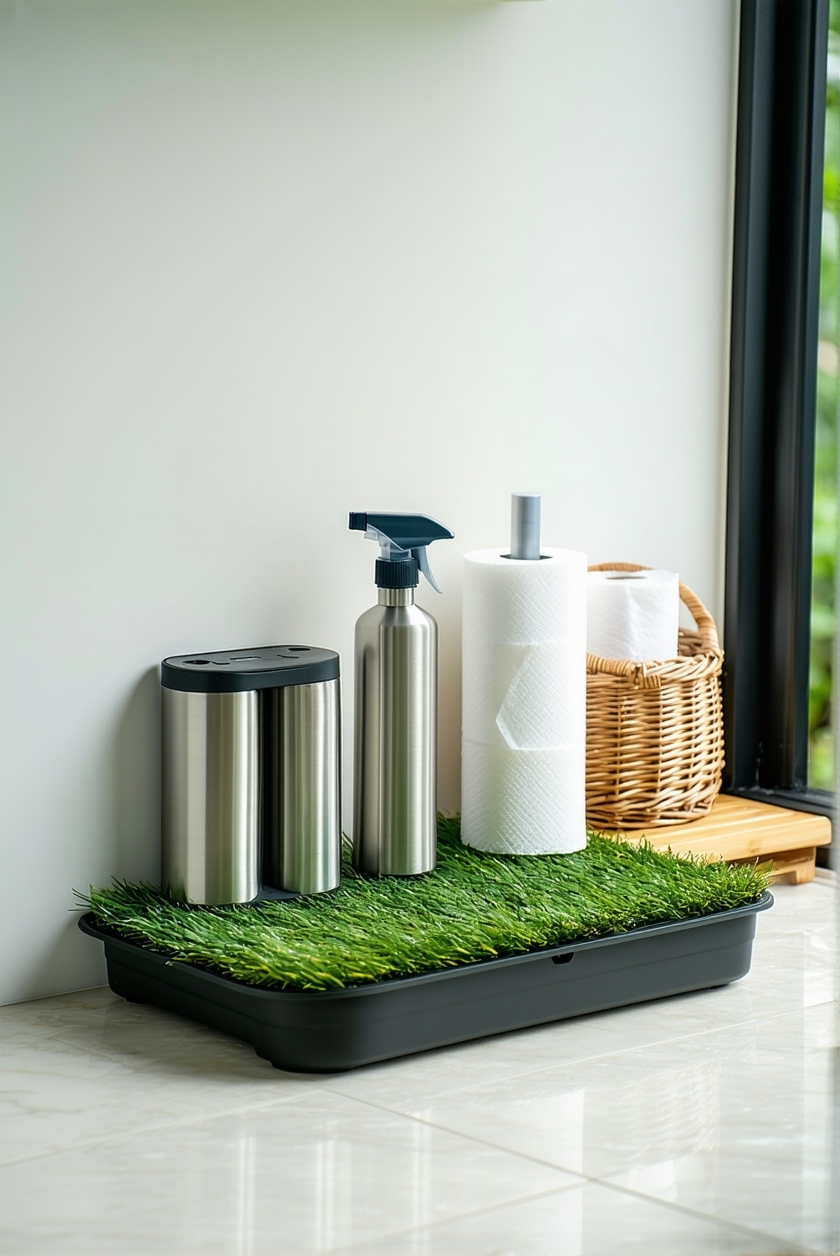
When setting up an indoor dog potty station, you'll need several key components to create a successful and hygienic space for your pet. Your dog toilet should feature either fresh grass patches or absorbent pads in a designated area that's easily accessible but separate from sleeping and dining spaces.
To help your furry friend adjust, keep positive reinforcement tools like treats nearby to reward successful potty visits.
You'll want to maintain freshness with effective odour control measures, including pet-safe cleaning solutions and proper ventilation. The indoor potty for dogs should be in a quiet spot where your pet feels comfortable and secure.
Remember to stock up on maintenance supplies for daily cleaning, including waste bags and disinfectants.
These essentials will help establish a consistent routine while keeping your home fresh and your pet happy.
Choosing Between Real Grass and Synthetic Options
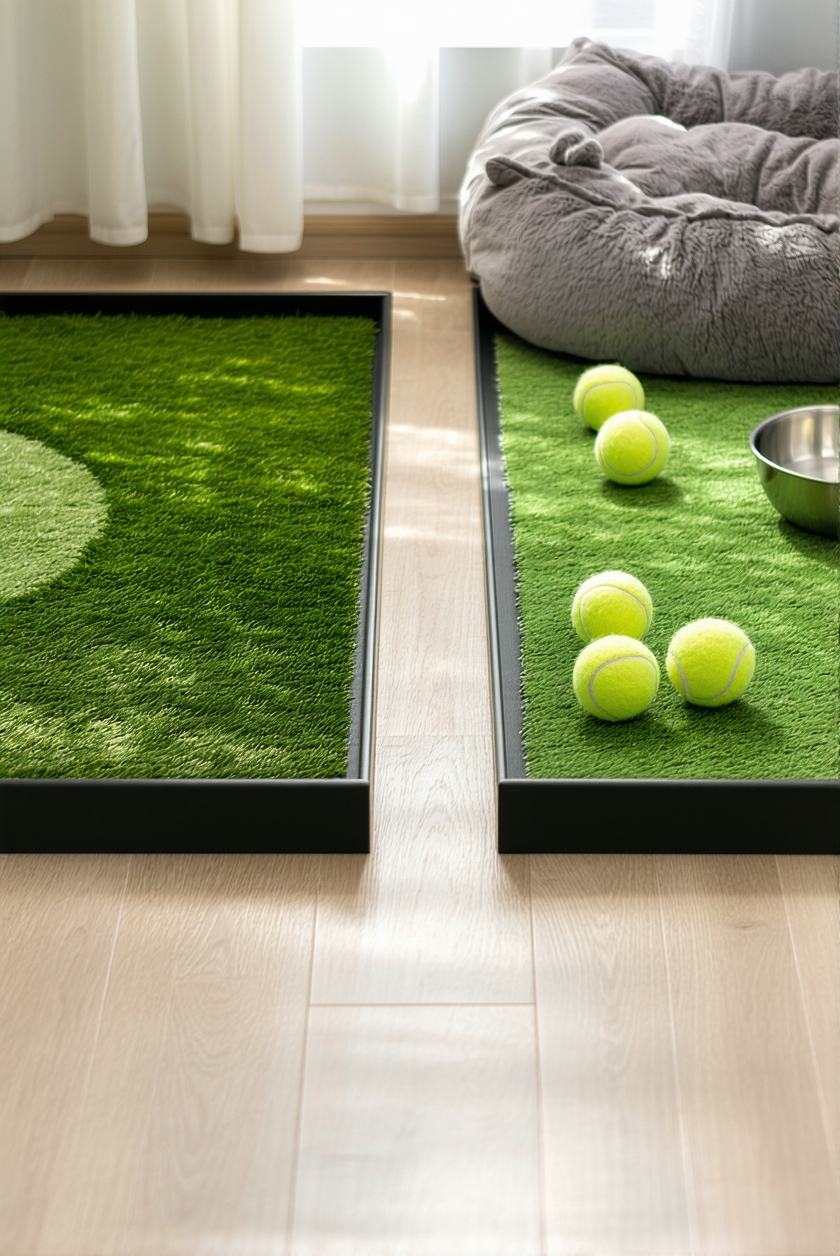
Although both real grass and synthetic options have their merits, natural grass patches often provide the most intuitive shift for dogs learning to use an indoor potty station. Your pup's instincts naturally draw them to real grass, making the transition smoother and more successful.
When deciding between options, consider your lifestyle alongside your dog's preferences. Real grass creates an authentic experience that taps into your dog's natural potty behaviours, but you'll need to plan for regular watering and replacement.
Synthetic options offer excellent durability and less frequent replacements, though they require thorough cleaning for proper odour management.
Your choice ultimately depends on balancing maintenance requirements with training effectiveness. If you're prioritising quick results in indoor potty training, real grass typically encourages faster adoption due to its familiar scent and texture.
Space-Saving Layout Strategies for Small Apartments

Living in a small apartment doesn't mean you can't create an effective indoor potty setup for your dog. By implementing a smart space-saving layout, you'll maximise your living area while keeping your furry friend comfortable.
Start by identifying a quiet corner for your indoor dog potty, away from high-traffic zones but still easily accessible for your pup.
Make the most of your limited space by choosing compact potty solutions like foldable grass patches or washable pads. You can enhance your potty area's efficiency with vertical storage solutions – mount shelves above the space to store supplies while keeping your floor clear.
Consider a portable potty option that you can relocate as needed, giving you flexibility in your apartment's layout. Multi-functional setups, like decorative potty stations that blend with your decor, help maintain your home's aesthetic while serving a practical purpose.
Training Your Dog to Use Their Indoor Bathroom
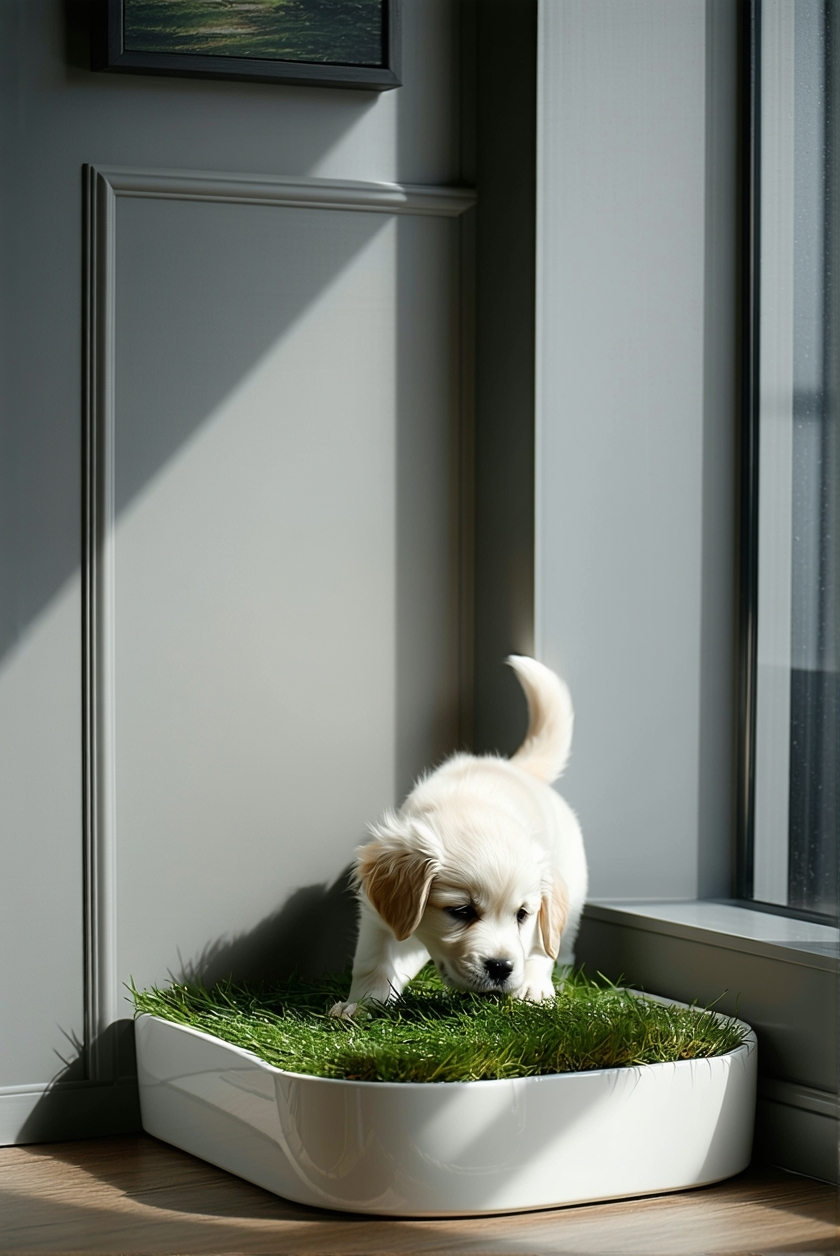
Successfully training your dog to use an indoor bathroom requires consistency, patience, and positive reinforcement techniques.
Start by establishing a regular feeding schedule to help predict when your pup will need potty breaks. This predictability makes monitoring your dog easier and increases training success.
Create a designated potty area that's easily accessible and introduce your furry friend to it frequently.
When using indoor dog potties, timing is everything – watch for signs that your pup needs to go and guide them to the spot immediately. When they use the area correctly, reward them with treats and enthusiastic praise right away.
Don't be discouraged by accidents; they're part of the learning process.
Clean any messes thoroughly with enzyme cleaners, and remember that consistency is key to establishing new bathroom habits.
Odor Management and Ventilation Solutions
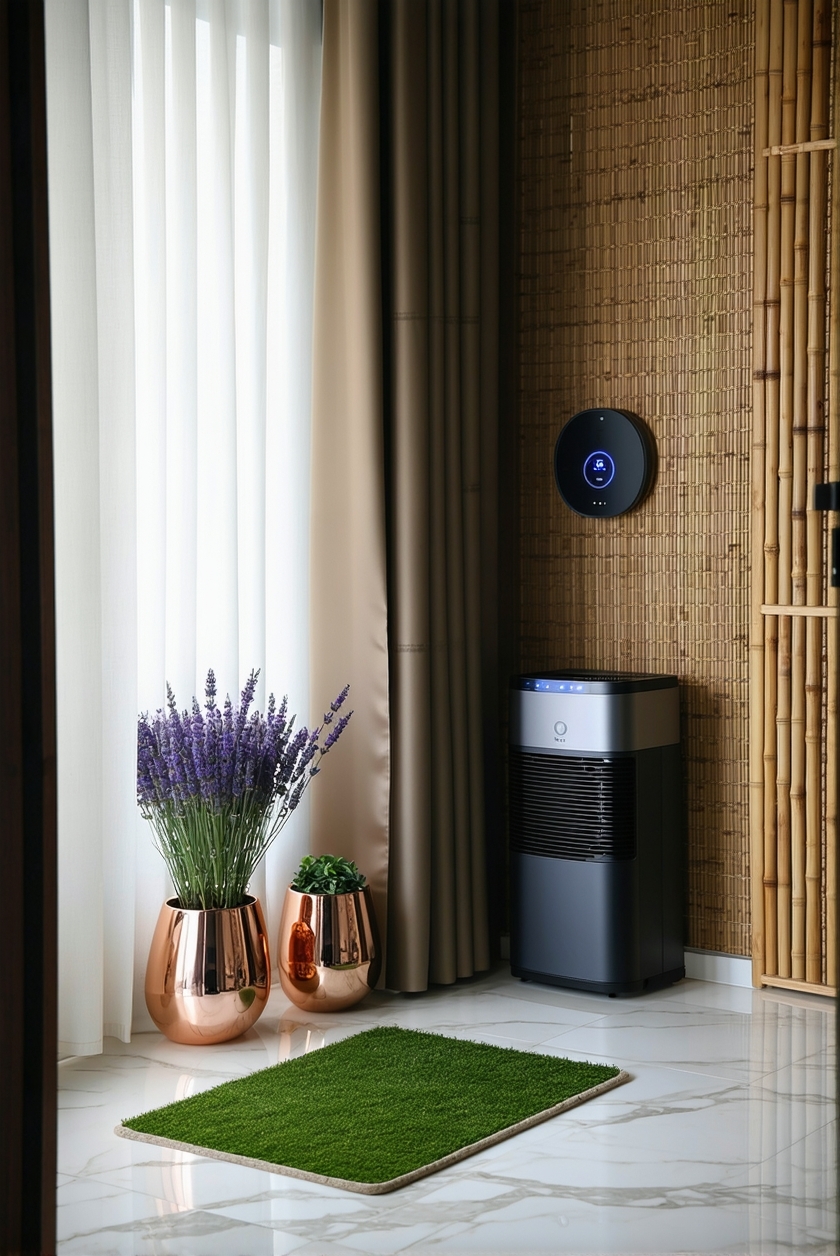
Maintaining a fresh-smelling home while using an indoor dog potty requires a thorough approach to odour management and ventilation.
You'll want to establish a daily cleaning routine that includes removing solid waste and using enzymatic cleaners to effectively break down organic matter. These specialised cleaners work wonders in neutralising persistent odours at their source.
To enhance air quality, position your dog's potty area in a well-ventilated space or consider adding an air purifier nearby.
You can boost your odour management strategy by using high-quality absorbent materials, such as specialised grass patches or eco-friendly pads. Remember to replace these materials regularly to maintain proper hygiene.
The combination of proper ventilation solutions and consistent cleaning will create a comfortable environment that both you and your furry friend will appreciate.
Daily Maintenance and Cleaning Protocols
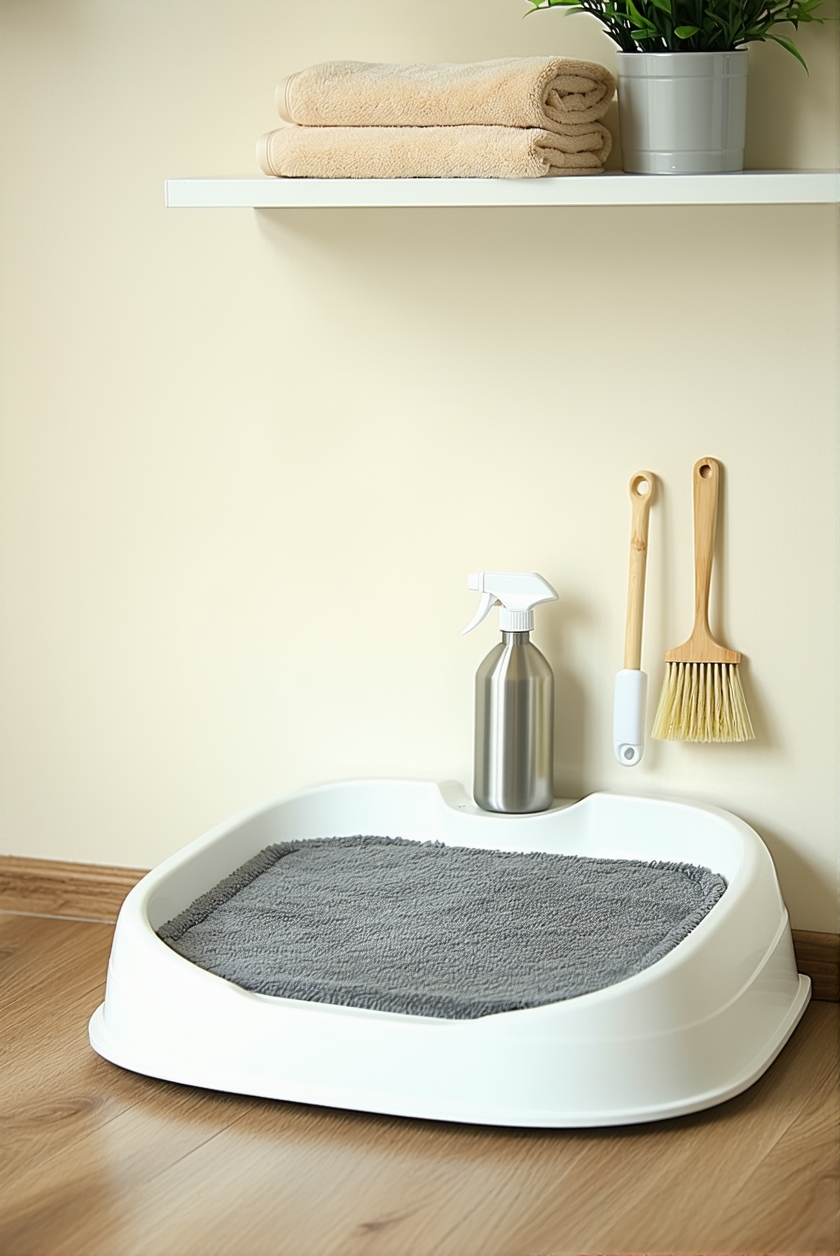
Proper daily care of your indoor dog potty sets the foundation for a clean and inviting space.
You'll want to establish a daily cleaning routine that includes promptly removing solid waste and rinsing real grass patches to keep your pup's potty area fresh and welcoming.
To maintain a hygienic environment, use pet-safe enzymatic cleaners to disinfect the area thoroughly.
Replace absorbent pads or grass patches every 1-2 weeks, or sooner if they're heavily soiled. This consistent upkeep guarantees your dog's training experience remains positive and effective.
Don't forget to conduct a weekly deep clean of the base tray, scrubbing it thoroughly to prevent bacterial growth.
Budget-Friendly DIY Setup Ideas
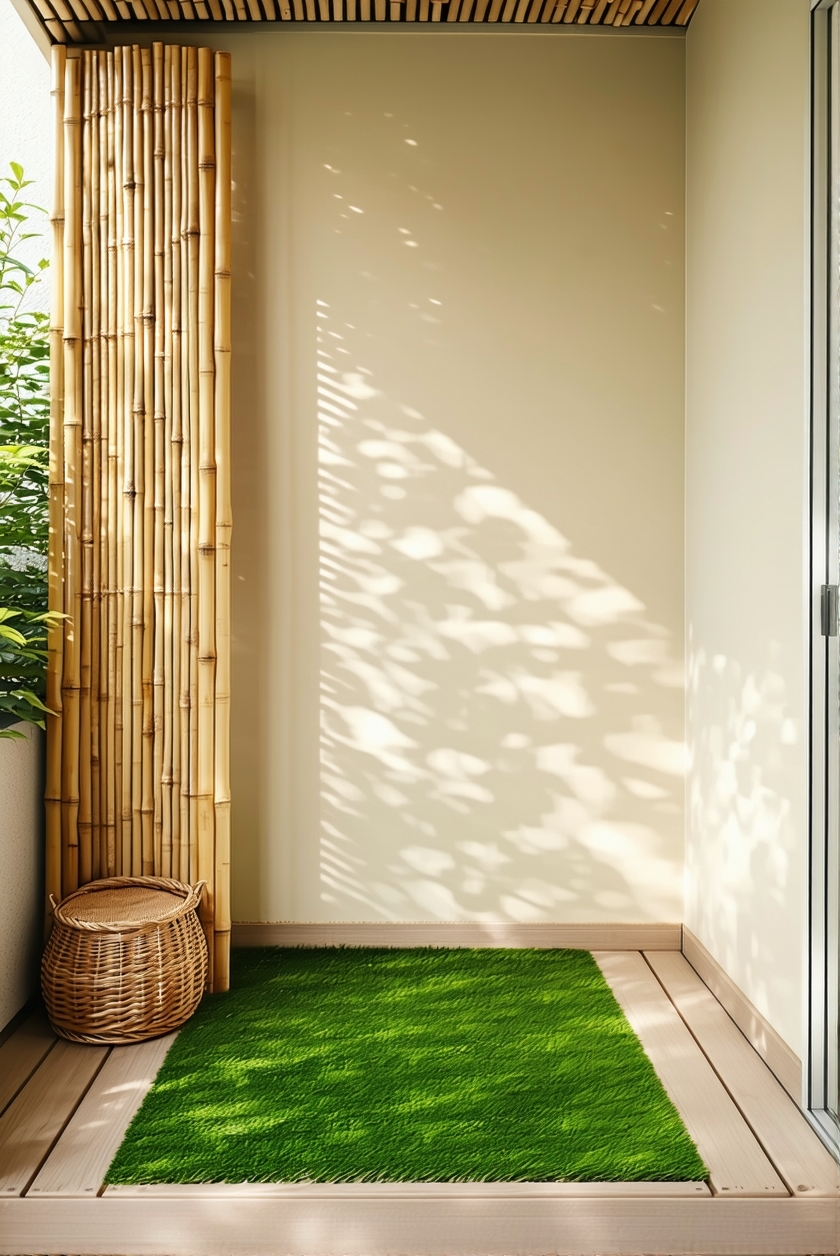
Creating an indoor potty solution doesn't have to strain your wallet, as you can build an effective setup using everyday household items.
You'll need a shallow plastic storage tub as your base and a sturdy plastic bread rack tray for drainage – these budget-friendly materials form the foundation of your indoor potty system.
To encourage your dog to use this new setup, position it in a quiet corner away from their bed and food bowls.
Add some artificial turf or a grass patch on top of the tray to create a familiar surface. You can make the spot more appealing by placing some of your dog's outdoor bathroom scents in the tub below.
This easy-to-clean system requires regular maintenance to stay fresh, but it's an affordable way to provide your pup with a reliable indoor potty solution.
Seasonal Adjustments for Year-Round Comfort
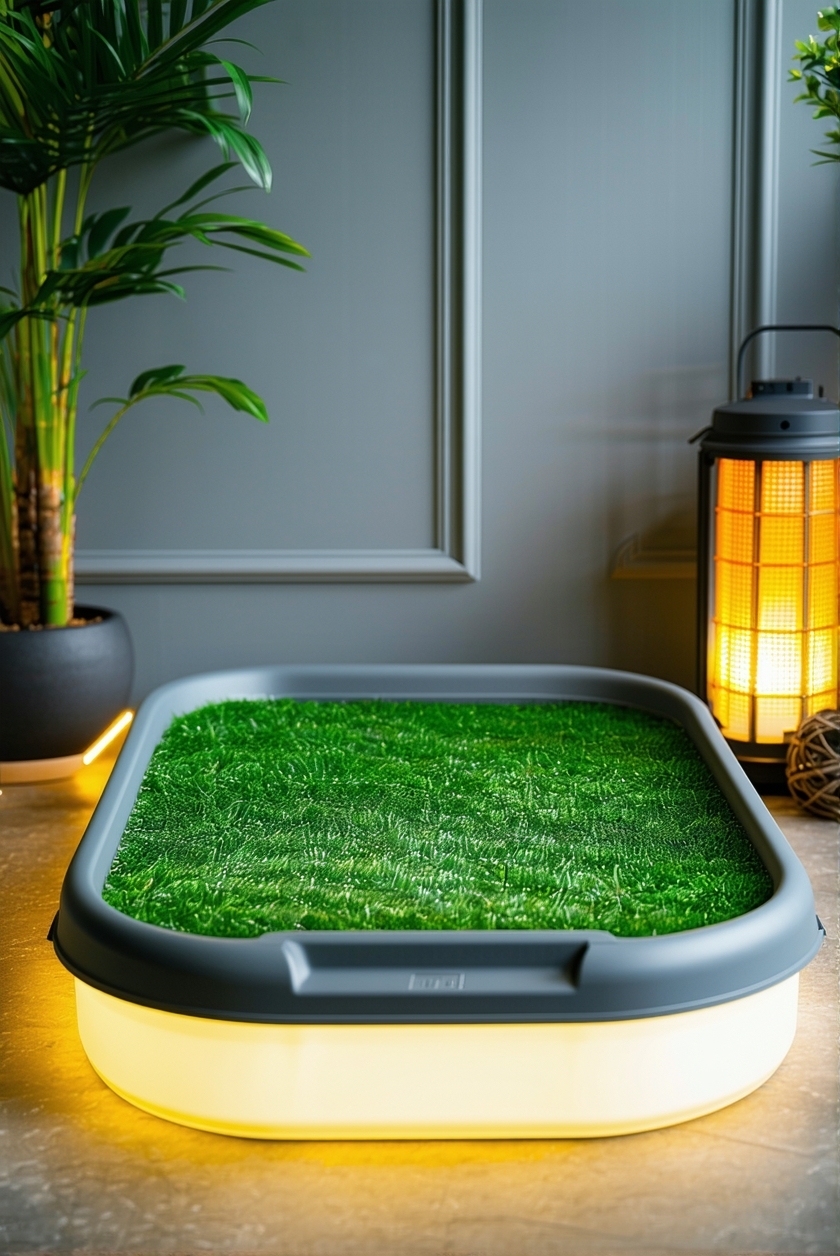
Your indoor dog potty setup requires seasonal modifications to ensure your furry friend remains comfortable throughout the year.
As weather conditions change, you'll want to adapt your indoor potty system to guarantee your dog maintains consistent bathroom habits, regardless of what's happening outside.
During the winter months, consider adding warmth to the potty area through insulation or a gentle heat source.
When summer arrives, relocate the setup to a cooler spot in your home or add cooling mats for extra comfort.
Don't forget to adjust your maintenance routine with the seasons – more frequent pad changes during humid weather will keep the area fresh and inviting.
You're creating a year-round sanctuary where your dog can reliably answer nature's call, making life easier for both of you while maintaining proper hygiene and comfort.
Frequently asked questions
Where Should I Put My Indoor Dog Potty?
Place your indoor dog potty in a quiet, low-traffic area where your pup can feel secure and undisturbed.
It's important to keep it away from their bed and food bowls, but still easily accessible.
Choose a spot with some natural light, as this helps your dog feel more comfortable and maintains familiar outdoor potty associations.
What Is the 10 Minute Rule for Potty Training?
Time is of the essence when it comes to potty training!
The 10 Minute Rule means you'll take your puppy to their potty spot every 10 minutes during the initial training sessions.
Watch for signs like sniffing or circling, and when your pup successfully goes potty, reward them immediately with treats and praise.
You're building a strong foundation of good habits, and your consistency will help your furry friend understand exactly when and where they should do their business.
Where Do Indoor Dogs Go to the Toilet?
You can provide your indoor dog with several comfortable toilet options right inside your home.
You'll find that real grass patches, artificial turf pads, or absorbent puppy pads work wonderfully as designated potty areas.
It's important to set up these spots in a quiet, consistent location away from where your pup eats and sleeps.
Remember to praise your dog when they use their indoor potty spot to reinforce this positive behaviour.
How Do You Stop a Dog From Peeing and Pooping in the House?
Don't let accidents get you down – you'll be out of the woods soon!
To stop your dog from having indoor accidents, establish a consistent feeding schedule and take your pup out regularly. Use positive reinforcement with treats and praise when they go in the right spot.
Crate training is helpful since dogs naturally avoid soiling their sleeping area.
Watch for signs like sniffing or circling, and clean any accidents with enzymatic cleaners.
To summarise
Your indoor dog potty setup's success depends on consistent maintenance and positive reinforcement. Just like Sarah in Brooklyn, who transformed her balcony into a thriving grass pad station for her Yorkie, you'll find that the right combination of materials, location, and training makes all the difference. Remember, you're creating a stress-free solution that works for both you and your dog's lifestyle, whether you're using artificial turf or real grass options.