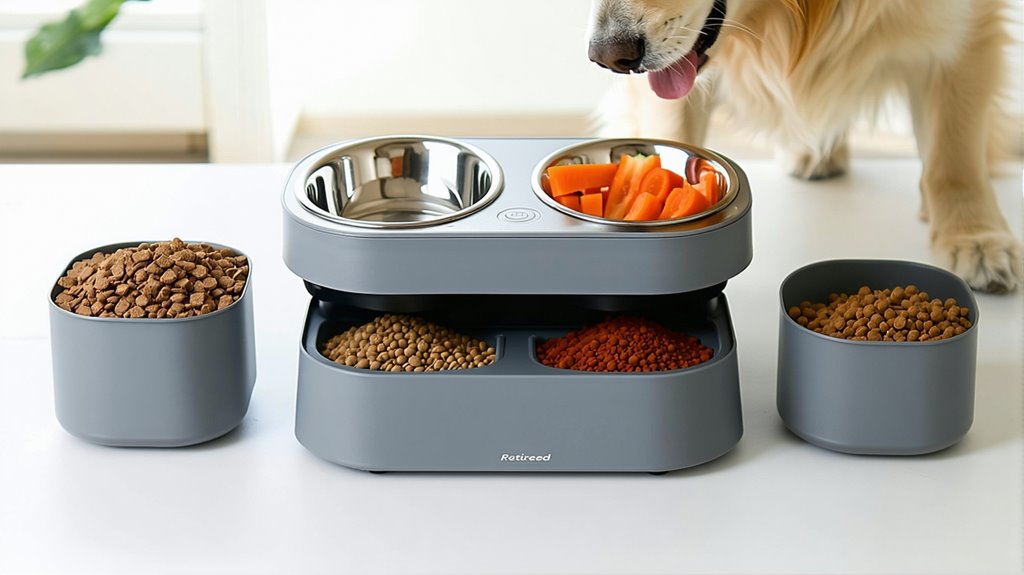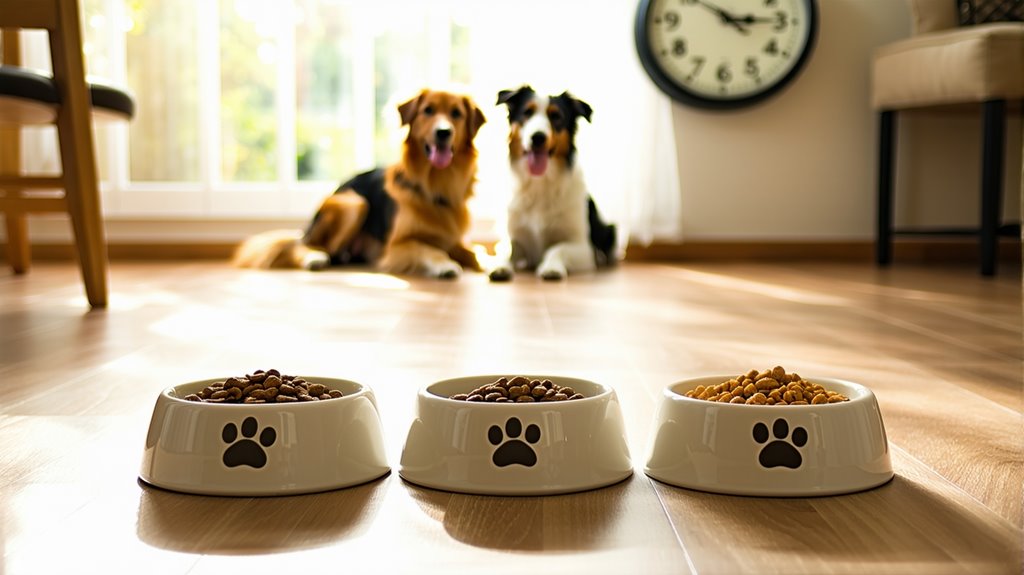
Feed your multiple dogs twice daily, scheduling breakfast between 6-9 AM and dinner between 5-8 PM, keeping meals approximately 12 hours apart. It's advisable to establish separate feeding zones and maintain consistent timing to reduce anxiety and competition among your dogs. Divide their daily portions accordingly, with one-third in the morning and two-thirds in the evening. This structured approach lays the groundwork for peaceful mealtimes, but there's much more to consider when creating the perfect feeding routine.
Some key takeaways
- Feed dogs twice daily, with morning meals served between 6:00 and 9:00 AM and evening meals scheduled at least one hour before bedtime.
- Space meals approximately 12 hours apart to maintain consistent blood sugar levels and establish a routine.
- Allow 30 minutes for each feeding session in separate, designated areas to prevent competition over food.
- Schedule the morning feeding to provide one-third of their daily caloric intake, with the evening feeding accounting for the remaining two-thirds.
- Maintain consistent feeding times each day to reduce anxiety and create predictable routines for multiple dogs.
Establishing Separate Feeding Zones for Multiple Dogs
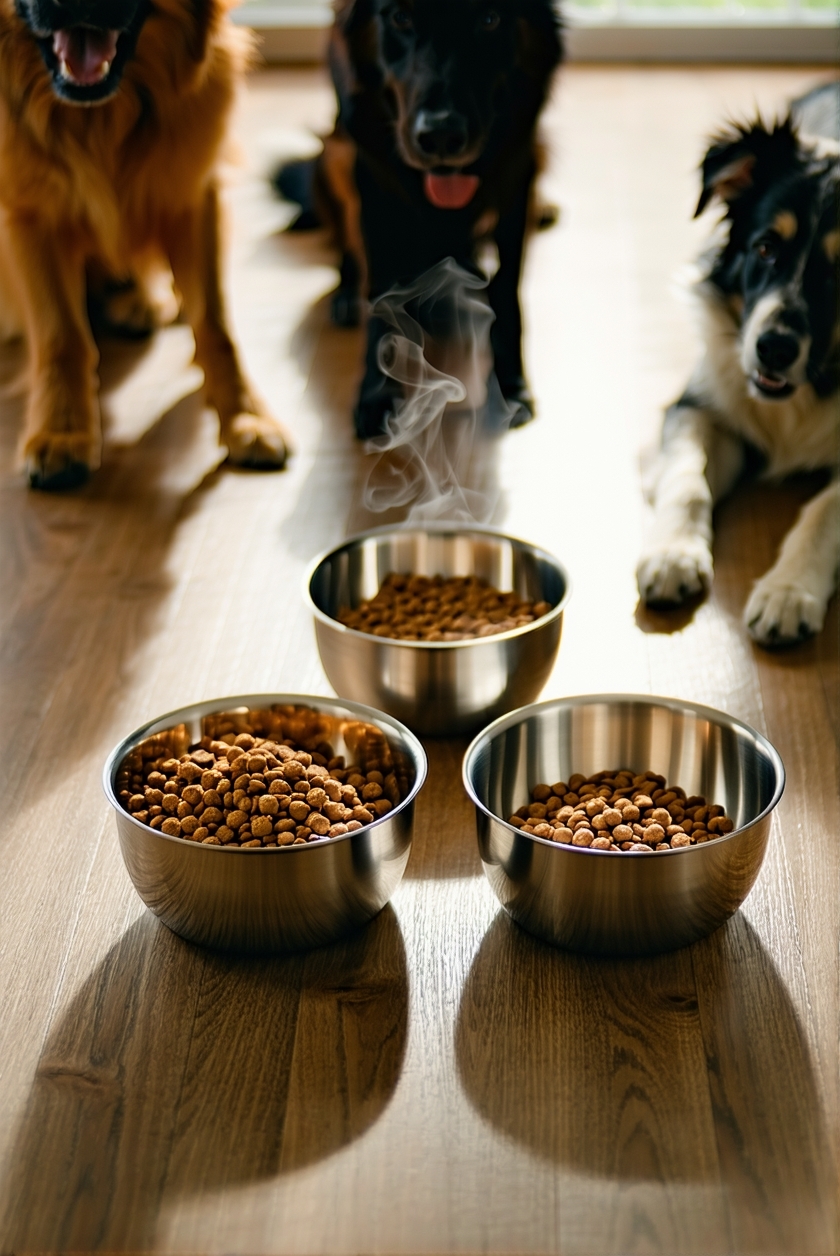
When feeding multiple dogs in your household, establishing separate feeding zones is essential for maintaining peace and preventing mealtime conflicts.
You'll want to designate quiet, distraction-free areas where each dog can focus on their meals each day without feeling threatened or rushed.
Create individual feeding zones that cater to your dogs' specific needs by using physical barriers like baby gates or separate rooms. If you're working with limited space, you can establish a rotation schedule for meals, ensuring each dog has their turn to eat comfortably.
Don't forget to monitor their eating habits and adjust portions as needed.
To prevent territorial behaviour, consider rotating feeding zones occasionally. This practice helps your dogs understand that mealtime is a positive experience, not a competition for resources or space.
Coordinating Morning and Evening Meal Schedules

Successfully coordinating meal schedules for multiple dogs requires careful timing and consistency throughout the day.
Your diligent attention to feeding times helps establish routines that keep your dogs healthy and content.
When planning your dog meals, follow these key timing guidelines:
- Schedule morning feedings between 6 AM and 9 AM, offering one-third of the daily intake.
- Plan evening meals at least one hour before bedtime, providing two-thirds of daily portions.
- Keep feeding times consistent each day to reduce anxiety and food competition.
- Feed dogs in separate areas to prevent rushing and food guarding behaviours.
Managing Food Competition Between Dogs

Beyond establishing consistent meal schedules, managing food competition is a key aspect of feeding multiple dogs harmoniously.
You'll want to create designated feeding areas by using separate rooms or barriers, ensuring each of your dogs feels secure during mealtimes.
Implement a structured feeding routine that provides each dog with their own space and time to eat without feeling rushed or threatened.
Consider using puzzle feeders or food toys to engage your dogs individually, which naturally reduces competition while making mealtimes more mentally stimulating.
You'll need to monitor intake carefully, adjusting portions to meet each dog's specific needs.
This personalised approach prevents resource guarding and ensures that no single dog dominates the food supply.
Adjusting Portions Based on Individual Dog Needs
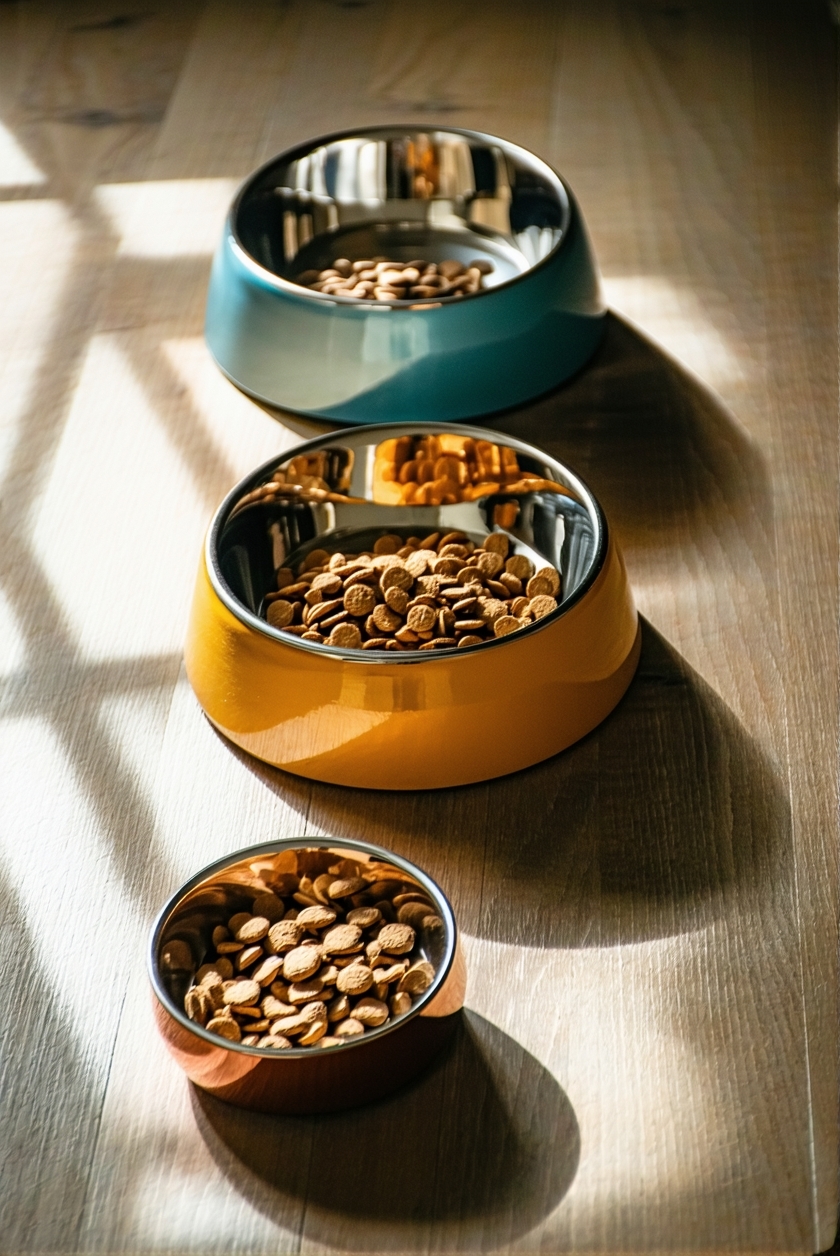
Determining the right portion size for each dog requires careful consideration of their individual characteristics and needs.
You'll want to create a personalised feeding guide that accounts for your dogs' unique requirements while ensuring they maintain healthy weights.
When adjusting portions for multiple dogs, consider these essential factors:
- Calculate each dog's daily calorie needs based on their age, weight, and activity level.
- Use precise measuring tools to portion out food according to individual needs.
- Monitor your dogs' body condition regularly and adjust serving sizes as needed.
- Work with your vet to create customised feeding plans that address specific health concerns.
Remember to weigh your dogs monthly and observe their eating patterns closely.
This attention to detail helps you maintain proper portion control while ensuring each dog receives the nutrition they need to thrive.
Creating a Consistent Feeding Routine

Once you've established appropriate portions for each dog, creating a consistent feeding routine becomes vital for maintaining harmony in your multi-dog household.
Start by dividing your dogs' daily meals into two servings spaced roughly 12 hours apart, which helps regulate their digestion and behaviour.
When feeding your dog family, you'll want to designate specific spots for each pet's bowl. This good feeding practice prevents resource guarding and ensures everyone feels secure during mealtime.
Stick to your chosen schedule religiously—dogs thrive on predictability. You'll notice that consistent mealtimes help reduce anxiety and competition among your pets.
Monitor how your dogs respond to the routine and make adjustments if needed. This attention to detail ensures each of your furry family members gets the nutrition they require without stress or conflict.
Spacing Meals Throughout the Day
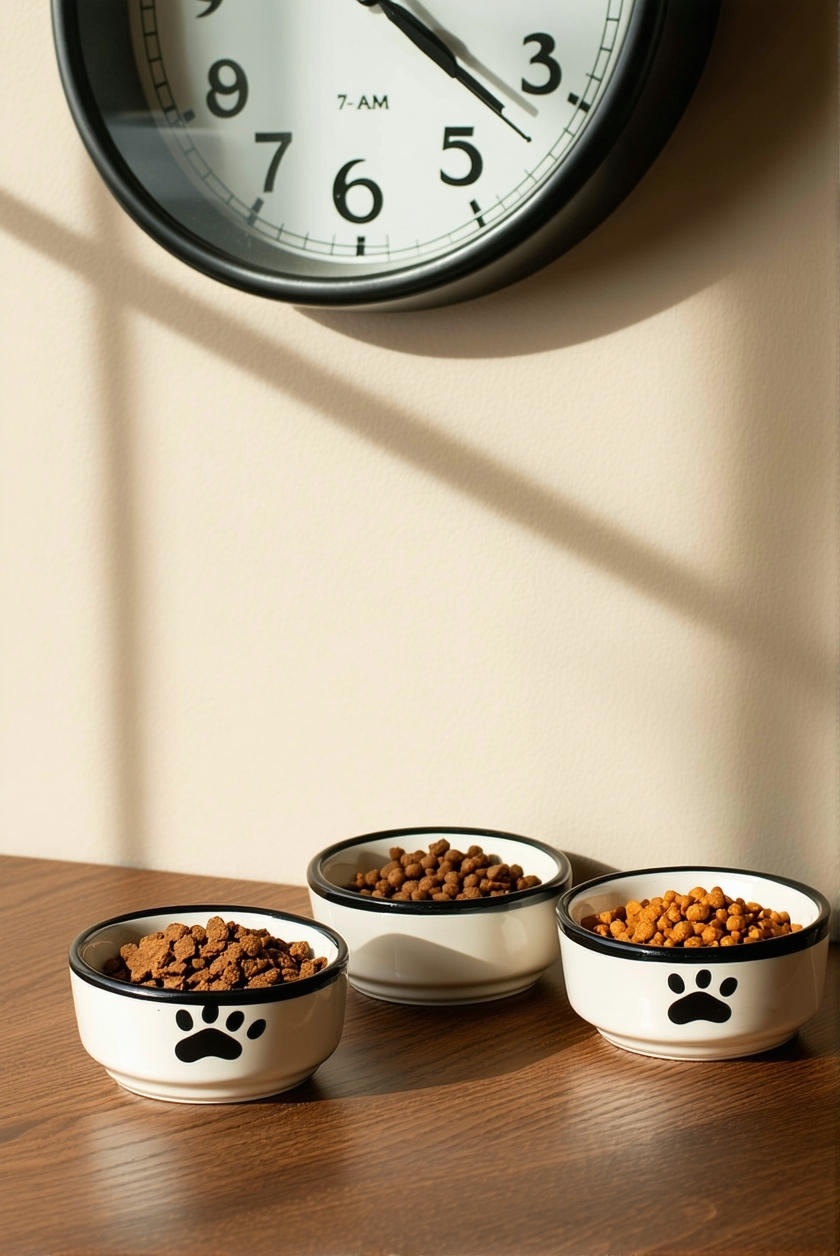
While managing multiple dogs requires careful planning, proper meal spacing throughout the day helps maintain their digestive health and energy levels.
When you feed your dog at consistent intervals, you'll create a harmonious feeding routine that benefits everyone in your household.
Follow these guidelines for ideal meal spacing:
- Feed adult dogs twice daily, spacing meals approximately 12 hours apart.
- Set morning and evening feeding times to establish predictability.
- For puppies under 6 months, provide 3-4 meals a day, spaced 4-6 hours apart.
- Create separate feeding areas to prevent resource guarding.
Addressing Different Age Group Requirements
Successfully managing multiple dogs of different ages requires understanding their distinct nutritional timelines and feeding requirements.
Your puppies need four daily meals until they're four months old, while your adult dogs can maintain a twice-daily schedule roughly 12 hours apart.
Watch your dogs' individual feeding habits closely, as you'll need to adjust portions and timing based on their specific needs.
If you have a pregnant or nursing dog, you'll want to provide smaller, more frequent meals to support their increased nutritional demands.
For senior dogs or those with health concerns, consider breaking their daily portions into smaller, more manageable meals.
Remember that each dog is unique, so you may need to create separate feeding stations and schedules to ensure everyone receives the right amount of food at the right time.
Monitoring Each Dog's Eating Habits

Monitoring Each Dog's Eating Habits
Keeping a close eye on your dogs' eating habits is essential when managing multiple pets at mealtime. By observing each dog's behaviour during feeding time, you can ensure they receive proper nutrition while maintaining a stress-free environment.
To effectively track your dogs' eating patterns, consider these key practices:
- Maintain a detailed feeding log to document daily food intake and any changes in appetite.
- Assess body condition scores monthly to adjust portions accordingly.
- Observe eating speeds to determine if separate feeding areas are necessary.
- Set specific feeding times to prevent food competition and establish a routine.
Your attentive monitoring will help identify potential health concerns early and maintain harmony during mealtimes.
If you notice significant changes in eating habits or concerning behaviours, don't hesitate to consult your veterinarian for professional guidance.
Balancing Treat Distribution Among Dogs
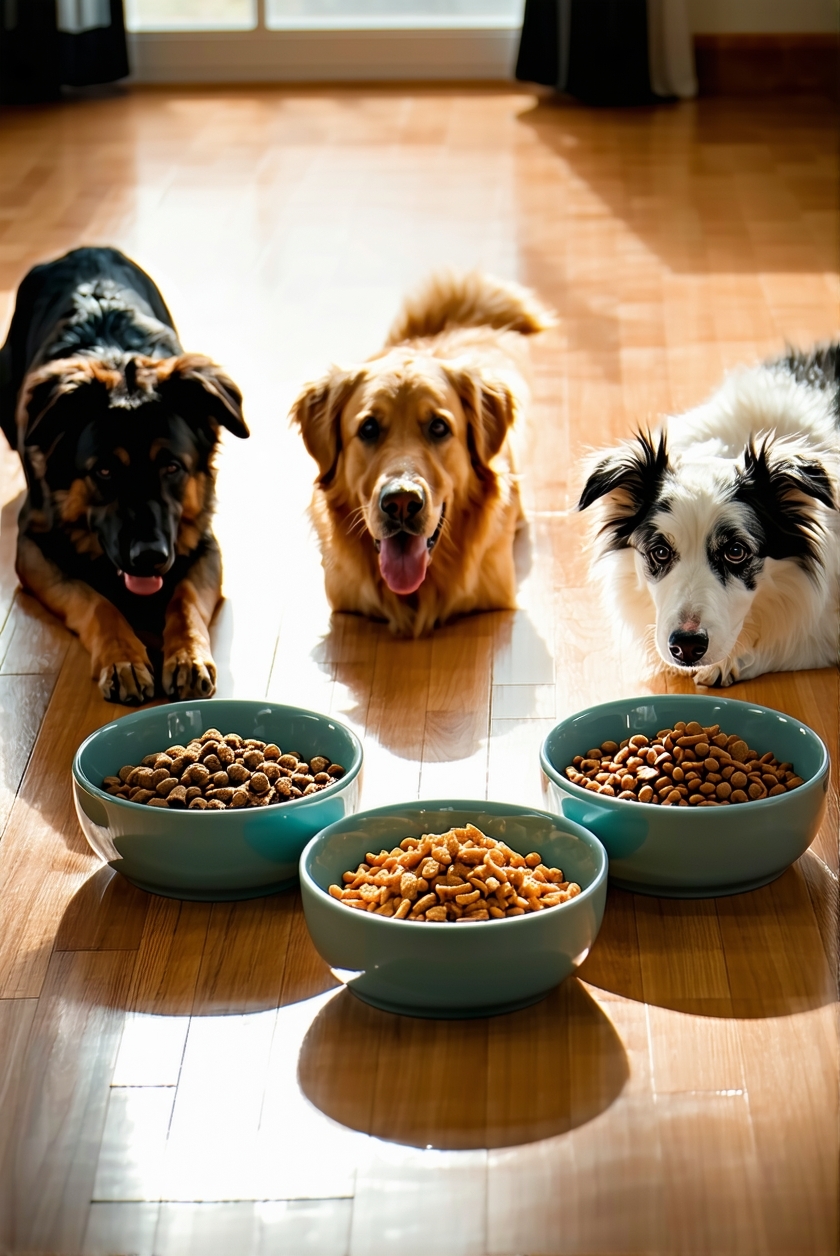
Proper treat distribution among multiple dogs requires careful attention to each pet's individual needs and dynamics.
You'll want to take into account your dogs' weights and activity levels when determining the daily amount of treats, keeping them within 5-10% of their total calorie intake.
To make treat time harmonious, establish separate feeding stations or areas for each dog. This prevents competition and ensures everyone gets their fair share.
Break treats into smaller pieces for training sessions, which allows you to reward more frequently without exceeding their daily treat allowance.
You'll need to monitor how each dog responds to their treats and adjust portions based on their appetite and health status.
Maintaining Order During Feeding Times

When you're feeding multiple dogs, structured mealtimes create a foundation for peaceful and organised dining. By establishing a consistent feeding schedule, you'll help your furry family members feel secure and reduce mealtime anxiety.
To maintain order during daily feedings, follow these essential steps:
- Set up separate feeding areas for each dog to prevent food guarding and ensure everyone receives their proper portion.
- Implement a timed feeding approach, allowing about 30 minutes for each meal.
- Monitor intake carefully, adjusting portions based on each dog's individual needs.
- Use positive reinforcement to create a calm atmosphere during mealtimes.
Remember that your presence and guidance during feeding times helps to maintain order. By staying consistent with these practices, you'll create a harmonious dining experience that your dogs will come to appreciate and expect.
Frequently asked questions
What Time of Day Is Best to Feed Dogs?
You'll want to establish a consistent feeding schedule that aligns with your dog's natural rhythms.
The best times are typically between 6-9 AM for breakfast and 5-7 PM for dinner, spacing meals roughly 12 hours apart. This timing helps optimise your dog's digestion and energy levels throughout the day.
Is 8pm Too Late to Feed a Dog?
Yes, 8 PM can be too late to feed your dog.
It's advisable to give your furry friend their last meal at least 1-2 hours before bedtime to support proper digestion and prevent issues like hunger-related vomiting in the morning.
This is particularly important if your dog is prone to bloat.
Consider moving dinner to an earlier time to ensure your pup's comfort throughout the night and to maintain a healthy digestive routine.
Is It Better to Feed Dogs 2 or 3 Times a Day?
For most adult dogs, feeding twice daily is ideal – typically once in the morning and once in the evening.
However, if you have a puppy, three to four meals a day will better support their growth and development.
Your dog's age, activity level, and health needs should guide your decision.
If you're unsure, you can always consult your vet to create the perfect feeding schedule for your furry friend's specific needs.
What Is the 80/20 Rule for Dog Food?
Just like a well-oiled machine requires the right fuel, your furry friend needs the perfect balance in their diet.
The 80/20 rule for dog food suggests you should provide 80% of your dog's meals from high-quality protein sources, while the remaining 20% should come from carbohydrates and fats.
You'll want to ensure this ratio to support your pup's muscle development, maintain healthy energy levels, and prevent obesity.
It's always best to consult your vet for personalised guidance.
To summarise
By establishing a consistent feeding schedule and implementing designated feeding zones, you'll create a peaceful mealtime routine for your multiple dogs. Take Sarah's three-dog household as an example: she successfully manages her senior Lab, adult Shepherd, and young Beagle by feeding them twice daily at 7 AM and 6 PM in separate rooms. Remember, you're not just feeding your dogs—you're maintaining harmony and ensuring each pet's nutritional needs are met.